

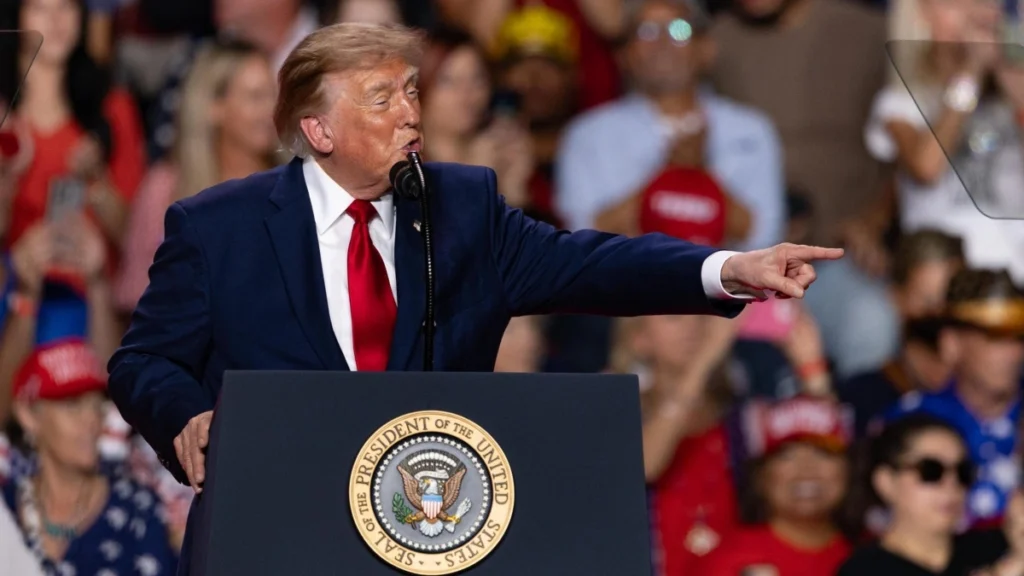
Donald Trump held six consecutive tele-rallies on Saturday for Republican candidates in Florida, New York and other states, part of about 20 he plans before Tuesday in a final push ahead of the midterm elections.
In the final stretch, Trump opted for tele-rallies—mass, non-interactive telephone conferences—to match the intensity of the agenda, avoid constant near-daily travel in this phase and try to reverse unfavorable polling, with his 31% approval, the cost of living, higher gasoline prices and the unpopular Iran war turning against the president and his party.
RELATED: U.S. Socialist Candidates Could Reshape the Democratic Party’s Direction
On Sunday, he will give a speech in Iowa and then head a second rally in Kansas, while persisting with a strategy of legal maneuvers that analysts attribute to the aim of keeping the electoral dispute alive and preparing the ground to sow doubts about the results if they are adverse to him. Legal disputes he is promoting in California and Alaska are also intensifying, while James Talarico and Gina Hinojosa promised to win back Texas for the Democrats.
NEW: @CAGovernor Gavin Newsom, in a letter to the top federal judges within California, warned that the Trump administration may try to seize midterm election ballots.
“I have grave concerns federal agents will seek search warrants to seize ballots and ballot materials before… pic.twitter.com/MnL5XGxDul
— Governor Newsom Press Office (@GovPressOffice) October 31, 2026
Saturday began with early-vote figures—by mail and in person—between 49.5 million and 51 million votes, according to morning press dispatches. In the afternoon, Michael McDonald, director of the UF Election Lab at the University of Florida, officially confirmed on his platforms that the national counter surpassed the barrier of 52 million people who had already voted. At night, the Election Lab counter showed 52,704,306 votes (29,079,449 in person and 23,734,759 by mail).
US Senator Bernie Sanders described President Donald Trump as “the most dangerous president in US history,” characterizing him as an authoritarian figure who does not believe in the rule of law.
Sanders warned against continued Republican control of Congress and lawmakers… pic.twitter.com/5iwc0Hyc1s
— Al Mayadeen English (@MayadeenEnglish) November 1, 2026
Tuesday’s elections will renew all seats in the House of Representatives, one-third of the 100 Senate seats, and the governorships of 36 states. However, it is too soon to assume Trump would be constrained if he loses the congressional majority, given the authoritarian bent of his government, his frequent use of executive orders, other presidential prerogatives, and maneuvers to bypass the Legislature.
Democratic control would mean blocking power over the presidential agenda, more investigations into the Government’s management and cabinet officials, or even a probable impeachment—Trump went through two in his first term, for abuse of power and obstruction of Congress and for incitement to insurrection. In the Senate’s case, it could make a difference on foreign policy and the confirmation of presidential appointments for the cabinet and the Supreme Court.
From teleSUR English via This RSS Feed.