

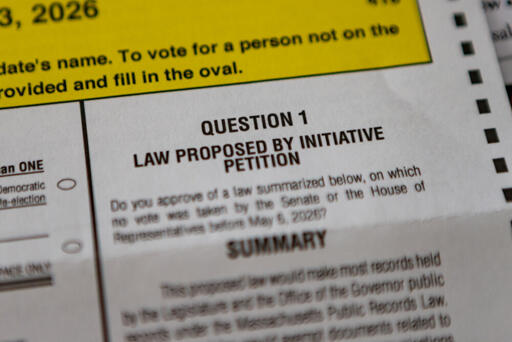
As people turn out to vote in Massachusetts on November 3, they’re finding their ballots several pages thicker than usual. This year there are nine ballot questions up for vote, on subjects from open party primaries to gun control, the most since 1994. That so many questions are going through this process rather than simple legislation reflects parallel tendencies: for more direct democracy on one hand, and lucrative opportunities for special interests on the other.
In the state of Massachusetts, ballot questions appear as the final step in the citizen-initiated process where ordinary people can propose laws themselves, rather than relying on legislators to introduce them. By collecting enough valid signatures for a “proposed statutory initiative,” these are first presented to the legislature for a majority vote. If that fails, a smaller number of signatures can place the statute on the ballot, where voters get the final say come election time (with permission from the Massachusetts General Court — more on that later).
This year, a whopping 47 initiatives were submitted either as proposed laws or state constitutional amendments for the 2026 and 2028 election cycles, respectively. For residents of bigger states like California, where 14 ballot measures are up for votes this year, this might not seem out of the ordinary. But in Massachusetts, there is longtime frustration over the slow, bureaucratic, and opaque nature of the state legislature. This is the primary motivator for attempting to go through the ballot question process, where interest groups gamble that voters will be sympathetic to their positions.
Beneath this tactical choice lies deeper questions about bourgeois democracy, elections, and who gets a say in the politics of our state. While political organizations like the Democratic Socialists of America have been issuing voter guides and canvassing on specific questions, few are challenging the terrain on which these questions appear.
Although anyone can file for an issue to appear on the ballot, the odds heavily favor big corporations and special interests who can turn out their deep pockets to get past the barriers imposed by the process. Much like how Super PACs work behind the scenes to orchestrate funding for political candidates, coalitions with nebulous names form to dump millions of dollars into campaigns supporting the various questions. The so-called “Coalition for Healthy Democracy,” which is backing a shift to “open primaries” and a two-tier election system, is funded by an overwhelming majority of high-paying individual donors linked to private equity and venture capital. In total, over $25 million has been raised by ballot question committees across all questions.
Some measures, such as one which would allow public defenders the right to collective bargaining and another which approves same-day voter registration, are meaningful progressive reforms that don’t face challenges from any particular special interest. Taken as a whole, however, the questions don’t meaningfully challenge the Democrat-dominated political system, especially because they are not backed by significant movements from below. At worst, they risk capping funding for social services or placing more power into the state to track gun ownership.
One question that didn’t make it onto the ballot this year was rent control. Despite clearing the hurdles for signature requirements and generating a significant campaign from the Left, the Massachusetts Supreme Court struck down a measure that would have imposed statewide rent stabilization and capping rent increases at five percent across most housing units.
Although the justification was based on language including exemptions for religious institutions (which the state has no problem declaring tax-free), the experience demonstrates two lessons: that state government and its judiciary consistently sides with corporate interests over working people, and that ballot measures are extremely limited in their ability to materially improve our lives.
Class Struggle, Not Ballot Measures
Our capitalist system makes it extremely difficult for popular demands to be realized. Although Massachusetts is a Democratic stronghold, its state government has consistently shown itself to be closely tied to wealthy investors, corporations, and even Trump’s ICE. This brings into question whether our state institutions, including the ballot question process, are really democratic, or if they are designed to limit the involvement of working people in decisions made over their own lives.
In one of the wealthiest states in the country dominated by healthcare, biotech, and academic sectors, with multi-billion dollar endowments for universities like Harvard and MIT and massive hospital systems like Mass General Brigham, there are enough resources to meet the needs of every resident in Massachusetts and elsewhere. The question is whether an independent workers movement can challenge these institutions to win reforms through class struggle and fight for an alternative vision of democracy.
In the context of a growing appetite for socialism and opposition to both political parties, it’s crucial to tap into the potential for a movement which can shift the balance of forces back in favor of the working class. Ballot questions can’t substitute this kind of movement, which must be driven from below by teachers, nurses, students, and the multiracial working class.
The post Ballot Questions in Massachusetts Showcase Need for Workers Democracy appeared first on Left Voice.
From Left Voice via This RSS Feed.