

By Atilio Boron – Oct 26, 2026
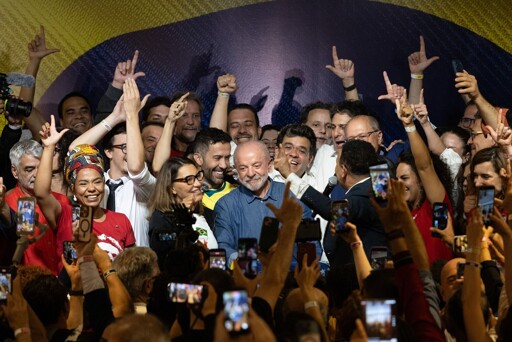
Luiz Inácio Lula da Silva’s victory in last Sunday’s historic presidential runoff leaves several lessons for future electoral processes in the region, especially in Argentina. Despite polls indicating a “technical tie” and, in some cases, major Brazilian media outlets suggesting a slight advantage for Flávio Bolsonaro, the voice of the ballot boxes shattered those self-serving and far-from-innocent conjectures. Lula won “by a landslide”: 51.8% against 48.2% of his rival. In absolute numbers, he received about 4.4 million more votes than his opponent, a difference equivalent to 3.45% of the electoral roll. Lula’s achievement was a political feat of enormous proportions, destined to have an influence beyond Brazil and Latin America.
What would those lessons be? First, that the existence of a well-organized political-electoral instrument with the ability to mobilize can make people who otherwise would not have voted turn up at the polls. The abstention rate in the second round was 19.2%, a two-point reduction compared to 21.2% in the first round and the lowest level since the 2006 elections. For that, PT (Workers’ Party) members had to leave their offices and take to the streets to win the people’s will, something they did not do in the first round. PT voters stayed at home in line with the triumphalism emanating from Brasília. Yet, faced with the threat that Bolsonaro’s victory represented, they decided to participate in the elections, and the results are here.
The “territory” is a crucial stage in any electoral process and can never be abandoned for television studios or the media in general. That was one of the gravest sins the PT committed in the first round.
Second lesson: unlike a few years ago, there are now “other territories” where battles must be fought. I am referring to social media, a crucial space controlled by a handful of reactionary tech magnates who command sophisticated communication apparatuses and modify perceptions and wills with their algorithms. The prevailing pessimism among broad sectors of the left and progressivism regarding this novelty rested on a false premise: the citizen’s helplessness in the face of machinations and manipulations of algorithms on various social media platforms. Lula’s epic comeback disproved the universal validity of that premise. Sure: Meta (WhatsApp, Instagram, Facebook, Messenger, Threads, Meta AI), along with X, are factors that can “format” the opinion of large sectors of the electorate. However, their effectiveness is far from irresistible and can be countered if organizations and popular forces build an adequate strategy dedicated to neutralizing those intentions. This requires the formation of a large contingent of digital guerrillas ready to fight in the digital galaxy.
The PT (and Lula) ignored it in the first round, but corrected course in the second with the results that we are celebrating today. This sudden awareness of the importance of the other territorial space, the digital one, was precipitated by the overwhelming success of Ana Elisa Santos Silva, a brilliant Afro-Brazilian 21-year-old who received the highest vote in history when she was elected as a federal deputy for the state of Minas Gerais. She did it not with her party’s support, but through tireless, daily activism on social media, which translated into almost two million followers on Instagram. This was a cannon shot that shook the PT leadership to its core and convinced Lula and the PT that the digital territory had been imprudently left in enemy hands.
Another young man, federal deputy André Janones, had been working hard on social media without much resonance among party leadership. Emboldened by Ana Elisa’s success, he took it upon himself to organize the “Lula Army” on WhatsApp and managed to assemble a shock force of ten million volunteers in just a few weeks. Two very clear lessons: return to the territory and enter the digital space. These are two of the most important keys that explain Lula’s historic victory.
The monumental importance of Lula’s victory will be analyzed in subsequent notes, but there is one that I must point out right now. This is the third lesson: imperialism is not omnipotent, and nothing could be worse than resigning ourselves to its threats or thinking that there are no possibilities to resist its predatory designs. Trump threatened the Iranian “regime” in a thousand ways, and even the US military now recognizes that it has lost that war. For more than 60 years, the US has been trying to destroy the Cuban Revolution, and it has not been able to and will not be able to do so.
In the case of Brazil, Trump shouted, blackmailed, threatened, and pressured in a thousand different ways to prevent Lula’s victory, but he could not neutralize the people’s will. He supported the Bolsonaro family, father and sons, with all his might and suffered a humiliating defeat. Not just Brazil, but all of Latin America, will never be the “backyard of the empire.” The empire is not invincible; let us throw that belief in the trash made in Hollywood. There will be moments of greater or lesser resistance, but ultimately the peoples will rebel sooner or later.
The far-right wave, which seemed on the verge of sweeping the entire continent, crashed against the will and patriotism of the Brazilian people. With this, the two largest economies and the two most populous countries in the region, Brazil and Mexico, stand as impregnable fortresses against Washington’s ambitions. It is up to us in Argentina, next year, to join this movement and put an end to the colonial project embodied by the once hyperactive and now silent user of X, Javier Milei, and the wrongdoers who accompany him.
Translation: Orinoco Tribune
OT/SC/SF
From Orinoco Tribune via This RSS Feed.