

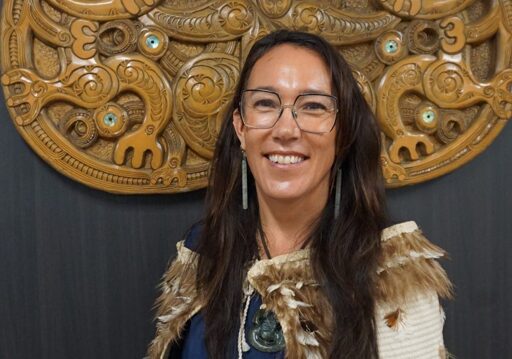

Professor Claire Charters (Supplied)
Compared with many other countries, New Zealand has extremely weak constitutional protections for Māori rights, writes Professor Claire Charters in this extract from her new book, Sovereignty: The Case for Constitutional Transformation.
Examples of other constitutions can provide food for thought when we come to consider the forms constitutional transformation might take in this country.
Here, I outline some of the key elements of the constitutions and laws of the United States, Canada, Australia, Scandinavia, Greenland and Mexico with respect to Indigenous peoples’ rights, and with an emphasis on Indigenous peoples’ self-determination.
It is starkly apparent that New Zealand’s constitution has extremely weak constitutional protections of Māori rights compared with these other countries, even if, on other measures, New Zealand has made some progress, such as in the revitalisation of te reo Māori.
Historical, social, cultural and political contexts are relevant in any comparison between jurisdictions, as well as, and I emphasise this especially, the demography of the countries being compared.
In Aotearoa, we have a comparatively large population of Māori, at 17.5 percent of those living here, which means that Māori influence politically is potentially stronger than Indigenous influence in other places (though perhaps not when compared with the position in Canada of First Nations, Inuit and Métis peoples, who make up 5 percent of the Canadian population).
Greenland has one of the highest proportions in the world of Indigenous peoples compared to total population; and Mexico has the largest number of Indigenous peoples as recognised by the state. (China, Indonesia and India have much higher numbers of Indigenous peoples in real terms, but do not officially recognise them as Indigenous under international law.)
It is important to stress that none of the laws and constitutions discussed here are anywhere close to being “perfect”, and the situation of Indigenous peoples’ rights in reality does not always measure up to the protections on paper. That is not to say the constitutions are window-dressing or that they disguise the reality. Law, including constitutions, is an important protection of rights, and transformation in law to respect Indigenous peoples’ rights can be instrumental in leading to better realities for Indigenous peoples.
Canada
Canada is of great comparative interest to Aotearoa given its western liberal pedigree, the British (and French) claim to sovereignty there, and the fact that there are treaties between Indigenous peoples and colonial powers.
Since the mid-1800s, there has been some, albeit paternalistic, provision for band (tribal) jurisdiction under the Indian Act 1876. In a watershed moment in 1982, the constitution of Canada was transformed to include the firm protection of First Nations, Métis and Inuit aboriginal and treaty rights.
These rights trump general human rights, meaning that aboriginal and treaty rights are protected as higher law. In other words, all Canadian law must respect those rights or risk being overturned. There is a plethora of cases that elaborate on what the rights are and hold governments to account, though some argue that the courts have not been as progressive as they might be.
The Canadian constitution does not include a right to aboriginal self-government, which many First Nations sought. But an extremely interesting recent development has been the passage of federal and British Columbia legislation to implement the UN Declaration on the Rights of Indigenous Peoples, as well as other law that provides for greater Indigenous peoples’ self-determination.
The federal United Nations Declaration on the Rights of Indigenous Peoples Act came into force on June 21, 2021. This act requires the government of Canada, in consultation and cooperation with Indigenous peoples, to, among other things, take all measures necessary to ensure the laws of Canada are consistent with the declaration, including the right to self-determination. The action plan that resulted from the act includes specific requirements in relation to, as examples, state action on violence against Indigenous women and health.
Significantly, it authorises the establishment of an independent Indigenous rights monitoring, oversight, recourse or remedy mechanism or mechanisms to provide Indigenous peoples with access to, and prompt decisions through, just and fair procedures for dispute and conflict resolution, as well as stipulating effective remedies for infringements of their individual and collective rights.
Similarly, British Columbia’s Declaration Act Action Plan, released in 2022 and based on 2019 legislation adopting the UN Indigenous Declaration for the province, outlines a whole-of-government roadmap for advancing reconciliation with Indigenous peoples through a renewed relationship of federal, provincial and Indigenous nations and governments based on recognition of rights, respect, cooperation and partnership as the foundation for transformative change.
Other landmark legislation supportive of Indigenous peoples’ self-determination has also been upheld by the highest Canadian courts. In a unanimous 2024 opinion, the Supreme Court of Canada accepted the inherent sovereignty of tribes in support of their authority with respect to the care of Indigenous children. The court also recognised that the legislation contributes to the implementation of the UN Indigenous Declaration.
Indigenous peoples have also incorporated the UN Declaration into their own policies. Note, for example, the Cree Nation Mining Policy that requires the agreement of their communities with respect to mining in the Eeyou Istchee James Bay territory, or the new Squamish impact assessments required for any development on their territories.
Treaty settlements in Canada include territory return and, significantly, agreements by the provincial and federal governments to realise Indigenous peoples’ self-determination by, for example, dividing up law-making power between the Indigenous government, the provincial government and the federal government. In the Nisga’a settlement in British Columbia of 1998–2000, for example, the Nisga’a tribal government gained jurisdiction over — meaning the authority to make its own laws in relation to — culture and language; actions on Nisga’a lands that may constitute a nuisance or trespass or a danger to public health, order, peace or safety; and the provision of social services.
Law schools have become important venues for change, too. Among other scholars, Professor Val Napoleon at the University of Victoria in British Columbia and Professor John Borrows at the University of Toronto have done groundbreaking work on Indigenous law. At Victoria University, students can now take a conjoint degree in Canadian and Indigenous law.
None of this is to say that Canada is some Indigenous utopia: it is not, and new governments may slow the pace of change. But there are some interesting developments going on.
Drawing on the example of Canada, in relation to New Zealand’s constitution, we might consider: constitutional entrenchment of Māori rights; laws to give effect to the UN Declaration; enforcement of Indigenous treaties; recognition of Indigenous laws; and agreement to jurisdiction sharing in our Treaty settlement process, or under a more fit-for-purpose arrangement.
United States
Under the United States Constitution, treaties with Native American peoples have the same status as federal law, meaning that they trump state law and can only be overturned by subsequent federal law.
The inherent sovereignty of the nearly 350 Native American tribes in the lower 48 states is expressed through their ongoing jurisdiction over their own territories. Tribal governments are thus a third sovereign, alongside the federal government and state governments. The federal and Indian tribe relationship is classified as “government-to-government”.
This translates into considerable tribal nation law-making power over their territories and people, and governmental infrastructure such as courts, and tribes often have their own constitutions.
Further, the US constitutional protections of rights do not apply in Indian country. In a very well-known case from 1978, the Supreme Court found that Indian tribes had sole jurisdiction to decide a case of alleged discrimination against an Indian tribal member. Similarly, in 2020, the Supreme Court denied the state of Oklahoma jurisdiction in criminal matters on Indian country, much of it in the capital city of Tulsa.
Nonetheless, Indian nations’ inherent sovereignty is subject to something called “congressional plenary authority”, which means that Congress can pass law applicable in Indian country. Notably, however, the United States has been operating under a self-determination policy since the 1970s, with the groundbreaking Indian Self-Determination and Education Assistance Act of 1975. Further, there are potentially limits on its power to act inconsistently with tribal nations’ authority under the “trust doctrine”, which requires the US to act in the interests of tribal nations and peoples.
Federal “trust” responsibilities are given effect also via self-determination contracts and self-governance contracts in areas such as health care, education and social services.
In New Zealand, we should consider ways to constitutionally recognise iwi and hapū “inherent sovereignty”, including greater jurisdiction over their territories, enforcing Te Tiriti via the constitution, and enforceable trust obligations on state government.
US federal and state governments have not shown a lot of enthusiasm for the UN Declaration on the Rights of Indigenous Peoples, although some have expressed their support of it and the country has signed up to various related obligations. This is potentially symptomatic of a wider lack of enthusiasm for international law in the US. Various tribes themselves have endorsed the declaration, as research from the University of Colorado has tracked.
The states of Alaska and Hawai‘i are different, and their histories unique and complicated. In contrast to the lower 48, and as a consequence of deals made in the 1970s, in Alaska there is very little territory over which the 230-odd Alaskan native governments can exercise jurisdiction, at least not in the same way as American Indians do in the south.
However, and potentially relevant to Aotearoa New Zealand, tribes do exercise some “personal jurisdiction”, meaning that they have some law-making power over their own citizens irrespective of where they reside. They make laws with respect to their own membership, determine their own form of government and justice system, rule over their own internal affairs, and generally have concurrent — with the state of Alaska — jurisdiction over domestic relations involving tribal members, including adoptions, child protection, domestic violence, marriages, divorces and probate.
Hawai‘i is different again. While there are some potential parallels with New Zealand, including that Hawaiian nations’ inherent sovereignty is not recognised under the constitution, the specifics of relevant law, and legal history, are somewhat different. The constitutional and legal system there is complicated and subject to intense politics at the state and federal levels. Accordingly, I won’t go into it here. But note that there are interesting lessons to be learned from Hawaiian sovereignty developments too.
Australia
Constitutional law with respect to Aboriginal self-determination is weak in Australia. Nonetheless, there have been some important developments recently.
In 2025, the Yoorrook Justice Commission tabled its finding with the Victorian Parliament that Aboriginal people continue to face the consequences of historical discrimination, and systemic injustice resulting from colonisation. On that basis, it put forward proposals for structural change, including a state government to Aboriginal government arrangement.
The treaty that sprang from this commission was signed between Victoria First Nations and the Victoria state government in November 2025 and is the first treaty signed between Aboriginal peoples and an Australian government. Under the treaty, Aboriginal peoples’ self-determination is recognised, consistently with continuing legal pluralism. The treaty is given effect through procedures facilitating Aboriginal participation in government especially. A First Peoples’ Assembly acts as the official voice and is comprised of elected traditional owners. A “self-determination fund” has been established, also to facilitate economic development.
There is much to be learned here about processes to recognise iwi and hapū self-determination, and to strengthen Māori participation in governance.
Greenland
Greenland, an autonomous territory of the Kingdom of Denmark with a population almost 90 per cent Inuit, saw worldwide press attention in 2025 and 2026 due to US interest in annexing it.
Greenland exercises self-determination via two major pieces of Danish legislation, passed in 1978 and 2009 respectively. These gave the Greenlandic government, the Naalakkersuisut, and legislature, the Inatsisartut, law-making power over the territory of Greenland in relation to almost every issue except defence, currency and foreign affairs. Importantly, Denmark also recognises Greenland’s ownership rights over all minerals and resources.
The people of Greenland have the right to choose independence from Denmark, and the independence movement has draft constitutions and plans for constitutional reform to make that happen.
What is interesting, here, from my point of view, is the extent to which Denmark recognises the ongoing Inuit sovereignty over their territories, and rights to minerals and resources in their territory.
Mexico
Mexico is a particularly interesting case study for the consideration of Indigenous rights and self-determination. It has a large population of Indigenous peoples, who make up 20.5 per cent (25.8 million) of its total population. The federal government has been expanding state constitutional law to better make spaces for Indigenous self-determination, including law-making power, especially in accordance with agreements reached with the Zapatista movement in the 1990s, when an Indigenous-led uprising demanded greater Indigenous rights, autonomy and land reform.
These reforms have been considerably influenced by international law and policy such as the International Labour Organization’s 1989 Indigenous and Tribal Peoples Convention, which is binding under Mexican law, and, more recently, the UN and the American Indigenous Declarations.
In practice, many Indigenous peoples in Mexico regulate themselves — under their own traditional laws and governance structures, in their own territories — with different degrees of interference from the state, depending on the regions and the federate states (Oaxaca, Chiapas, Guerrero, Michoacán, Jalisco). In some cases, Indigenous peoples are effectively municipalities or local governments, because they are the vast majority in the area, particularly in Oaxaca.
In the most recent iteration of constitutional transformation in Mexico, the 2024 amendments gave greater effect to the already enshrined right of self-determination. These amendments centre on the designation of Indigenous peoples as “subjects of public law”. In addition to acquiring formal recognition as self-determining legal subjects, they receive taxpayer funding to run their own governments, for example, in undertaking infrastructure and social projects. Work is currently under way on legislation to clarify how these rights — some of the most progressive in the world — will be realised in practice.
Lessons for New Zealand here include, as in the other cases, the extent to which Indigenous peoples’ self-determination, including law-making power, is recognised, and that constitutions can be transformed to support that self-determination.
Sápmi
Sápmi is the region in the north of Norway, Sweden, Finland and far-western Russia inhabited by the Sámi people. There are individual, independent Sámi parliaments in Norway, Finland and Sweden; a Saami Council that operates across the four Sápmi countries; and a Sámi Parliamentary Council that facilitates coordination between the three parliaments.
The very existence of Sámi parliaments and elections is significant. Each of the parliaments is different, legally and culturally. The Sámi Parliament in Norway, for example, serves as the Sámi’s elected political body to promote political initiatives and “carry out the administrative tasks delegated from national authorities or by law to the Sámi Parliament”. Its remit is broad, namely, “any matter that affects the Sámi people”. In other words, it influences the Norwegian state government in law-making — arguably somewhat like a “voice”.
Its influence lies mainly in its legal right to be consulted, its legal rights in specific acts and in its symbolic power. Influence through these legal rights rests on the Norwegian authorities respecting and enforcing acts and Supreme Court decisions that are in favour of Sámi rights, but the symbolic power is not limited by, and goes beyond, the Norwegian authorities.
The Sámi in Norway and Finland have also been playing a leading role in recourse to the international oversight mechanisms of the UN Indigenous Declaration and other human rights and labour rights conventions to apply pressure on states to uphold their rights. The results have been significant. Sámi groups in Norway, for instance, successfully relied on a specific international human rights treaty to fight back against a wind turbine development that was established on their territories without their or the affected reindeer herders’ consent.
While Sámi parliaments do not have as much independent law-making power as we have seen in some of the other examples above, the fact of a “parliament” and their considerable influence in state law-making in Sámi territory is potentially inspiring for constitutional transformation here.
A world of power-sharing
There are many further examples of Indigenous peoples’ self-determination in Asia, the Pacific and Africa that could be cited here if there was space. Case studies would include the recognition of Indigenous peoples’ land rights under customary law in Malaysia, redress in Taiwan, and the ongoing and constitutionally recognised regulation of peoples under their customary law in the Pacific.
This is an extract from Sovereignty: The Case for Constitutional Transformation, published by BWB.
Claire Charters (Ngāti Whakaue, Tainui, Tūwharetoa, Ngāti Tahu, Ngāti Whaoa and Ngāti Rehia) is a professor at Waipapa Taumata Rau University of Auckland, specialising in Indigenous peoples’ rights under international and constitutional law. She co-directs Te Puna Rangahau o Te Wai Ariki, the New Zealand Centre for Indigenous Peoples and the Law. She has also worked for the United Nations, including at the UN Office of the High Commissioner for Human Rights, and the New Zealand Human Rights Commission.
The post A world of power-sharing appeared first on E-Tangata.
From E-Tangata via This RSS Feed.