

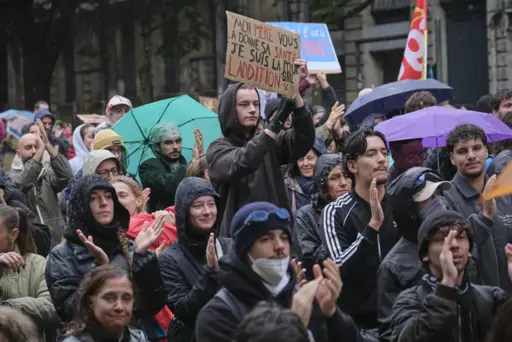
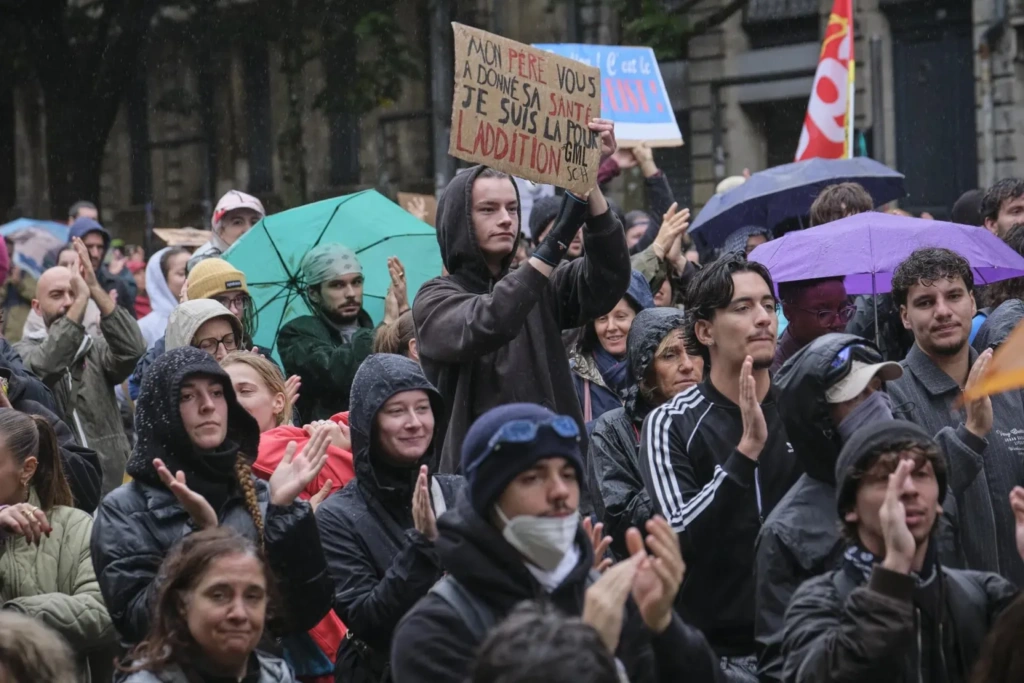
Europe youth protests spread to Germany and France as authorities deploy 220,000 police, close Paris metro stations and businesses board up windows.
Related: France’s Leftist Leader Melenchon Calls for Peaceful Demonstrations
Europe Youth Protests Spread Across Germany and France
Europe youth protests have spread to Germany and France as young people prepare for major demonstrations during the Halloween weekend. In Germany, organizers expect around 150,000 people to take part in demonstrations in approximately 30 cities, including Berlin, Frankfurt, Cologne and Munich.
The mobilization is led by the youth movement Gen Z regelt, which translates as “Gen Z has got this.”
The group is protesting against the rising cost of living, deteriorating schools and universities, cuts to public spending and the possible return of compulsory military service. Organizers say more than 160,000 people had registered online to participate in demonstrations across 34 cities.
The movement is calling for greater investment in education, health, climate protection, social justice and affordable living conditions. Protesters also demand a greater political voice for young people and criticize decisions made without regard for the needs of the younger generation. German authorities have deployed thousands of additional police officers nationwide ahead of the protests.
Luxury shops along Berlin’s Kurfürstendamm shopping street have boarded up their windows as a precaution. The German movement has explicitly rejected violence against people and property, but authorities remain concerned that extremist groups could try to exploit the demonstrations.
Europe Youth Protests Reach Germany’s Major Cities
Deutsche Welle | Federal Ministry of the Interior—Germany
The Europe youth protests in Germany are inspired by demonstrations that have shaken France for three consecutive weekends.
Organizers of Gen Z regelt say young people face “crises and hardly any prospects.”
They argue that spending cuts in education, culture and healthcare are being made at the expense of younger generations while large corporations continue to profit. Protesters also criticize the flow of billions of euros into rearmament while schools, universities and public services remain underfunded.
The movement opposes Germany’s push to expand its military through a new voluntary service model and fears that mandatory conscription could return. Demonstrations are planned in Berlin, Frankfurt, Cologne, Munich, Hamburg and other cities.
Berlin police expected around 10,000 people at the Brandenburg Gate. The protests coincide with Halloween, a date organizers chose to maximize participation and visibility. German authorities say they expect the demonstrations to be largely peaceful but have warned of possible attempts by extremist groups to infiltrate the movement.
The German protests reflect a wider wave of youth-led mobilization across Europe, including demonstrations in France, Italy and Spain. In Serbia, student-led activism helped bring about the electoral defeat of the country’s long-time leader earlier this year.
Young Europeans are increasingly framing their demands around education, housing, employment, climate protection and democratic participation. The German movement has called for another peaceful demonstration on November 20 to demand better educational conditions.
France Deploys 70,000 Officers for Third Protest Weekend
French Ministry of the Interior | France 24
France is preparing for its third consecutive weekend of protests over the cost of living and education.
The government has deployed 70,000 police officers and gendarmes nationwide for the demonstrations on Saturday, November 1. Authorities have closed more than 40 metro stations in Paris, including stations near the Champs-Élysées, the Élysée presidential palace, the National Assembly and ministry headquarters.
Transport authorities have also announced changes to tram services in the Paris metropolitan area. The French Interior Ministry warned of a very high risk of public disorder during the Halloween weekend. Officials have prohibited protesters from wearing face-covering masks during demonstrations. French law allows masks in public during festivities, but prohibits them near demonstrations considered likely to lead to disorder.
The measures come after protests on October 17 degenerated into some of the worst rioting France has seen in years. Authorities estimated that about 550,000 people attended the October 17 demonstrations, when hundreds of shops were looted.
The following weekend, around 410,000 people marched in largely peaceful demonstrations, although police made more than 1,300 arrests. Despite restrictions imposed by prefectural authorities to disperse gatherings, intermittent clashes between protesters and security forces were reported last weekend.
Businesses in Paris and other cities have boarded up windows and reinforced storefronts ahead of the new mobilization. The French protests began in late September, led by high school students demanding improvements to deteriorating school buildings, teacher shortages and lack of resources.
The movement later expanded to include unions, community groups and citizens protesting inflation, education cuts and limited opportunities for young people.
🇩🇪🚨 Jóvenes protestan en más de 30 ciudades alemanas contra el coste de la vida, los recortes en educación y sanidad y el plan de servicio militar obligatorio. En Múnich, tiendas de lujo tapiaron escaparates. 175.000 inscritos.
Cortesía: Viory#teleSUR #31Oct #manif31octobre… pic.twitter.com/isNib0Am1k
— teleSUR TV (@teleSURtv) October 31, 2026
Businesses Brace for Damage During Halloween Protests
French Chamber of Commerce and Industry | Reuters
The Europe youth protests have prompted concern among business owners in both countries. In Germany, luxury retailers in Berlin have covered their windows with protective panels to prevent damage during the demonstrations. In France, shops and businesses in Paris and other major cities began boarding up windows on Friday.
The president of the French Chamber of Commerce, Alain Di Crescenzo, expressed concern about possible property damage during the protests. He said the coincidence with Halloween increases anxiety among local merchants because some groups could use costumes to conceal their identities. Business groups have urged authorities to protect shops, restaurants and other commercial establishments.
Critics argue that the focus on property damage risks overshadowing the social grievances that have driven young people into the streets. Organizers of the German protests have rejected violence and said their mobilization is intended to be peaceful. They argue that the underlying causes of unrest—rising prices, underfunded schools, precarious employment and limited opportunities—must be addressed.
The protests have also raised questions about the balance between public security and the right to demonstrate. Human rights organizations have warned that heavy policing, mass arrests and restrictions on movement can discourage peaceful participation. The Halloween weekend will test whether European authorities can protect public order without criminalizing youth dissent.
🇫🇷 El Gobierno francés fortalece las medidas de seguridad para este sábado 1 de noviembre mediante el despliegue de 70.000 agentes, drones, helicópteros y blindados.#Francia #Protesta #teleSUR #31Oct pic.twitter.com/tPqQ6eiuyr
— teleSUR TV (@teleSURtv) October 31, 2026
Geopolitical Context
The Europe youth protests reflect a broader political and social crisis affecting the European Union. Young people across the continent are facing rising living costs, housing shortages, precarious employment, education cuts and limited prospects for social mobility.
The demonstrations have spread beyond France and Germany to countries including Italy, Spain and Serbia. The movement has become a challenge for governments that have prioritized fiscal discipline, military spending and security policies while cutting public services.
In Germany, protesters have criticized the contrast between austerity in education and healthcare and increased investment in rearmament. The issue is particularly sensitive as European countries increase defense budgets amid the war in Ukraine and growing security tensions with Russia.
The protests could pressure governments to redirect resources toward social investment, education, housing and climate protection. They may also influence electoral politics, particularly among younger voters who have become increasingly mobilized across Europe.
The French government’s decision to deploy 70,000 officers and close dozens of metro stations shows the scale of official concern. The German response, with thousands of additional officers and preventive measures by businesses, reflects fears that the movement could expand.
The Halloween weekend demonstrations will be a major test for European governments and for the youth movements demanding a different future.
From teleSUR English via This RSS Feed.