

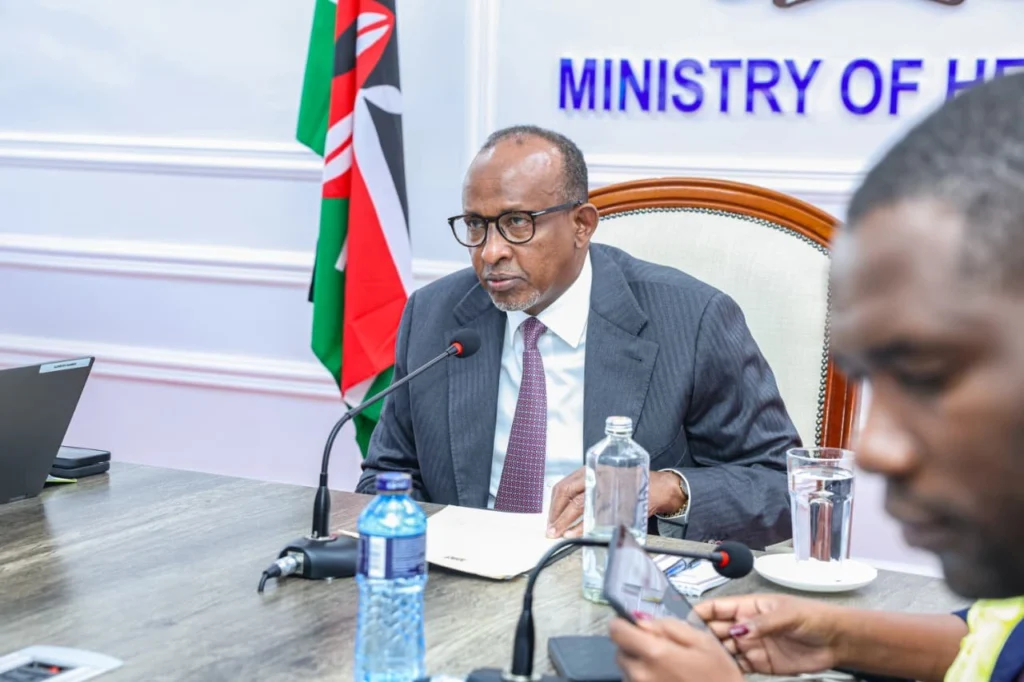
Kenya’s government defended its Ebola management in the country this Saturday after travel restrictions were imposed by Saudi Arabia due to the detection of cases of the disease in Kenyan territory.
[Kenya Reports Its Second Ebola Dead in the Country: Kenya Defends Its Ebola Management Following Travel Restrictions Imposed by Saudi Arabia](https://www.telesurenglish.net/kenya-defends-its-ebola-management-following-travel-restrictions-imposed-by-saudi-arabia/)
“The measures taken are not only excessive, but they are not supported by the current epidemiological situation in the country,” said Kenya’s Ministry of Health in a statement, expressing its “concern” about these measures.
To “dispel any doubt,” the ministry recalled that the first detected case was imported from the Democratic Republic of Congo (DRC), and that they “quickly” traced all 135 contacts related to that person.
“In addition, we proceeded to quarantine 118 contacts. The eight confirmed cases were linked to the index case, involving healthcare workers (four) or close relatives (four),” the ministry detailed.
“We have NOT had any transmission of the disease outside of this group and I reiterate that we have NO evidence of community transmission. We have NOT reported any new cases since October 19, 2026. We have lost one patient, in addition to the index case,” it added.
MINISTRY OF HEALTH ON MEASURES TAKEN BY THE KINGDOM OF SAUDI ARABIA REGARDING THE EBOLA SITUATION IN KENYA pic.twitter.com/KhsR7pWW31
— Ministry of Health (@MOH_Kenya) October 31, 2026
It also clarified that the seven patients still receiving medical care “are progressing favorably” and that five of them have already tested negative for the Ebola virus after completing treatment, awaiting a second test scheduled for this Monday.
The ministry expressed optimism about these patients, and expects them to return home on Tuesday along with 46 other quarantined contacts who have not developed any symptoms, joining the twenty contacts who had already been discharged.
Saudi Arabia suspended its citizens’ travel to Kenya on Friday and halted visa issuance to people from that country after an assessment of the Ebola situation.
Saudi authorities also prohibited entry to travelers arriving directly from Kenya or through third countries if they had remained in Kenya or another country experiencing an active Ebola outbreak in the 21 days prior to their arrival.
The first case detected in Kenya was a 40-year-old Kenyan man who had lived for the past seven years in the DRC, where he received treatment in several Congolese hospitals before traveling by road to Kampala (Uganda’s capital) and then flying to Nairobi, where he landed on October 3 and died two days later.
The DRC declared its seventeenth Ebola outbreak on May 15 – the second deadliest in history globally – affecting eight Congolese provinces and, according to the latest official balance, has caused 10,351 confirmed cases and 5,026 deaths so far.
It also spread to neighboring Uganda, where the World Health Organization (WHO) declared the end of the outbreak on August 26, after counting twenty confirmed infections, including fifteen imported from the DRC, among which there were two deaths.
Along with the DRC, Uganda, and Kenya, one more case linked to the Congolese outbreak has been detected in Nigeria. Similarly, a case linked to the epidemic has been detected in France. In addition to this infection, three people evacuated after contracting the virus in the DRC were taken to the Netherlands (one) and Germany (two).
The Bundibugyo strain, which is causing the current epidemic, lacks specific medical treatments, although the WHO is working on two vaccines that have started human trials and have so far proven safe, but their development could take several months.
From teleSUR English via This RSS Feed.