

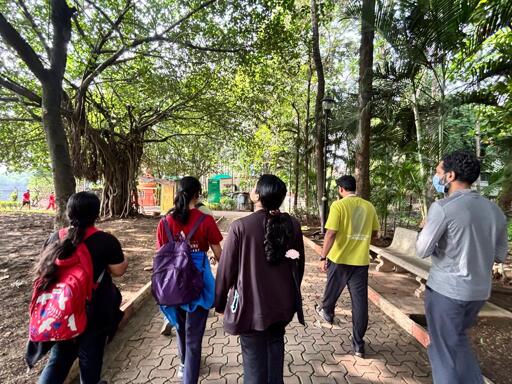
PUNE, India — On a quiet Saturday morning, away from the usual urban rush of Pune, citizens gather at the Madhavrao Scindia Garden along the banks of the Mula River. Out on the water, two fishers quietly navigate their boat surrounding a dense forested area on the other side of the river; the cooling shade and chirping birds feel like a natural alarm that you would want to listen to every day. Such a setting is increasingly rare in a bustling metropolis like Pune, where the population is estimated at 7.9 million, yet these volunteers arrive every weekend equipped with measuring tapes, smartphones and a keen curiosity to explore and document the trees in the city’s riparian zones. On this particular Saturday, a group of seven visits a city park along a riverbank, where trees stand tall against the sky. The volunteers belong to Pune River Revival, a grassroots movement formed in response to the Pune Riverfront Development Project, a large urban redevelopment plan along the Mula-Mutha rivers aimed at creating promenades, recreational spaces and infrastructure along the riverbanks. The total estimated cost of the project is around 4,727 crore rupees (about $500 million). “We started organizing the tree mapping exercise systematically in 2024,” explains Raghunandan Patil, a volunteer with the group. “While our volunteers used to do tree mapping earlier manually, at that time, the group was not well-versed in the technical details of how to map a tree properly and create thorough documentation.” Patil adds that now they…This article was originally published on Mongabay
From Conservation news via This RSS Feed.