

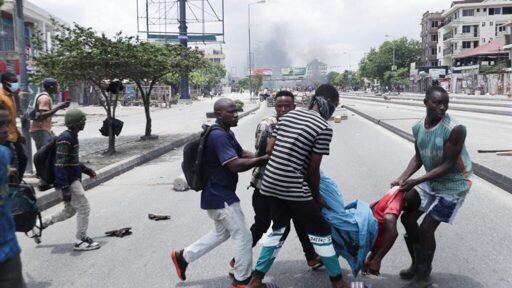

One year ago, Tanzanians went to the polls in an election followed by deadly protests and a violent security crackdown. The immediate unrest has since subsided, but the wounds remain, and the demand for justice continues.
President Samia Suluhu Hassan was declared the winner with 97.66% of the vote, an overwhelming margin that came with the exclusion of opposition forces and mounting restrictions on political activities. The disputed election and the violence that followed exposed deep tensions over Tanzania’s political realities, democratic participation, and the state’s response to dissent. A year on, not a single official has been held responsible, and justice for the victims and their families remains out of reach.
A disputed election and a deadly crackdown
The violence of October 2025 did not erupt out of nowhere. In the months before the election, opposition parties faced mounting restrictions, rallies were disrupted, and political activists were arrested. Opposition leader Tundu Lissu was arrested in April 2025 and charged with treason, which kept him out of the electoral process. His party, CHADEMA, was then excluded from the election after refusing to sign the electoral code of ethics.
These developments narrowed the space for political competition and raised serious questions about the credibility of the vote. When Tanzanians went to the polls on October 29, demonstrations broke out in several parts of the country, including Dar es Salaam, Arusha, and Mwanza. Protesters rejected the election and demanded political change. The government responded with a nationwide curfew and an internet shutdown that lasted several days, cutting off communication and the flow of information as security forces confronted demonstrators. Human rights organizations documented the use of lethal force against protesters and other people who did not pose an imminent threat to life.
The scale of the killings became clearer in April 2026, when a government-appointed Commission of Inquiry reported that at least 518 people had died during the election-related violence. Thousands were also injured.
The opposition has maintained that the death toll was higher, with concerns also raised about people who remain missing and the circumstances in which bodies were removed from hospitals and mortuaries.
The commission submitted its report to President Samia Suluhu Hassan on April 23. However, the full report has not been made public, leaving victims’ families and the wider public without access to the complete findings.
One year later, impunity remains
On October 28, Amnesty International marked the anniversary by condemning the continuing failure to hold officials accountable for the violence.
“Not a single official has been criminally investigated, let alone prosecuted and punished for the excessive force that Tanzanian security forces used against protesters,” said Tigere Chagutah, Amnesty International’s Regional Director for East and Southern Africa.
The organization also warned that, instead of opening a transparent accountability process, the authorities had increasingly used counterterrorism laws against opposition supporters and government critics.
The withholding of the inquiry report has become a central obstacle to establishing the truth. Without public access to the findings, it remains difficult to scrutinize the evidence, understand the circumstances surrounding individual deaths, and determine what action the government intends to take against those responsible.
President Samia Suluhu Hassan and other government officials have repeatedly portrayed the protests as a foreign-backed attempt to overthrow the government, a coordinated plot to destabilize the country. Activists argue that this narrative serves to deflect responsibility, evade justice, and excuse the authorities’ slow response to the killings. Tanzania today is marked by silence, not reconciliation. And a nation cannot simply move on from an atrocity of this scale without truth and accountability.
From BT News via This RSS Feed.