

For ILPS Philippines, these agreements are not merely defense arrangements. They further integrate the country into Washington’s military operations and its First Island Chain strategy against China.
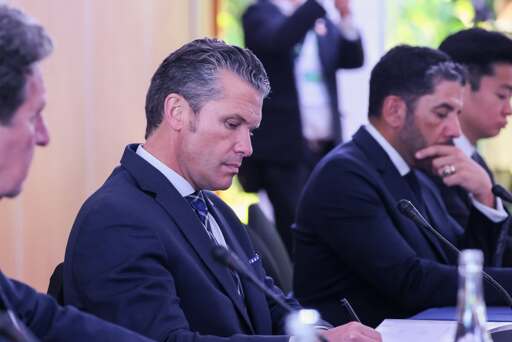
The arrival of US Secretary of War Pete Hegseth in Cebu on October 28 has drawn condemnation from progressive groups, which warned that the Philippines is increasingly being drawn into Washington’s military and economic agenda at the expense of national sovereignty.
The International League of Peoples’ Struggle (ILPS) Philippines said Hegseth’s visit for the ASEAN Defence Ministers’ Meeting comes amid the Trump administration’s aggressive expansion of US military power in the Asia-Pacific and its preparations for greater confrontation with China.
The group described Hegseth as a key enforcer of Washington’s war agenda, criticizing Ferdinand Marcos Jr. administration for facilitating the growing US military presence in the country.
Under the Marcos administration, military cooperation between Manila and Washington has expanded through weapons deployments, joint military exercises, intelligence-sharing arrangements, and the increased use of Philippine military facilities.
Read: Missiles, markets, and massacres: Balikatan, ASEAN, and the war logic of US imperial decline*
During Hegseth’s March 2025 visit, the two governments agreed to deploy advanced US weapons, including the Navy Marine Expeditionary Ship Interdiction System (NMESIS), expand high-end military exercises, strengthen defense-industrial cooperation, and launch joint cyber operations.
In October 2025, Hegseth and Defense Secretary Gilberto Teodoro Jr. announced a Task Force-Philippines to strengthen joint military planning and operational coordination. This was followed by a 15-year Communications Interoperability and Security Memorandum of Agreement (CISMOA) in May 2026, further institutionalizing secure military communications and information-sharing between the two countries.
These arrangements build on the General Security of Military Information Agreement (GSOMIA) and the nine Enhanced Defense Cooperation Agreement (EDCA) sites across the Philippines.
For ILPS Philippines, these agreements are not merely defense arrangements. They further integrate the country into Washington’s military operations and its First Island Chain strategy against China.
The consequences, the group warned, extend beyond military installations. With US forces increasingly capable of operating advanced weapons from Philippine territory, Filipino communities could become vulnerable to retaliation in the event of a regional conflict.
Read: Tacloban fishers slam Balikatan exercises
During the May 2026 Balikatan exercises, the US military reportedly launched a Tomahawk cruise missile from Tacloban Airport, demonstrating its capacity to conduct long-range missile strikes from Philippine soil.
“Our country is being transformed into a forward operating platform for US wars, exposing millions of Filipinos to the grave danger of retaliation, devastation, and death in a regional conflict,” ILPS Philippines said.
The group accused the Marcos administration of sacrificing national independence through its cooperation with Washington, using tensions with China to justify the expanding US military footprint.
While opposing China’s coercion and violations of Philippine sovereign rights, ILPS Philippines stressed that the country cannot defend its sovereignty by allowing another foreign power to use its territory for military operations and war preparations.
Beyond military intervention
Progressive groups also warned that US intervention is not confined to military installations. They said Washington’s economic initiatives are tied to its strategic interests in the Philippines, particularly its access to critical resources and supply chains.
The Kilusang Magbubukid ng Pilipinas (KMP) condemned Hegseth’s visit, saying the US is pursuing both military access and greater control over resources through initiatives such as Pax Silica.
A US-led initiative seeking to secure supply chains for critical minerals, semiconductors, and other strategic technologies, Pax Silica could further open Philippine resources to foreign corporate interests, the farmers’ group warned.
KMP Chairperson Danilo Ramos said the Marcos administration is surrendering the country’s sovereignty on both military and economic fronts.
“Washington wants access not only to our territory for its war machine but also to our resources. Farmers and rural communities will bear the cost through land grabbing, resource extraction and displacement,” Ramos said.
The group linked these concerns to the Luzon Economic Corridor, which includes infrastructure and industrial projects that could support US strategic and commercial interests.
Among the developments cited were shipyard expansion in Subic for US military warships, an ammunition hub, and a proposed advanced manufacturing park in Capas, Tarlac, intended to support artificial intelligence supply chains.
KMP warned that these projects could intensify pressure on agricultural and ancestral lands, further threatening farmers already struggling with landlessness, agricultural imports, and the encroachment of mining and large-scale energy projects.
For rural communities, the group said, the consequences could mean displacement, loss of livelihood, and greater foreign corporate control over the country’s natural resources.
“Marcos is selling out our sovereignty on both military and economic fronts,” Ramos said.
US military assistance?
Meanwhile, the Makabayan coalition demanded transparency over the latest military arrangements, including their financial implications, operational scope, and consequences for national security.
The growing US military presence has also raised questions about Washington’s own record of military operations and accountability.
Hegseth has faced scrutiny from US lawmakers over strikes on suspected drug-trafficking vessels in the Caribbean, including reports of a follow-up strike that killed survivors. Lawmakers have likewise raised concerns over alleged violations of the laws of armed conflict involving civilian casualties in Iran, including the bombing of a girls’ school in Minab.
Ramos said such incidents must be investigated and those responsible held accountable.
“Deliberately killing defenseless survivors and unlawfully attacking civilians are grave violations of international humanitarian law. US officials like Hegseth must be held accountable, not shielded by their political and military power,” he said.
For progressive groups, the issue goes beyond Hegseth’s visit. It reflects the continuing struggle against foreign intervention and the country’s dependence on a military power whose geopolitical interests do not necessarily serve the Filipino people.
ILPS Philippines stressed that opposing US intervention does not mean tolerating aggression by China or any other foreign power. Rather, genuine sovereignty means refusing to surrender Philippine territory, resources, and military facilities to foreign strategic ambitions.
“The region needs genuine peace, not more American missiles, military bases, and troops,” the group said.
KMP called on Filipinos to oppose US intervention and demand the termination of unequal military agreements that facilitate Washington’s military presence and operations in the country.
“We must fight for genuine independence, national sovereignty and freedom,” Ramos said. (AMU, RVO)
The post Hegseth visit exposes deepening US military intervention in the Philippines appeared first on Bulatlat.
From Bulatlat via This RSS Feed.