

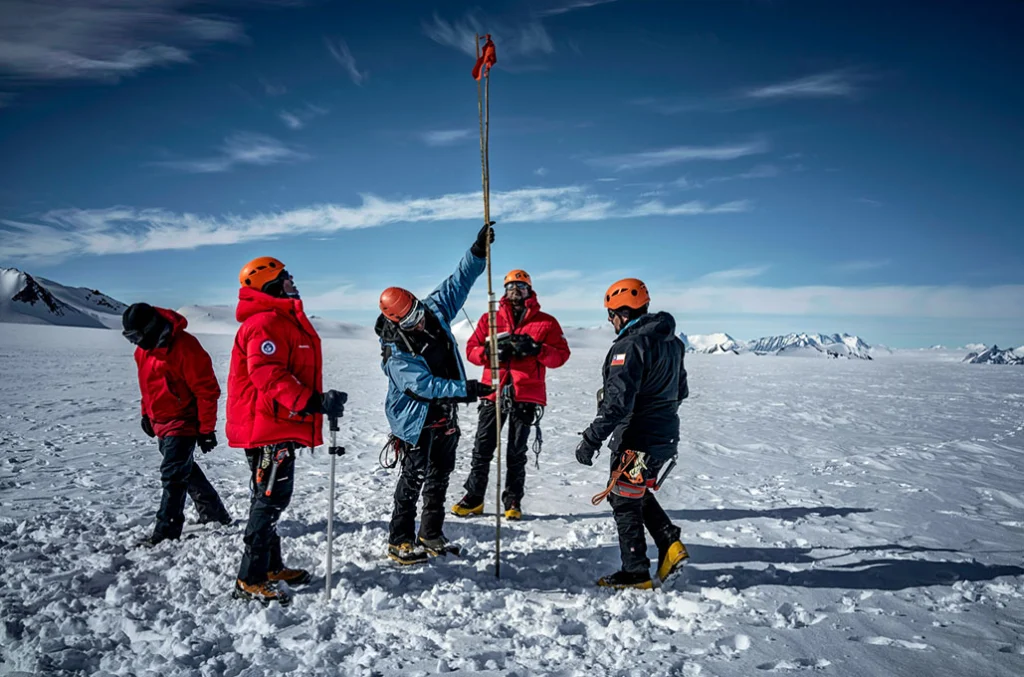
On Thursday, Chilean Minister of Foreign Affairs Francisco Pérez Mackenna inaugurated the 63rd Antarctic Scientific Expedition (ECA) in Punta Arenas. The expedition is set to carry out nearly 50 research projects, involving more than 150 scientists, between November and the end of March.
RELATED:
29 Detained at March Marking Anniversary of Chile’s 2019 Social Outburst
During the ceremony, the Foreign Minister highlighted Chile’s position as a gateway to Antarctica for international scientific programs. “The trust Chile enjoys in the realm of international relations, combined with the prestige of its public institutions and its logistical and infrastructural capabilities, represents an asset of immense value for attracting more countries to choose Chile as their gateway to Antarctica,” stated Pérez Mackenna.
Foreign Ministry reports indicated that the number of countries using Punta Arenas as a departure point for the “White Continent” has grown from 12 to 21 since 2004. Furthermore, eight other nations have occasionally passed through the capital of the Magallanes and Chilean Antarctic Region. “They use our ports and airports for their own vessels and aircraft, or they contract services in the Magallanes region to facilitate their scientific expeditions,” the minister noted.
The 63rd Antarctic Scientific Expedition includes operations at bases and field camps across the Antarctic Peninsula and the continent’s interior—including Union Glacier, located approximately 1,000 kilometers from the South Pole. The teams will conduct research across various fields of Antarctic science—an area the Foreign Minister described as strategic and inseparable from Chilean foreign policy.
En PuntaArenas se realizó el lanzamiento oficial de la 63ª Expedición Científica Antártica “ECA63” del @inach_gob
En la instancia, el Comandante en Jefe de la Tercera Zona Naval, Contraalmirante Juan Soto Herrera, presentó los detalles del despliegue naval para este periodo pic.twitter.com/qXflnac41l
— Armada de Chile (@Armada_Chile) October 30, 2026
The text reads, “The official launch of the 63rd Antarctic Scientific Expedition (“ECA63″) by @inach_gob took place in Punta Arenas. During the event, the Commander-in-Chief of the Third Naval Zone, Rear Admiral Juan Soto Herrera, presented details regarding the naval deployment for this period.”
“Antarctic science has a very distinct character; it is a strategic field—inseparable from Chile’s foreign policy—that helps us explore and gain knowledge about a vast territory that is crucial to the future of both our country and the planet,” Pérez Mackenna affirmed.
Antarctica is governed by the Antarctic Treaty—originally signed by 12 countries in 1959—which designates the territory for science and international cooperation. Although the continent is not governed by any single state, countries such as Chile, the United Kingdom, Argentina, Australia, and New Zealand maintain historical territorial claims.
Chile operates at least ten Antarctic bases: five are managed by the Chilean Antarctic Institute (INACH), while the others are run by the Armed Forces. The country’s first facility in the territory was inaugurated in 1940, following a decree by President Pedro Aguirre Cerda that established the boundaries of the Chilean Antarctic territory.
#Chile | Severe storms and a tornado have damaged at least 25 homes in Requínoa and left over 10,000 customers without power in Santiago. Authorities have issued emergency alerts as they assess the damage.#ChileStorms #Tornado #SevereWeather #teleSUREnglish pic.twitter.com/p1XM7r0xMz
— teleSUR English (@telesurenglish) October 27, 2026
From teleSUR English via This RSS Feed.