


Nika Bartoo-Smith
From Massachusetts to Washington state, there are 31 ballot measures across Indian County that Native voters will have a chance to vote on in the November midterm elections that would impact Native people in 15 states.
Measures span across a dozen issues including voting rights, abortion access, 2SLGBTQ+ rights, cannabis regulation and beyond. In total, there are more than 140 statewide ballot measures in 39 states that the voters will decide on these midterms.
“[Ballot measures] are issues that really do impact how we commute, how we get from our homes to our workplace, how the parks in our cities get built,” said Jade Begay, Tesuque Pueblo and Diné, a policy campaign strategist. “For Natives right now, a lot of it pertains to our voting rights.”
Her biggest advice for voters is to take the time to do your research before heading to the polls or mailing in your ballot.
Many ballot measures are likely to impact tribes and Native people, even if that language is not explicitly mentioned in the text of the measure itself.
“Sit with your ballot. Have your phone ready to be able to ask questions, Google things, learn more about the various ballot issues, and make your decision in informed ways,” Begay said. “We’re on a countdown, so if you don’t have time for a mail-in ballot, I would just say text your friends, text your families, go online.”
As always, there is also a big push for Native people to get out and vote.
“I think it’s really important for tribal citizens to get out and vote,” said Mary Jane Oatman, citizen of the Nez Perce Tribe, executive director of the Indigenous Cannabis Industry Association. “For those of us that are active in our local tribal politics, we see the impact of just a dozen people turning out to vote can completely sway a local tribal election, and so thinking forward towards our impact as Indigenous peoples in the larger political framework, our voice matters.”
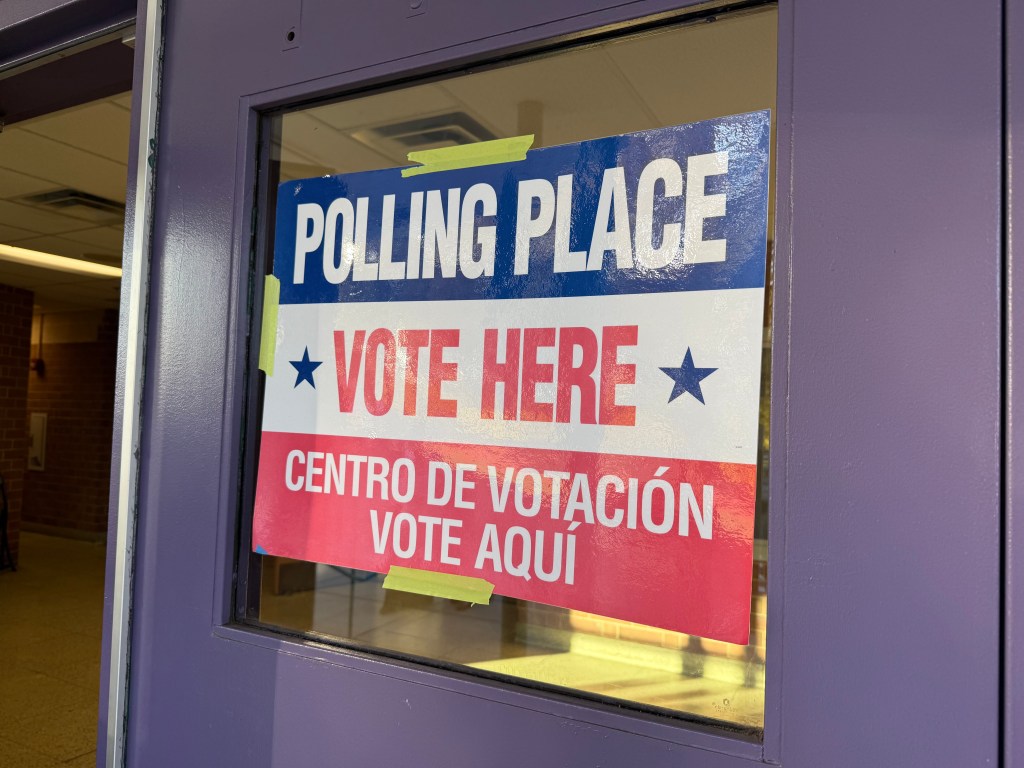
For mail-in-ballot states, ballots are already out. Check your local election deadlines for early voting. Election day is Nov. 3.
Below are more than 30 ballot measures across a dozen issues, spanning 15 states, that will be voted on this November. This is not an exhaustive list, as there are over 140 ballot measures across the country. Refer to ballots in your state for a full list.
Sex, Gender and 2SLGBTQ+ Rights
This midterm election season, states across the country have anti-2SLGBTQ+ initiatives on the ballot. There are seven specific measures across five states that could impact Native people living in those states.
Recently, the Affiliated Tribes of Northwest Indians passed a resolution opposing two of the measures in Washington state.
“This is really an attack on all people’s bodily autonomy because it’s not going to stop with them coming for trans kids or trans kids in sports or trans kids access to healthcare,” said Shelby Chestnut, a citizen of the Assiniboine Nation on the Fort Peck Reservation and executive director of the Transgender Law Center. “It’s going to be as far-reaching as we can imagine, and you will see if we don’t defeat these ballot measures in a variety of states across the country, we will expect them to be more, and we will expect them to be more severe.”
Washington
In Washington state, Initiative 638 aims ban transgender girls from participating in girls’ sports and would require students to obtain a statement signed by a health care provider “that verifies the student’s biological sex, relying only on one or more of the following: The student’s reproductive anatomy, genetic makeup, or normal endogenously produced testosterone levels.”
Initiative 001 would open access to all of a students’ school records — including medical and mental health records — to parents or legal guardians, potentially increasing student safety risks, especially for 2SLGBTQ+ students without accepting homes.
“In Indian Country, we all know and love someone who’s a Two-Spirit person, and therefore, to me, that means that we are all from Two-Spirit families,” said Se-ah-dom Edmo, executive director of Seeding Justice, Shoshone-Bannock, Nez Perce and Yakama. “So this impacts every family in Indian Country.”
Arizona
In Arizona Proposition 318, if passed, would prohibit schools and athletic associations from allowing a student, athlete, employee, or other individual from using a restroom, locker room or other private space that is not designated for their sex, which they define as being that which is marked on a person’s birth certificate.
Colorado
In Colorado, Proposition 134, if passed, would require school sports teams, from kindergarten through college level, to be separated based on sex, defined as “biological reproductive systems.”
Proposition 135, if passed, would prohibit healthcare professionals from providing gender-affirming care surgeries for those under 18.
Missouri
In Missouri Amendment 3, of passed, would repeal the constitutional right to reproductive freedom except in cases of “medical emergency, fetal anomaly, rape, or incest.” It would also prohibit gender transition surgeries for individuals under 18, including prescribing or administering hormones of puberty-blocking medication.
Nebraska
In Nebraska, Measure 442, if passed, would require schools to designate sports teams as male, female or co-ed and attempt to ban transgender girls from girls’ sports.
In terms of support for 2SLGBTQ+ rights, one state does have a marriage equality measure on the ballot.
Virginia
In Virginia, Question 2, if passed, would remove a provision the constitutional same-sex marriage ban that states that marriage is between one man and one woman. It would prohibit the state from denying a marriage license based on sex, gender or race.
Cannabis
In two states, Idaho and Massachusetts, measures related to marijuana regulation are on the ballot. Both states are home to seven federally recognized tribes in total, two in Massachusetts and five in Idaho.
These ballot measures come on the heels of an April 2026 decision in which the Department of Justice reclassified medical marijuana from a Schedule I to a Schedule III drug, making it acceptable for medical use on a federal level.
“I think it is a slippery slope right now with the federal government undergoing the Controlled Substance Act rescheduling of cannabis from a one to a three, because that process also did not create a clear pathway or exemption for tribes and tribal healthcare programs that are providing medicinal cannabis,” said Mary Jane Oatman, citizen of the Nez Perce Tribe, executive director of the Indigenous Cannabis Industry Association.
In Idaho, HJR 4, if passed, would grant the state legislature exclusive authority to legalize marijuana, narcotics and other psychoactive substances.
Based in Idaho herself, Oatman sees the proposed ballot measure as an “over-politicization” of marijuana. She encourages tribes to engage more with opportunities within the cannabis industry and to remain educated on what laws could mean for cannabis use on tribal lands.
“I think it is a huge attack on democracy, and it is just reprehensible that the legislature has moved in this direction with more of a constitutional provision when the voice of the people should be what really matters,” Oatman said.
In Massachusetts, Question 8, if passed, would eliminate recreational marijuana sales and growing cannabis by an individual in their home. For those over 21, it would allow the possession of up to one ounce of marijuana without penalties. For those under 21, it would make possession of up to two ounces of marijuana a civil offense.
“I do believe that is more prohibitive attempts to criminalize Black and Brown communities,” Oatman said.
Voter IDs
Six states across the country have measures on the ballots related to voter identification, an issue that Jade Begay, Tesuque Pueblo and Diné, a policy campaign strategist, encourages people to look at intersectionally. She sees a need for more policies that increase access to voting, versus the below measures that seek to restrict access.
“When the voter identification piece comes into question, it can create barriers as far as whether a tribal ID is acceptable,” Begay said. “For a lot of our community members, I’m thinking our elders who you know may not have a need for a driver’s license or a state ID, but they also want to be engaged, they want to participate in democracy, and they should be able to use their tribal ID.”
Arizona
In Arizona, Proposition 144, if passed, would change the state’s election laws, including specifying that only U.S. citizens may vote in any Arizona elections. It would also require voters to show a government-issued ID to cast a ballot.
California
In California, Proposition 39, if passed, would require voters to show a government-issued ID when casting a ballot and would also require election officials to use government data to confirm voter citizenship and report each year the percentage of each county’s voters that have been citizenship-verified.
Colorado
In Colorado, Amendment 84, if passed, would require voters that are sending their ballots by mail to provide both a signature and an identification number which could include the last four of their Social Security number or a REAL ID number.
Massachusetts
In Massachusetts, Question 4, if passed, would allow for same-day voter registration.
Nevada
In Nevada, Question 7, if passed, would amend the constitution to require voters to present photo identification when voting in person or to provide the last four digits of their driver’s license or Social Security number if voting by mail.
North Carolina
In North Carolina, the Require Voter Identification Amendment, if passed, would require photo identification for all voters, not just those voting in person.
Abortion
Abortion access is on the ballot in three states: Idaho, which is home to five federally recognized tribes; Nevada has 28 federally recognized tribes; and Virginia, home to 11 state recognized tribes, seven of which are also federally recognized tribes.
Idaho
In Idaho, abortions are currently prohibited unless they are needed to save the life of the pregnant person or in the cases of rape and incest. Proposition 1, if passed, would create a statute saying that people have the right to reproductive freedom and privacy declaring that the state can regulate abortion only after the “point of fetal viability.”
Nevada
In Nevada, Question 6, if passed, would establish a right to abortion in the state constitution allowed until “fetal viability.”
Virginia
In Virginia, Question 1, if passed, would create a state constitutional right to reproductive freedom.
Education
There are two education-related measures in two states across the country, New Mexico, home to 23 federally recognized tribes, and North Dakota has five federally recognized tribes and one Indian community.
New Mexico
In New Mexico, Bond Question 3, if passed, would permit up to $230 million in bonds for improvements at higher education institutions, special schools and tribal schools, that would be funded by a statewide property tax.
North Dakota
In North Dakota, Constitutional Measure 2, if passed, would require all public schools to provide a free breakfast and a free lunch to all students.
Election System
There is one election system measure on the ballot, in Alaska, home to 229 federally recognized tribes.
Alaska
In Alaska, Ballot Measure 2, if passed, would repeal the Top-Four rank choice voting method that was adopted in 2020.
Environment
A measure on the ballot in California could change the environmental review process, especially when tribal consultation is part of it.
California
In California, Proposition 45, if passed, would make changes to the California Environmental Quality Act, including establishing deadlines for public agencies to complete environmental review and limiting their existing requirement to consider project alternatives that would reduce environmental impact. The proposition does include a tribal consultation component, requiring applicants to consult with federally recognized tribes.
Health
There is one health-related question on the ballot in South Dakota, home to nine federally recognized tribes.
South Dakota
In South Dakota, Constitutional Amendment , if passed, would make it so Medicaid expansion was dependent on the federal government covering at least 90% of the program’s cost.
Hunting and Fishing
There is one hunting and fishing measure on the ballot in Colorado, home to two federally recognized tribes.
Colorado
In Colorado, Amendment 83, if passed, would establish a right to hunt, fish and take fish and wildlife through “traditional methods,” allowing the state legislature and executive agencies to regulate it.
Judicial
There is one judicial question on the ballot in Montana, home to 12 federally recognized tribes.
Montana
In Montana, CI-132, if passed, would add a section to the state constitution requiring that all judicial elections remain nonpartisan.
Race and Ethnicity
There are two race and ethnicity questions on the ballot across the country, one in Arizona, home to 22 federally recognized tribes and the other in Wisconsin, home to 11 federally recognized tribes.
Arizona
In Arizona, Proposition 142, if passed, would prohibit the state from “race or ethnicity based preferential treatment” of applicants, students or employees. It would also prohibit state funds from going toward training or offices that promote “preferential treatment toward or discrimination against an individual or group due to their race or ethnicity.”
Wisconsin
In Wisconsin, Question 3, if passed, would prohibit the government from granting preferential treatment or discrimination based on race, sex, color, ethnicity or national origin.
Religion
There is one religion based question on the ballot in Wisconsin, home to 11 federally recognized tribes.
Wisconsin
In Wisconsin, Question 2, if passed, would prohibit the state from closing or forbidding gatherings in public places of worship during declared emergencies, including public health emergencies.
State Government
There are two state government questions on the ballot, both in New Mexico, home to 23 federally recognized tribes.
New Mexico
In New Mexico, Constitutional Amendment 1, if passed, would require bills to become law if the governor does not sign or veto them within a required timeframe. This would eliminate the governor’s pocket veto.
Constitutional Amendment 4, if passed, would establish a salary for state legislators that is equal to the statewide annual median household income.
This story is co-published by Underscore Native News and ICT, a news partnership that covers Indigenous communities in the Pacific Northwest.
The post Statewide ballot measures could impact Native voters appeared first on ICT.
From ICT via This RSS Feed.