

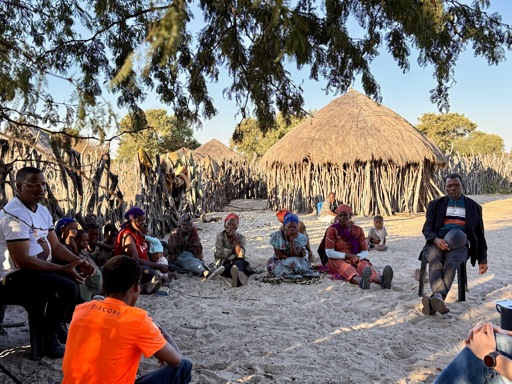
Nearly two decades after winning a landmark court case against their forced removal from ancestral lands in Botswana’s Central Kalahari Game Reserve, Indigenous San communities may finally be closer to securing broader, legally protected rights to the land they have called home for generations. The Central Kalahari Game Reserve was established in 1961 both to protect wildlife and to provide a sanctuary where San communities could continue their traditional way of life. But beginning in the 1990s, the government relocated residents to settlements outside the reserve. The United Nations documented how the authorities justified these policies on conservation grounds and the costs of providing public services. Some residents moved under government resettlement programs, while others resisted. Following the withdrawal of basic services in 2002, further forced relocations led to a prolonged legal battle. In December 2006, Botswana’s High Court ruled in favor of Roy Sesana and other San applicants, finding that they had been unlawfully deprived of possession of their land. But the ruling did not resolve the wider question of Indigenous land rights in that area. A change of government in November 2024 opened the possibility of a different approach. Botswana’s new president, Duma Boko, a former human rights lawyer involved in the San people’s legal struggle, had firsthand knowledge of their grievances. In March 2025, his administration announced an interministerial committee to examine the situation of San communities, including their relocation, land claims, cultural rights and possible return to the reserve. The committee subsequently began consultations with affected…This article was originally published on Mongabay
From Conservation news via This RSS Feed.