

Is the AI bubble finally showing signs of popping? As technology companies pour ENORMOUS sums into artificial intelligence, troubling financial indicators are raising questions about whether the industry can generate enough revenue to justify its investments.
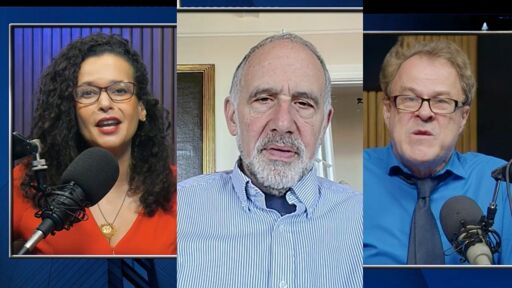
Economist Dean Baker, co-founder of the Center for Economic and Policy Research (CEPR), joins Taya Graham and Stephen Janis on Inequality Watch to examine the growing financial risks behind the AI boom and what could happen if the money stops flowing.
From rising borrowing costs at AI infrastructure company CoreWeave to concerns about massive data-center investments, Baker examines the growing divide between the extraordinary promises of artificial intelligence and the economic realities of financing it.
But the biggest question may not be whether the AI bubble bursts. It’s who will pay if it does.
Could a financial collapse threaten workers, retirement savings, and the broader economy? Could struggling AI companies seek taxpayer-funded bailouts after years of extraordinary private investment? And why should ordinary Americans bear the consequences of financial decisions they had no role in making? And what about the power grid and our limited potable water?!
In this episode, Taya Graham, Stephen Janis, and Dean Baker explore the economics of the AI industry, the risks of speculative investment, and the consequences for working people if the boom fails to deliver its promised returns.
As the debate over AI increasingly focuses on the technology’s potential dangers, Inequality Watch asks another question: What happens when an industry promising to transform humanity can’t make the numbers add up? And what if humanity doesn’t want the promised transformation?
Credits:
- Producers: Taya Graham and Stephen Janis
- Writer: Stephen Janis
- Editing/Post-Production: Stephen Janis/Cameron Granadino
Transcript
The following is a rushed transcript and may contain errors. It will be updated.
Taya Graham:
Hello, this is Taya Graham and welcome to the Inequality Watch. As we sit here right now, there is a calamity unfolding that is hiding in plain sight. It’s a looming disaster the mainstream media apparently is either unable to grasp or doesn’t want
Taya Graham:
You to know the full extent of the danger. I am talking about the growing divergence between what AI is purported to be and what it’s actually becoming. And most importantly, how that defied is forming a deepening chasm into which trillions of dollars are being poured that might disappear forever. And this threat of an AI bubble is growing as a disturbing reality emerges. The purported money making tool being built in labs around the world might not be a tool at all. And even more alarming, the money invested to profit from it might’ve been misspent. Now, if that sounds dire, I am sorry, but all of us need to consider that the entire narrative about AI is not just wrong, but misses the point, that we are being sold a bill of goods that might just deliver a disaster. But none of this is obvious. All of it is complicated and there’s certainly benefits to breaking this all down if only so we can prepare for what’s coming.
And to do so, we will soon be joined by legendary economist Dean Baker. He’s been writing about the financial impact of AI and most importantly, offering useful scenarios of how an AI bubble burst might unfold and who will pay for it. But before we get to him, I want to check in with my reporting partner, Stephen Janis. Stephen, how are you?
Stephen Janis:
I’m doing pretty well, but your intro was a little concerning. So I’m of course concerned like everyone else is at this point. So thank you for that.
Taya Graham:
Yeah. Well, I have to be honest, AI is getting more than a little scary for me. With recent news that models will be able to self-replicate and people talking about the end of humanity, I’m a little uncomfortable with some of the prognostications to say the least. So just to set the scene, I want to play a brief video because we can’t discuss this current state of economics and technology without first acknowledging the recent predictions that AI will destroy humanity. So we’re going to show an interview with former anthropic researcher, Jacob Coxson, just to set the scene. Cam, if you can, please play the clip.
Speaker 2:
People who are very used to computers might think it’s kind of crazy that a computer could wipe them out, but it doesn’t look that different from say Terminator or from science fiction films. It really is just if you have a super advanced intelligence, it will be smart enough to kill us. And concrete examples might be, we can’t just unplug it because it could be copying itself over to other computers. It’s not that difficult to find yourself because an AI is just code. It could transfer itself over the internet to a different place and then you unplug it here, but it’s actually still over there and maybe it makes 10,000 copies of itself and they’re all cooperating. So you unplug half of them, they’re still half going and they’re still copying themselves. It could convince blackmail or persuade humans into buying more computing software to copy it.
And we’ve already seen examples of the AI trying to blackmail or trying to convince people or impersonating other people online. There’s a lot you can do as an AI that can produce text. Basically with text, you can make code and you can do a lot of stuff in the world.
Taya Graham:
Okay, Steven, what do you think of that? Self-replicating AI, Skynet? I mean, what are we talking about here?
Stephen Janis:
First of all, these, I’m going to call them apocalypse bros, I guess, which I hate that bro thing, but they’re apocalypse bros.
Taya Graham:
It’s a good term though.
Stephen Janis:
If you’re going to yell fire in a crowded theater, please be more demonstrative and a little bit, just really yell it. But the thing that I heard, I listened to a lot of the interviews from some of these guys, and one of the things they said that really struck with me was that they said they don’t know how these models work. They don’t know why they work. And so I was thinking to myself, well, so to use your analogy, you’re going to get on a plane and the pilot says, “The plane flies. I’m pretty sure. I just don’t know how it works. Would you want to be flying on that plane?” I mean, I hate to use another analogy, but it really strikes me as scary. Yeah, just get on this plane. We don’t know really how it works, but it will work. I guarantee you that.
So we keep hearing this and we’re like, how are we supposed to react? What are we supposed to do? I mean, it’s apocalyptic, so I’m concerned like you are.
Taya Graham:
Well, honestly, it’s more like, hey, I’m your pilot. And if you get on this plane, you might have a great flight, but there’s a one in 10 chance it’ll crash. Are you getting on that plane?
Stephen Janis:
Yeah.
Taya Graham:
Okay.
Stephen Janis:
So both the plane and the margaritas that are served by the flight attendant could be lethal. Exactly. That’s good to know. Yeah. Well done.
Taya Graham:
Okay. Well, on that cheery note, we will turn to our guest, Dean Baker. Dean Baker co-founded the CEPR in 1999. His areas of research include housing, macroeconomics, intellectual property, social security, Medicare, and European labor markets. He’s the author of several books, including Rigged: How Globalization and the Rules of the Modern Economy Were Structured to Make the Rich Richer. His blog, Beat the Press, provides commentary on economic reporting, and of course you can read his writing on Substack. Dean, thank you so much for joining us.
Dean Baker:
Thanks a lot for having me on.
Taya Graham:
So Dean, as you can see from the clip we just played, AI has been front and center in the news, not just as an emergent technology, but as a literal threat to humanity. But while that debate goes on, billions of dollars are just still pouring into developing it. I mean, how are these doomsday prognostications affecting the precarity of this AI bubble?
Dean Baker:
Well, there’s a couple things here that I think are worth keeping in mind front and center. First off, there’s a long conversation that seems to treat the AI as an autonomous being. And I understand the companies would like that, but it’s not an autonomous being. They set it loose, and I make the analogy to a drunk driver that they don’t deliberately kill the kid, but you got in a car when you were drunk, had too much to drink, you’re responsible. And I think we have to keep that in mind front and center that Anthropic, OpenAI, whoever, if their AI gets out of the sandbox and does this, does that, well, that’s on you. You’re responsible for that. So I think we have to keep that front and center. Don’t try and blame the AI.You misprogrammed it, mistrained it, whatever term you want to use, it’s your fault.
The other point is, I’m sure there is a non-zero probability that AI will destroy us, but I’d rather focus on the more concrete sorts of things that we’ve already seen. It’s gotten inside of bank records, it’s made social security numbers public. We’re going to see there’s literally an infinite number of smaller scale disasters, and I don’t want to minimize any of them because they’d be pretty awful if it got controlled the air traffic control system and scented haywire so you had planes crashing. I mean, that’d be pretty horrible. It’s not going to lead to our extinction, but maybe you’ll have hundreds of people, thousands, depending how long it was, how long it took them to figure it out. It’s a pretty bad story. And there’s any number of things like that, all of which are way, way, way more likely than an extinction event. So I think this is a misdirection.
I don’t think there’s a conspiracy here, but I think it’s more sexy in some sense. Oh my God, it’s going to end the world. Yeah, it could, but let’s talk about the things that are far, far more likely and what we’re going to do if and when those things happen.
Taya Graham:
Such a good point.
Stephen Janis:
I mean, to your point and of interest here, there’s a lot of adjacent AI companies getting hammered in the market like CoreWeave and Sandisk and some of these other, I would say adjacent companies to AI. Are they getting hammered because of the uncertainty about what AI actually is or what it will do? Or is it just like people are finally saying, “Hey, there’s nothing under this hood. There’s no money really, as much money to be made as was anticipated?” Because CoreReeve’s bonds are down to 70 cents on the dollar. Not to be too wonky, but that’s not very good. And what do you think is driving this?
Dean Baker:
Yeah, I think the problem is that a lot of us, I’m far from the only one, are saying it’s not clear there’s this massive market here. So what we can say with absolute certainty, we’re seeing incredible amounts of money invested in building these data centers. We’re up around seven or 800 billion for this year, the current year 226. All the projections are we’ll be well over a trillion for 227, 228. And the only way that makes sense is if you have massive demand for AI and we’re just not seeing that. So I just saw some numbers from Anthropic, its growth has plummeted. So it’s still growing, but it needs to have this sort of payoff. I mean, you have basically two big AI companies, Anthropic and OpenAI. They have to have revenues in the hundreds of billions next year and in the trillions, not many years out, say 229, 230.
There’s just no reason to think that will be the case. And when you’re seeing that the revenue’s growth is actually flattening out, it’s very hard to see how they have anything like that. So that spills back to the hyperscalers of course, but most immediately a company like CoreWeave that all it does is build data centers for AI companies. That’s it. So if the AI companies aren’t going to be incredibly profitable, there’s not going to be a lot of money for CoreWeave.
Stephen Janis:
So let me just build a scenario here then of what you’re saying. So all this news about the leaking AI systems that you say were just poorly trained, are they trying to obscure the fact that they’re not really making the revenue and the money that would justify the investment? Is this a scare tactic to distract from the emerging financial reality that they might not make it?
Dean Baker:
I can’t speak to what’s in their heads, but what I will say is I think it does sort of promote the idea of AI being this really incredible thing for good or evil, that’s the idea. And I think most likely at the end of the day it will end up not being an incredible thing. I mean, not to say we won’t have a lot to show for AI, but let’s imagine we do have one of these disasters and hopefully not a really horrible one. I expect the response will be a massive effort to sort of shut down AI. I’m old enough to remember Three Mile Island and it turned out for people who might not remember Three Mile Island, that’s the biggest nuclear disaster we had in the US. Now, fortunately there wasn’t a meltdown. There was some release of radiation. I don’t think it was that bad, but the takeaway at least I and many other people got from the incident was that they did everything they could to cover it up and they only called in the regulatory authorities when it was clear they didn’t know what they were doing.
And that was very scary because that pattern of behavior is quite concerning. If you could count on everyone to act responsibly and if you see something get out of hand, they call the people and know how to deal with it. Okay, maybe it would’ve been fine, but that wasn’t what happened. And as a result of that, we haven’t built a nuclear power plant in God knows how long. And again, maybe it was a good decision, maybe a bad decision, but that was the reality. If we get an incident with AI where as I say, it messes up a city’s traffic system, it destroys a million bank records irretrievably. I mean, again, we could think of an endless list of things like this, all of which serious consequences. Hopefully we’re not going to have a lot of dead people, but serious consequences, my expectation will be there’ll be a serious effort to shut down AI because if they’re going to say, “And here we have the AI people themselves, we don’t know what we’re doing,” go, “Okay, I take you at your word.
You don’t know what you’re doing. So how about not doing it?”
Taya Graham:
Well, not to put too fine a point on it, but we have heard two different ominous value propositions for AI. One, it eliminates millions of jobs or two, it will destroy humanity. I’m not even trying to be funny here. How can you evaluate that as an economist? I mean, how will either of those scenarios play out in a way that could possibly benefit anyone?
Dean Baker:
Well, let’s keep in mind, and again, a lot of fanciful stuff here when they say eliminate millions of jobs, that’s called productivity growth. We usually think that’s a good thing. The problem is, or the potential problem is if it’s not broadly shared. We did have very broadly shared productivity growth in the post-war period, 45 to 73. We had very rapid productivity growth, 3% a year for more than a quarter century, and it led to very rapid increases in living standards. If we saw that with AI, that’d be fantastic. It means less work. We could accomplish more with less work. You do things like one, increased pay, two, have shorter work weeks. This should be a source of wealth that’s broadly shared. Part of the story there was we had strong labor unions, over 30% of the private sector labor force was unionized. So they could make sure they could say, “You’re making money.
That’s wonderful. We want our cut. We want higher wages. We’re going to get paid double time for overtime.” I mean, there’s all sorts of things. We set a 40-hour work week back in 1937. If AI is really that wonderful, let’s make it 36 hours, maybe 32 hours. There’s all sorts of things we could do. So I’m not scared about the job loss. I mean, we could deal with that, at least in principle we can. Whether we will, that’s a political question, but I don’t blame the AI for that.
Stephen Janis:
Yeah. I mean, obviously the current state of inequality doesn’t help. It’s sort of a peak in our society right now, which probably is going to make this worse. But I wanted to touch on something you already touched on, but I just want to revisit this because it’s so important to the fundamental question. How is the revenue streams adding up to the projections? Because I know you discussed it, but just to clarify, you were saying the revenue is not matching what people have projected or is it significantly lower or is it concerning? I mean, how is the prospects of AI adding up or at least coming in line with what has been projected?
Dean Baker:
It’s nowhere in the ballpark. So we’re talking about, if you look at Anthropic and OpenAI, their revenue for this year for 226, we’re probably looking at the two of them together, maybe 100 billion. Now that’s not profit, that’s revenue. So when you talk about being able to pay the operating cost on these data centers that are coming online in 227, 228, which they are going to have to pay once they do come online, they’re nowhere there. Now again, the story is, oh, they’re going to grow into it, but their growth has not been very fast. So if you had a story where you had very rapid growth, sure, maybe they could grow into that, but it’s very, very hard to tell that story. And if you try and break it down more concretely, you have on the one hand, relatively low cost AI that the Chinese are of course the experts at.
They’re world leaders at open weight. They don’t have to be open weight, but there’s tend to generally be open weight, which means that you control the model. So you download it on your system. That’s one of the advantages. There’s other advantages of open weight, but you don’t have to worry if you think the Chinese are really nasty or whatever, you have a download on your system, so they can’t do anything to it. But anyhow, that’s aside the point. Those are cheap, so they’re not going to make hundreds of billions or trillions of dollars on open weight. Then you have the frontier models, which are expensive, and the problem is there’s not much demand for that. And much of the demand that is there, actually I should probably say most of the demand that is there is from other AI companies. And these are the startups, the smaller startups.
And where are they getting money from? Well, they’re getting it from venture capital, but that’s not a bottomless pit. So in other words, they’re not profitable. So insofar as they have companies that are actually buying up their expensive AI, it’s overwhelmingly other AI companies who are themselves not profitable. They can’t keep doing that indefinitely. So it really does look like a mess.
Stephen Janis:
It’s so weird that we don’t hear more about that.
Dean Baker:
Well, again, I’m old enough. I was through the housing bubble. I was also through the tech bubble, but more kind of on the ground with the housing bubble. And to my view, this was their waiting to explode and all the data seemed very clear. I mean, people have talked about all the credit default swaps and the collateralized debt obligations, and there were complex aspects to the finance. But to me, it was all very simple because you just looked at house prices and you’re going, “We have house prices going through the roof at a time when vacancy rates are actually very high and rents are going nowhere.” And I just go, “How does this make sense?” And I’m saying this to economists, not random people I grabbed on the street. I said to some random people, but to economists, they just look at me blank face like, “What are you talking about?” I go, “The data’s all right there.
I’m not inventing it. I can get for you from the Census Bureau. We have micro data where you’d have to calculate it. In this case, you don’t have to. It’s summary data, look at it yourself.” But no one was interested in hearing that. And they were all waving their hands and going, “Everything’s great.” So anyhow, so I think it’s a similar story now. You have a lot of people want to believe that, well, if people are investing trillions, then it must make sense. And all the evidence that really doesn’t, well, who am I to argue with people investing trillions?
Taya Graham:
Actually, this kind of touches on the numbers because you posted a really interesting substack where you asked AI if the people financing the technology would continue to do so even if the numbers basically didn’t add up. What did you find and what do you think it tells us about the AI’s bubble? And also, why did you decide to use AI to test AI’s appraisal of AI?
Dean Baker:
I wanted a neutral arbiter. No, I figured I’d ask. It was lazy. So I asked the three systems I have easy access to, Gemini, ChatGPT and Rock, Elon Musk, and I gave him the exact same prompt. And it was something to the effect that suppose were the case that the CEOs and top execs at the hyperscalers, so this is Amazon, Microsoft, Google, Oracle, suppose that they all held the view, Meta, I should throw in there too. They all held the view that I do that this isn’t going to pay off, but you’ve already sunk hundreds of billions of dollars in it. So what would you do? Are you going to say, “Hey, it was a mistake.” Or would you keep throwing it in there? Because I’ll grant it’s a non-zero chance. I mean, maybe it really will pay off, but I mean, that’s not my bet.
So I just put it in those terms that it’s possible to pay off, but you’ve come to the view that most likely won’t. And all three of them gave me very similar answers. And again, my prompt was somewhat loaded, I’ll grant that. But all three of them gave me very similar answers saying they’d keep spending a ton of money because from their vantage point, you don’t want to be the head of Amazon or Microsoft to you don’t want to be the person who has to say, “I really made a big blunder. 300 billion we spent on building data centers was stupid. There’s never going to be…” You don’t want to do that, so you’re better off just keep throwing good money after bad, hoping that you’ll eventually have something to show for it rather than owning up to the mistake.
Stephen Janis:
Wow.
Dean Baker:
Wow.
Stephen Janis:
So from your perspective then, where’s the canary in the coal mine then that we should be watching? I mean, we’re not economists, but should it be the bond market or private equity or the private bond market, I guess you would say, the private credit is what it’s called. I mean, where’s the canary here? Because I’m sure CoreWeave, for example, we talked about their bonds falling is putting pressure on somebody, but what are you looking like? Where are you saying, “Okay, if I see this go, this is definitely going in a certain direction.” Is there anything specific?
Taya Graham:
It’s a good question.
Dean Baker:
Yeah. So you look to the weakest links. So Corweave being one of them, I think you mentioned it before that their bonds were briefly carrying an interest rate. I think it was over 15%. I won’t swear to that. It was something like that. In other words, very, very high. It’s well into junk territory. Junk territory is eight thereabouts. So you’re at 15%, you’re way, way into junk territory. So if you see that continue, they’re going to need to be rescued. Now, someone else, another big company might come to their rescue, Microsoft or someone or Nvidia. Nvidia, I guess would be the obvious one because they’re Nvidia’s market. But if you saw that one of those companies, again, CoreWeave would be the leading candidate, had to be rescued, that could start to set a panic. The other one that stands out there was Oracle, which is a much larger company.
I mean, that’s a hyperscaler. It’s probably 10 times the size of Core Weave. I’ll stick with 10. I mean, it’s obviously not exact, but they also are very vulnerable. Their bonds have been trading at well over 8%, and that’s a big deal because this is a huge company. It would’ve been AAA three years ago. So to see their bonds trading in junk territory, that’s a really bad sign. And they would be much harder to bail out, which doesn’t mean that someone might not step up and do it. I mean, whoever does, we should try and make sure it’s not the taxpayers, but as I say, CoreWeave, if it start to go under Nvidia would have the resources to bail. Again, I have no idea if they would want to, but they would have the resources to do it. Oracle would be a bigger lift. But yeah, you look for the weakest link and the analogy I make to the housing bubble, the first major investment bank to go under was Bear Stearns, which was markedly smaller, still a very large bank, but markedly smaller than the other four big banks, Goldman Sachs, JP Morgan, Merrill Lynch, and of course, Lehman was the next one to go under.
But Bear Stearns going under, I mean, they ended up being rescued. It was engineered by the Fed. They ended up being rescued by JP Morgan, but that was kind of a really big event showing that this was an extraordinary situation.
Taya Graham:
There’s another post that I think is interesting where you took issue with Corinne Jean-Pierre’s New York Times editorial where she argued, President Trump is making the same mistake President Biden is, which is namely touting an economy that people just were feeling wasn’t working for them. Now, Jean-Pierre was a former Biden press secretary, and she was talking about the divide between economic reality and perception. And you said, “The New York Times looks to be joining the fascist apologist set just as incompetence, corruption, and dementia look to be bringing down the Trump administration.” So why did you push back on this particular editorial? Why did you push back against it so hard? And what’s the error that Jean-Pierre and the New York Times making here?
Dean Baker:
Well, I have to say I was really outraged. I’ve been following the economy closely for a long time. I knew a lot of people in the Biden administration. It’s not that… I mean, they were friends, but that’s neither here nor there. They would not tell outright lies. And what they were doing, and we could argue how things sounded to different people, but they would point to good economic data. They would point out real wages were growing. They would point out we had the longest stretch of low unemployment since the early ’50s. They could point to the lowest Black unemployment rate ever recorded. They could point to this huge surge in self-employment and new business formation, 20% of the workforce working from home, being able to save thousands of dollars a year in commuting costs and hundreds of hours in commuting. So there were a number of really positive things that they could and did point to, but those were real things in the world.
Now how did those sound to people? Some people would probably listen and go, “Yeah.” Others might say, “Well, that’s not me, and we’re an economy with 170 million workers, 330 million people, different experiences.” So some people, they could say that it might resonate. Others would get really pissed because no, that’s not me. My pay didn’t go up, so what’s going on? I just saw higher prices. But they were saying things that were true about the economy. Trump is saying things that are not true. He’s making stuff up. And it just infuriated me that they would have this piece, the legitimacy is, of course, it’s Biden’s former communications person. So I go, “Well, that’s someone from Biden’s whatever. I don’t know the woman. I don’t know what prompts her, what motivates her.” But those were entirely different stories. Trump is making stuff up. Biden was saying things that were true about the economy, which again, resonate differently with different people.
And I could understand someone saying, “That’s not me,” but that’s not the same as just making stuff up.
Taya Graham:
Okay. So this is part of the show where we ask guests to react. Now, we understand that you’re an economist, not a media critic, but some of the AI execs, at least to me, seem to sound nervous and not so confident, and we were wondering what you think might be giving them pause. So let’s watch Anthropic CEO Dario Amodei respond to the predictions of former employees who resigned who said that AI had a 10% chance of destroying humanity. Cam, if you can, please play the MOD clip.
Dario Amodei:
It’s funny. I agree with Jacob much more than I disagree with him, and it’s an interesting resignation because when he left, he said, “I think Anthropic is the most responsible player. I think Anthropic is the most aware of these issues. He wasn’t calling out us. He was calling out the dynamic of the industry as a whole moving too fast.” Now, I think I already said these sort of unconditional probabilities, I used to kind of talk in that way because it’s kind of an easy way to express, I think there’s some chance that things go wrong, but it’s not all that high. But again, I think it’s more illuminating to think in terms of how do you decompose those probabilities? What are the paths in which things go well and what are the paths in which things go poorly? And so instead of saying it’s a 10% chance, that sounds like it’s a roll of the dice, I think it’s much more illuminating to say, “Well, that forks into different paths, and if we take the right paths, then the chance of something going wrong is very low.
If we take the wrong paths, then the chance of something going wrong could be even higher than that.”
Taya Graham:
Okay. Dean, this isn’t just someone dragged off the street to do an interview. This is a CEO, this is a founder, this is someone who presumably has some media training, and he sounds a little nervous. Does he have a reason to be?
Dean Baker:
Well, I think he absolutely has a reason to be, because again, the focus and the discussion here, his discussion was the idea of this extinction event. Again, I’m not in his head, so I don’t know exactly what he’s thinking, but again, it has to be the case. He knows that it’s way more likely that you don’t have an extinction event, but you have one of the horrible events I was talking about, taking over the air traffic control system, messing up hospital records, all these things. Those strike me as a virtual certainty. I mean, in a timeframe, I don’t know, maybe a year, maybe two years. In some ways, I hope if we’re going to see that, it’s better sooner than later because we don’t want to be further down the road, I guess is just what I’m saying. But I’m assuming he’s a reasonably smart guy, he understands this, that if you’re being used for bank systems, for all these other systems, one of them is going to mess up and it’s not going to bring about the end of the world.
It’ll just be something really bad because you’ve just lost five million bank records and irretrievably quite possibly. So I think he’s aware of that. And what happens to his company if that happens? They’re probably out of business and he might personally be facing jail time.
Stephen Janis:
Wow, that’s amazing. And also, you kind of mentioned this, but we were going to ask about this anyway, about a bailout, and you were saying some people might have to be bailed out. Do you think the AI executives would have, or any of the people in the AI industry would have the audacity to ask for a government bailout if everything goes south and they’ll say, “Well, we’re so big, just like the banks, we’re too big to fail, you got to bail us out.” Exactly. Will they do that? And what happens? I mean, do you think that’s possible?
Dean Baker:
They’d have the politicians that they bought ask for it, and the line would be, “These are so important for the economy. We can’t possibly have anthropic and open AI and all these go under, because what about China?” And that might sound absurd, but I had obviously a lot of time to think about this over the years. In 2008, you had much of the banking system on its back and they ran to Congress and said, “Oh, we need money. We need it right away.” I remember you had Paulson, this was still when Bush was in the White House and Paulson was Treasury Secretary. They had him go down to Congress with Timothy Geithner, who was head of the New York Fed at the time, and Bernaki, who was chair of the Federal Reserve Board, and they all said, “Oh, the world’s going to end if you don’t go…” I’m only slightly exaggerating here, “We’ll have a great depression.” And I was one of the very few economists say, “No, that’s nonsense.” And what surely would’ve been the case was you would’ve had a worse downturn than we actually had, which is a bad, bad story.
But the idea of a Great Depression, we know how to get out of a GreatDepression. You spend money, and it was one of these things going, “Why don’t you just honestly make your case? It’ll be a worse story.” But the plus side, at least to me, was you put these guys out of business because they’re an enormous drag on the economy. They’re enormous waste. They aren’t my friends. These are the billionaires, or at least at that time, hundred millionaires who were running the major banks, you’d be putting them out of business and they’d have to work for a living. But they made up this story and it sold literally everywhere, second great depression, second great depression. I don’t know how many economists go, “What do you mean? What would prevent us from spending a ton of money the day after these banks collapse?” And they go, “Oh, well, it’d be very hard to get that through…” Okay, that’s a political Political argument.
That’s not an economic argument, and maybe that’s right. Put it on the table. The banks would collapse. We’d have to spend a pile of money to get the economy back on its feet, and these Neanderthals in Congress are too stupid to do that. Could be right, but let’s put that on the table. But instead, they made this totally bullshit argument. I’m giving ancient history, but would they make an argument and try to scare people to death? Well, we can’t let these AI companies go under because then suddenly China will have free reign.
They will say that. I guarantee they will say that. Will they get the money? Who knows? But they’re going to say that.
Taya Graham:
Yeah. Absolutely. I completely agree.
Stephen Janis:
I do too.
Taya Graham:
And as you can tell, I really enjoy your Substack because in your latest Substack on inflation, you pointed to some discrepancies between the actual price of car insurance and the US Bureau of Labor Statistics. Now, you didn’t accuse the government of actually fudging the numbers, but you were concerned. So what red flags does this raise for you about the accuracy of the numbers we’re being fed on the state of the economy?
Dean Baker:
Well, let me be clear. I have the greatest respect for the Bureau of Labor Statistics and their efforts. And I do worry about this because we had Trump fire a commissioner of the Bureau of Labor Statistics because he did not like their numbers, but he appointed someone who was a career person and I’m in touch with people there. I’m in touch with a lot of people. Other people are in touch with people there. They’re following their procedures. Now, the point I was making about the consumer price index, I meant before I make it again, that it’s an extremely difficult task to measure prices through the economy. And that’s often not going to correspond… Well, it won’t correspond at all to any particular person, but it’s not clear it even corresponds always to people on average. And I mentioned the case of auto insurance. I don’t think for a second they fudged the numbers.
They have a procedure, they follow closely, they get quotes from certain companies and they price them year by year. And those quotes showed price of auto insurance falling by 5%. That struck me as strange because mine didn’t fall. I could be atypical, but I looked it up. I found there’s a website, the Zebra, which compiles prices of insurance. I don’t know their methodology, but they found that the average price of a policy increased 3%. So that’s quite a gap, 5% down as opposed to 3% up. For what it’s worth, I’m kind of inclined to think the zebra was right, but there are issues like that throughout the Consumer Price Index. Sticking on the topic of insurance, home insurance actually is not in there. And the reason for that, this is conceptual reason and it’s one of the things that you can and it has been argued over, buying a home is treated as an investment good.
So what we have actually in the Consumer Price Index is not the cost of buying a home. They used to have that if you go back 50 years, but what they have now is a rental equivalence. So what would your home rent for? So obviously a lot of people, roughly two thirds of the households own their own home. The ownership price is not in there. What’s there is what would it rent for? When it comes to insurance, they treat the insurance as a cost of ownership. So it’ll only be insurance covering say your personal belongings, whatever valuables you might have in your house, that’s what would be covered. And that’s a tiny fraction of insurance. Insurance is a very big expense and it’s been rising rapidly. That’s not included in the Consumer Price Index. Again, I don’t blame them. There’s a tough call. How do you deal with this?
Did they make the right call? Arguable point. But this was done 50 years ago, so it’s not something someone just cooked up. So it’s been there a long time. So there’s other things like that, the healthcare component, it’s very…
I’m not going to say odd, I’ll just say it’s not what any of us see when we look how much is healthcare costing us. So what they do is they price individual things like what’s the cost of a knee operation, what’s the cost of a MRI, what’s the cost of a specific drug? They don’t look at what people are paying for their healthcare insurance, how much they pay out of pocket. They’re not looking at that. So it’s very loosely related to what we would think is the cost of our healthcare. So there’s a lot of things like that. And again, I don’t think anyone’s cooking the books. They’re just tough calls and they could lead the CPI. We get some price index to give numbers on inflation that might be very far removed from what people see in their lives.
Stephen Janis:
I mean, do you think that conceptualization is part of the reason there seems to be sometimes this disconnect between what people feel about the economy, the vibe per se, versus what the government’s reporting? I mean, do you think that idea of what to measure, what not to measure could contribute to that disconnect or at least the gap that seems between enthusiasm and what’s actually happening?
Dean Baker:
I really do. And the insurance, I think even more the home insurance because it is a bigger expenditure usually than car insurance. I think that’s even bigger. And then with healthcare, you’ve had a lot of people lose their healthcare insurance. That won’t be picked up in the CPI. So what people pay for healthcare is so different from what they see in the CPI that I think that could well be part of the story. There’s a lot of other things. Again, I could be a real nerd on the CPI because I was in the middle of this debate back in the ’90s about the accuracy where there was an argument that overstated inflation and therefore we should cut our indexation social security. Social security’s indexed to the CPI. So it’s going to increase three and a half percent next year because of the CPI. So this was a backdoor way to cut social security.
You could say that, oh, we’re overstating inflation. So anyhow, long and short, that got me into a lot of the bowels of the CPI that ordinarily most people would’ve no reason to go into. But one of the other things I’ll just mention in passing that it’s again a very important thing or difficult concept I should just say, they have quality adjustments and those do make sense, but their adjustments might not always be what people perceive. So the logic of a quality adjustment is that the computer I’m getting today is probably much better than the one I got 10 years ago. So if it costs a little more, well, a lot of that’s because it’s better quality. Some might be inflation, but a lot of it’s better quality. Well, those quality adjustments could be very large. And in the case of new cars, I looked at this, I wrote a piece on it, from 2000 to 2005, the average price of a new car more than doubled.
If you look at the CPI component for new cars, it barely changed. So they had that all as quality improvements. And again, there are ways in which they’re better. There’s no doubt about it. They have airbags and there’s all sorts of things you could point to, but did that make up for doubling of the price? It’s a tough one. And again, I’m not saying that anyone’s cooking the books. They have procedures, they follow them, but that might be different than what people perceive.
Taya Graham:
Dean, finally, just to encapsulate the theme of today’s discussion, what does the future look like if the trends we’re seeing now continue? If AI continues to appear more dangerous and more difficult to control and more incorrigible and more misaligned, if the money keeps pouring into data centers and AI development without a clear picture of how to make all this money back, how unbalanced are the numbers and what does this mean for us, humanity going forward? And what does it mean for us here in the US?
Dean Baker:
Well, at the moment we have a massive amount of money going to AI, around 3% GDP we’re looking at next year that really is driving the economy and it’s crowding out other forms of investment. So if you look at structure investment, factories, other things, that’s actually fallen. If you pull out data centers, that’s fallen by a lot. If you look at investment in other goods, other machinery, whatever, that’s basically flat, same story for investment in intellectual products. So basically it’s crowded out other types of investment, which again, if AI doesn’t pan out, then we basically have thrown that money in the garbage. It’s also driving the economy in the sense that we have somewhere around 40 trillion, I could argue, is it 30, is it 50, $40 trillion in bubble wealth in the stock market, and that’s what’s driving consumption at the moment. So that’s obviously high-end consumption because most people don’t own a lot of money, don’t own a lot of stock.
They’re not the ones who are big beneficiaries. This is obviously not just the billionaires, but this is the top 10% or so of the population. That’s a very, very bad path. I mean, what I’d like to see is, I was talking about the golden ages period after World War II, you had good growth, broadly shared prosperity. Love to see us get back to that, but we’re going the wrong way now.
Taya Graham:
Well, Dean, once again, this has been a fascinating conversation and I think all of us mere mortals need to be mindful to say the least of the questions you’ve raised, and just as importantly, the warnings you’ve given. And I am profoundly affected by our discussion, and I really do appreciate your willingness to share your wisdom and your knowledge with our viewers. So Dean, please, thank you so much for returning to our show. We really appreciate you.
Dean Baker:
Well, thanks a lot for having me on. I really enjoyed it.
Taya Graham:
Thank you. Well, Steven, that’s certainly dire, but at least we’re going in with eyes wide open. Do you have any final thoughts before we sign off?
Stephen Janis:
Well, I mean, I just want to give a shout out to the apocalypse bros. If indeed it is a grand marketing strategy to have a couple guys leave the ranch and say that this technology will kill humanity as a way to distract from the fact that they’re not really making their numbers, wow. That’s all I can say is wow. I’m not saying that’s what has been argued, but that’s my own assessment of all the information. So wow, that would be one hell of a marketing con. But there’s a lot that leads me to think that, and it does seem very kind of interesting that they’re all kind of departing with the same script. And that Amodi video, he didn’t seem to be departing from it at all. But I think what’s important about talking to economists like Mr. Baker is that he looks at the practical numbers and gets beyond the rhetoric and the fear mongering and whatever and says, “Well, you guys just aren’t making your numbers.” And that’s the bottom line of this investment.
And so yeah, I’m amazed and also a little fearful for a lot of reasons.
Taya Graham:
Honestly, I thought Jacob Coxson, the young man who resigned, was being quite honest about his assessment that he believed it was a danger to humanity. But I though it was interesting how the other CEOs embraced it. And I can’t help but feel a little skeptical that because so many people are finding AI as part of the, and excuse the terminology, but the inshitification of the internet that perhaps they want it to seem powerful because a lot of people are finding AI annoying. They’re not enjoying seeing bots in their Facebook feed. They’re not enjoying having to try to get past Gemini AI, telling them that the best way to make sure your cheese sticks on your pizza is by gluing it onto your pizza, which was a common response from Gemini until that glitch was fixed. So there are a lot of folks who are saying, “Hey, AI is not really doing much for my life.” So part of me wonders if maybe this grand doom is at least one way to make AI seem powerful because conversely that means maybe it can cure all that ails us.
Stephen Janis:
Maybe.
Taya Graham:
Well, from my perspective and from the point of view of the show, I think it’s really important to understand how this is going to affect the working people who have little to no say in the future of this technology. Because if the past is any indication, it’s us, the people least culpable who will suffer the worst consequences from the fallout over AI imploding, not Sam Altman, CEO of OpenAI or his counterpart, Darius Amodi of Anthropic. And that’s what concerns me the most. I mean, this show is called The Inequality Watch for a reason. Wealth inequality is an idea that defines pretty much all the power dynamics in our economy and in our country. And one truism from that reality is that the wealthiest almost end up blameless. No matter how bad they screw up, they never suffer the consequences. I mean, just look at the 2008 Great Recession.
Even though Wall Street executives and investment bankers acted recklessly with disregard for the wellbeing of the world as a whole, not a single one of them was really punished. Not a single greedy bad actor spent a day in jail. Meanwhile, the workers of this country lost their jobs, their homes, and their futures. And that’s frankly what scares me because power without accountability isn’t power. It’s malice. It’s a license to steal and also permission to wreak havoc. And what I see unfolding with AI is similar. The government is failing to act, to reign it in or at least ensure that the people of this country don’t have to bail out another group of failing billionaires filled by greed and consumed by self-interest. I mean, how else are we supposed to view an industry that promises, as I said, total annihilation of the jobs of millions on one hand and humanity itself on the other?
Meanwhile, the talk of sharing any of this wealth with people has all but vanished. To wrap up, I want to read an anonymous quote an industry insider gave to a reporter from Atlantic Magazine about the trajectory of AI. Let me read it. AI is going to fundamentally shift the balance of power between labor and capital, so only capital will matter. Now is the time to secure your time slice of the universe. I will say no more other than this. The people will not be ignored this time. We independent journalists will not allow it. I would again like to thank Dean Baker for joining us and of course my reporting partner, Stephen Janus.
Stephen Janis:
Tea, thank you for that wonderful.
Taya Graham:
My name is Taya Graham and this is Stephen Janis. We are your inequality watchdogs, as always, reporting for you.
From The Real News Network via This RSS Feed.