

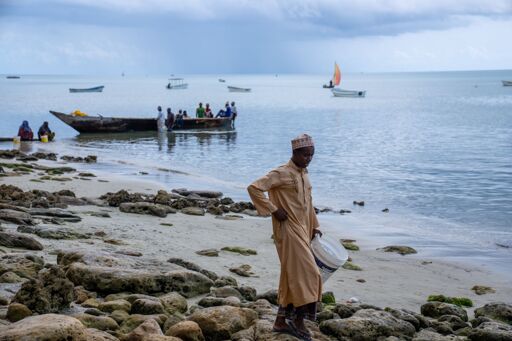
Omar Hamad Salim, like many other fishermen from Tumbe village, relies on the ocean for food, an income and a way of life. A number of years ago, he and his fellow fishers began returning from the sea with less and less. “Fishers would go to sea and return with very few fish, or sometimes none at all,” Salim says. “And this was not a temporary situation; the shortage had persisted for an extended period.” Salim is one of 12 elected members of the fisheries committee for the Tumbe shehia, or ward, on the north-eastern shore of Pemba Island, part of the semi-autonomous archipelago of Zanzibar. Shehia fishing committees elsewhere on Pemba’s east coast were also worried as their catches shrank. They decided that something had to change. Salim and a few others from Tumbe village conducted a more detailed assessment of what was actually happening, which they then presented to the rest of the village during a public meeting. Fishing committees on Pemba island’s east coast grew worried as their catches shrank. Image courtesy of Adrian Ponsard/WCS. The community had seen how the establishment of the Pemba Channel Conservation Area (PECCA) on the other side of the island in 2005 increased fish populations and improved livelihoods for fishers there. They wondered if new marine protected areas (MPAs) could do the same in the east. Some villagers were hesitant at first, recalls Salim, with fellow fishers wondering: “Where will we get school fees for our children? Where will we get…This article was originally published on Mongabay
From Conservation news via This RSS Feed.