

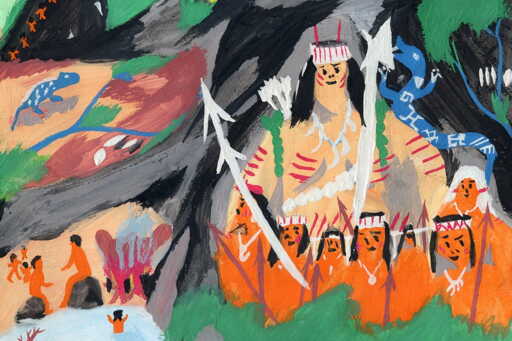
In 2004, archaeological anthropologist Renzo Duin joined an expedition into the mountainous tri-border area where Brazil, Suriname and Guyana meet alongside French botanists and ecologists. While the scientific team focused on mapping the biodiversity of what appeared to be untouched vegetation, Duin noticed that the ground told a very different story, rich with traces of pre-Columbian human occupation. “While they investigated what they perceived as pristine rainforest, I found the area dotted with fragments of pottery and other archaeological indications, including a site surrounded by a ditch,” Duin told Mongabay in a video call from The Hague, Netherlands. The evidence uncovered by Duin was one of many showing that the Amazon rainforest of Suriname and the Guianas region has been shaped and inhabited by people for millennia. Over the years, the researcher returned regularly to the region, making him one of the leading Amazon archaeologists, reshaping the knowledge about human occupation in the rainforest. “In the last three decades, archaeological knowledge of the Amazon has made a great stride forward in Brazil, Ecuador and Bolivia,” Duin said. “In Guyana, Suriname and French Guiana, the picture of the past has improved along the coast and major rivers. Yet, in the inland-uplands we have barely scratched the surface regarding the long-time histories of the Indigenous peoples.” Renzo Duin in the Tumuc-Humac Mountains. Image by © 2004, Renzo Duin /AMIK. As elsewhere in the Amazon, archaeological research in the region has unveiled a wealth of ancient rock art sites, stone tools, pottery and…This article was originally published on Mongabay
From Conservation news via This RSS Feed.