

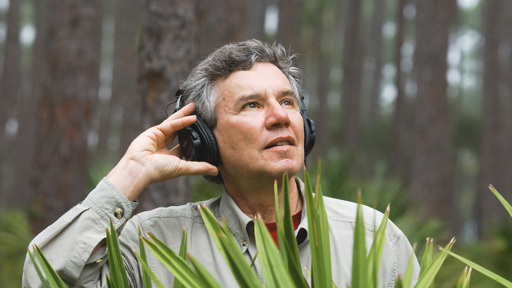
It is a peculiar irony: as technology reaches ever deeper into Earth’s living systems, the primal sonic expressions of the natural world—wind, water, leaf, and creature—have never been more imperiled. Soundscape ecology rests on a simple conviction: the collective voices of the nonhuman world are not only eloquent, but essential. Recorded and preserved over time, these biophonies become enduring ledgers of planetary health, as valuable as genetic databases or satellite images. Over more than half a century, I have gathered more than 5,000 hours of marine and terrestrial recordings. Across those decades, I have heard both the vivid symphony of life and its alarming decline. When science came under siege In recent years, the value of these scientific records—and the ethics of preserving them—has been thrown into sharp relief by forces not of nature, but of governance. In 2017, only weeks after a new U.S. administration took office, a chill settled over the scientific community. Colleagues described research suddenly treated as suspect, funding cut, and datasets removed from public view. It became alarmingly clear that science itself was under siege. Archiving natural soundscapes was no longer solely an act of devotion and curiosity. It had become an urgent responsibility. The danger was not only the destruction of habitat or the extinction of a particular songbird; it was also the erasure of a coherent body of knowledge. Beyond political reach I felt compelled to act. With a sense of defiance and duty, I copied my entire field collection—thousands of hours documenting…This article was originally published on Mongabay
From Conservation news via This RSS Feed.