

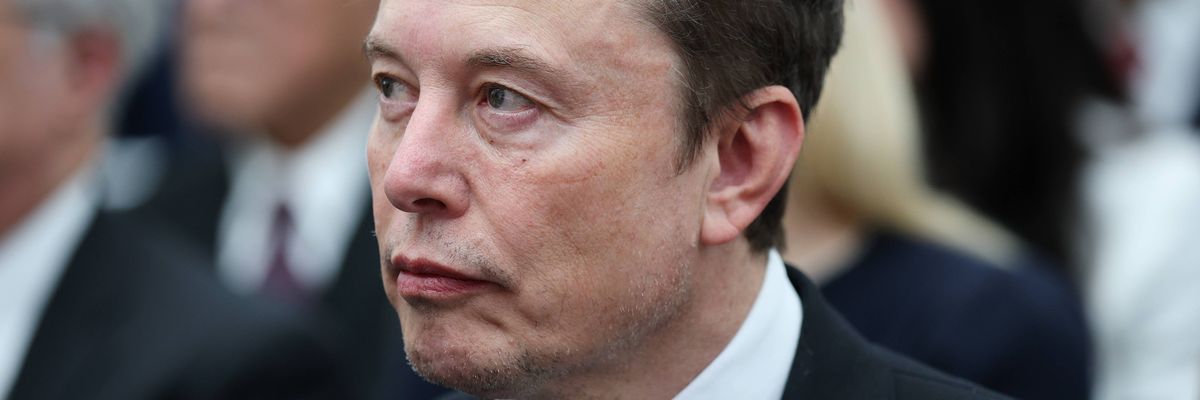
The “almost cartoon-villain level of political spending” by SpaceX CEO and former Trump administration adviser Elon Musk has reached a fever pitch ahead of the midterm elections, with the right-wing billionaire’s donations of $445 million to super political action committees accounting for 10% of the $4.2 billion the PACs have brought in.
As an analysis released Tuesday by the government watchdog Public Citizen found, Musk has led the way in contributing huge sums to super PACs. The PACs can raise unlimited amounts of money on behalf of candidates and causes and have increasingly influenced elections following the 2010 Citizens United Supreme Court ruling, which said the government cannot restrict political spending by corporations.
But excluding Musk, just 514 donors have contributed about $3.8 billion to super PACs this election cycle, as Republicans attempt to hold onto control of the US Senate and House of Representatives despite President Donald Trump’s plummeting approval rating and his record of raising the prices of gas and other essentials with his illegal war on Iran and his tariff policy.
Altogether, the donations from the 515 contributors account for 73% of all super PAC funding from individuals, corporations, and nonprofits this election cycle, according to Public Citizen.
“The figures add to a growing body of evidence that unlimited political spending has concentrated influence over elections among a tiny number of wealthy individuals and corporations,” said the organization, noting that Musk’s contributions come two years after he poured nearly $300 million into the 2024 elections, boosting Trump and other Republicans and spending close to $120 million more than the next closest donor.
The report follows an earlier Public Citizen analysis that found more than 100 super PACs that have raised at least $1 million received the majority of the funding from just a single donor, collectively gathering more than $1 billion to boost the candidates of their choice.
The Senate Leadership Fund has the most donors contributing at least $1 million each, with 61 people contributing $496 million.
“When 500 donors account for more than 70% of super PAC contributions, we should be asking whose voices our political system is prioritizing.”
MAGA Inc., the super PAC affiliated with Trump, has taken $405 million from 102 contributors ahead of the crucial midterms, while the Senate Majority PAC has received $244 million from 44 people or groups.
Fifty-three donors have sent $231 million to the Congressional Leadership Fund, while 31 donors have contributed $183 million to the House Majority PAC.
“Super PACs have helped create a political system where a small number of wealthy interests can spend unlimited amounts to influence elections and shape the choices voters face,” said Lisa Gilbert, co-president of Public Citizen. “When 500 donors account for more than 70% of super PAC contributions, we should be asking whose voices our political system is prioritizing.”
After Musk, GOP megadonors Richard and Elizabeth Uihlein have been the second-largest contributors to super PACs this year. The Uihleins own the packing company Uline, and have pushed for years for government deregulation and against labor unions.
Other top contributors include multiple dark money groups, right-wing megadonor Jeffrey Yass—a longtime funder of anti-LGBTQ+, anti-choice, and anti-public school campaigns—and venture capitalist Marc Andreessen, who said earlier this year that he would prefer to use artificial intelligence in his business rather than hire human workers.
As The Washington Sun reported Tuesday, dark money groups, which don’t have to reveal the source of their contributions, have poured more than $392 million into the four congressional leadership PACs this year.
The Public Citizen report stresses that the hundreds of top donors to super PACs this year gave amounts of money that “most Americans could not fathom donating to a political cause.”
More than 85% of the money raised by super PACs ahead of the midterms came from donors who gave at least $20,000—“nearly a quarter of the median household income,” said Public Citizen.
“Until something is done, like overturning the Citizens United US Supreme Court decision,” said the group, “the wealthy’s stranglehold on our political system will continue to tighten.”
From Common Dreams via This RSS Feed.