

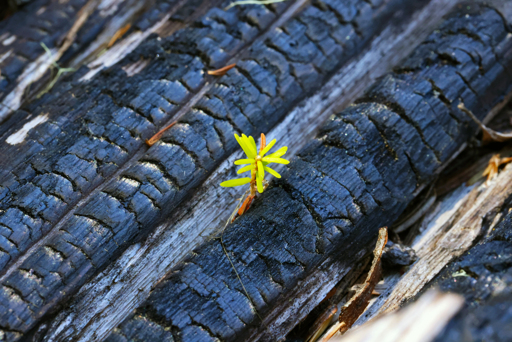
The reporting and photography for this story was fully supported by a 2025-2026 grant from the Sitka Foundation and the Science Media Centre of Canada. Four of the five worst years recorded for global forest fires occurred since 2021. And 2026 is no exception, with hundreds of thousands in North America, Europe and Africa forced to flee life threatening blazes. Now, as the Northern Hemisphere’s wildfire season subsides and forest recovery begins, tropical countries including Indonesia, Brazil and Tanzania are grappling with widespread fires. Wildfires — now intensified by climate change — can be devastating, life-altering, even deadly. But for many ecosystems and organisms, fire is an essential primeval force of nature that supports ecosystem health and biodiversity. “All terrestrial animals evolved in landscapes that had fire,” Canadian conservation biologist Karen Hodges said. “It goes all the way back to the beginning.” But we still have much to learn about post-fire recovery: Canadian researchers are studying charcoal-munching fungi, heat-sensing beetles, birds and at-risk carnivores in British Columbia’s fire-affected Interior to find out who thrives after the flames die, and why those responses matter for biodiversity and for us. Lieutenant Dan, Canada’s largest known living ponderosa pine (Pinus ponderosa), stands tall in British Columbia’s Montane Cordillera, the nation’s most biodiverse region. Many organisms like this one have evolved alongside fire for millennia. The surrounding forest is slated for logging. Image by Jakob Dulisse for Mongabay. A landscape shaped by fire Tell someone you’re from British Columbia (B.C.) and they’ll likely think…This article was originally published on Mongabay
From Conservation news via This RSS Feed.