

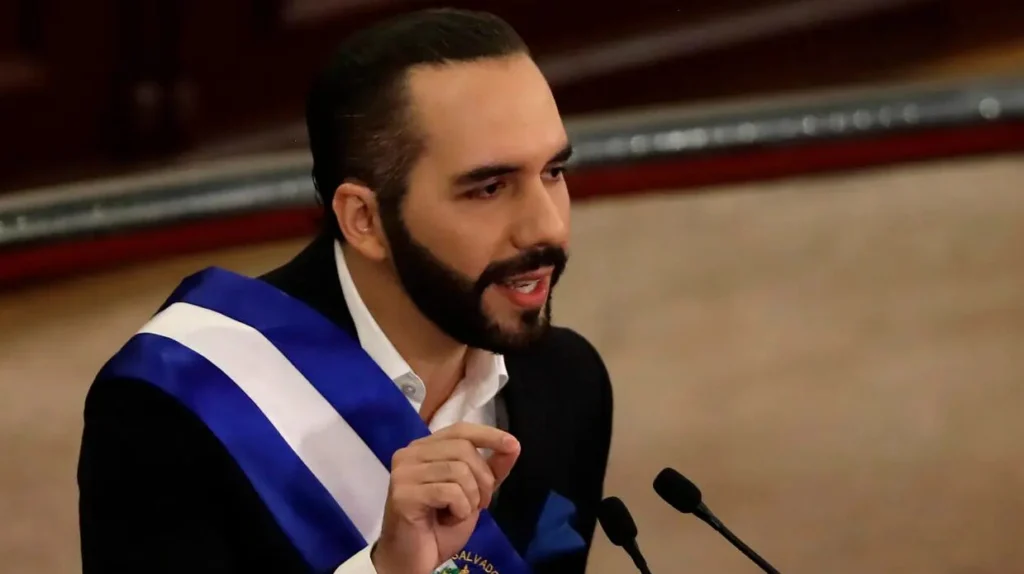
El Salvador has launched its presidential race for the 2027–2033 term, opening a four-month legal period for political organizations to promote their candidacies ahead of general elections set for Feb. 28, 2027.
The Supreme Electoral Tribunal (TSE) reported that no presidential ticket has yet completed formal registration, a step the Electoral Code requires to be done in person. Voters will fill 582 public posts, including the presidency, 60 Legislative Assembly seats, and 44 municipal councils, with mayoralties, municipal trustee offices and council seats also on the ballot.
RELATED: El Salvador Sets Feb. 28, 2027 Date For General Elections
Nuevas Ideas party (New Ideas) has put forward Nayib Bukele and Félix Ulloa for reelection as president and vice president. On the other hand, the FMLN party ticket would pair physician and union leader Rafael Aguirre with nurse Madaí Santos. According to media reports, Arena party would run lawyer Mayteé Iraheta for head of state and agricultural engineer Verónica Henríquez for vice president. Meanwhile, the PCN internally chose General Alirio García Flamenco and former San José Guayabal mayor Mauricio Vilanova, pending formal ratification.
Six other parties will not field presidential tickets: Fuerza Solidaria, Democracia Salvadoreña and PAÍS opted against nominating a ticket; PDC and GANA backed Bukele’s reelection project; and Vamos withdrew, arguing that the current officeholder’s continuity violates the Constitution.
Bukele and Ulloa ran for reelection in July 2023 despite its unconstitutionality. In August 2025, with full control of Parliament, Nuevas Ideas approved indefinite presidential reelection.
El Tribunal Supremo Electoral de El Salvador convocó oficialmente las elecciones generales para el 28 de febrero de 2027, en una jornada donde más de 6,5 millones de salvadoreños están llamados a votar. ¿Qué está en juego en estos comicios?
Entra al enlace y conoce los detalles… pic.twitter.com/eHs72zX3oE
— teleSUR TV (@teleSURtv) October 1, 2026
The 2027 process will for the first time apply the constitutional amendment removing presidential term limits, opening the way for unlimited consecutive candidacies. The measure was approved in 2025 through an expedited procedure pushed by the ruling Nuevas Ideas bench in the Legislative Assembly, without public consultations. The amendment removed provisions barring consecutive terms, extended the presidential term to six years, eliminated the runoff election and reorganized the institutional calendar to shorten the current term so that presidential, legislative and municipal elections coincide on a single general election day.
Opposition sectors and social organizations rejected it, saying the amendment alters the Constitution’s 1983 principles of alternation in power.
From teleSUR English via This RSS Feed.