

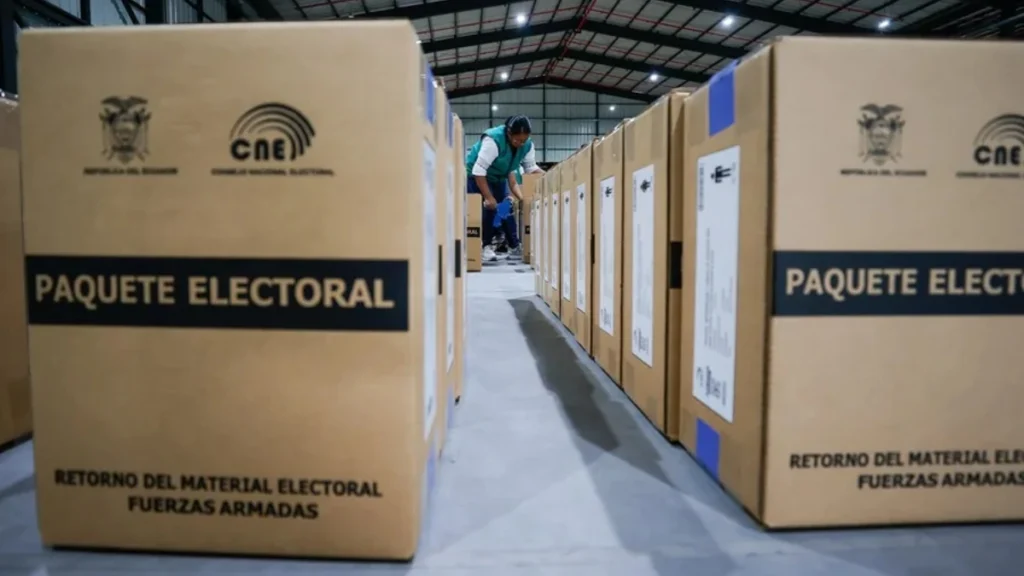
Ecuador’s National Electoral Council is preparing snap regional elections for Nov. 29 with more than 13 million voters called to the polls, amid opposition accusations of judicial persecution, candidate disqualification and a lack of impartiality by the electoral authority.
The NEC reported that it had completed dispatching electoral material to 37 countries and that distribution of 41,702 electoral packets nationwide would begin Nov. 16, according to the electoral body. Shipments were set to start in the Amazon provinces and Galápagos and finish Nov. 28 in Pichincha, which said 20 provinces had completed 100% of candidate qualification and expected to close the process in the remaining four during the week.
RELATED: Association of Jurists Demands Release of Luisa González in Ecuador
Social movements and political groups denounced the exclusion of opposition organizations and leaders as logistics advanced, according to the report. With the elections moved up from their original date of Feb. 14, 2027, political leaders pointed to the use of the state apparatus to block popular options in favor of dominant elites and the government of Daniel Noboa.
⭕️ #ATENCIÓN | El ministro de Relaciones Exteriores, @robertokuryec, informó que no se realizarán las votaciones para las elecciones seccionales y del Cpccs del 29 de noviembre en #Cuba y #Venezuela, debido a la falta de representación diplomática ecuatoriana en esos países.… pic.twitter.com/bNo2DrKlxD
— Radio Pichincha (@radio_pichincha) October 21, 2026
The text reads: The Minister of Foreign Affairs, @robertokuryec, announced that the voting for the regional elections and the Cpccs on November 29 will not take place in #Cuba and #Venezuela, due to the lack of Ecuadorian diplomatic representation in those countries.
Geovanni Atarihuana, president of the Unidad Popular party, said authorities sought to cancel Unidad Popular in March, suspended Citizen Revolution (RC) and in July targeted the Movimiento Amigo. He said several winning candidates had been pursued through the justice system and the electoral function and that the elections had been moved up because the government knew it lacked popular support.
After the suspension of the Revolución Ciudadana movement, its aspirants had to seek affiliation with other political platforms. Concern deepened after the Prosecutor’s Office and National Police raided Quito City Hall, an action the opposition interpreted as an attempt to disqualify Pabel Muñoz in his reelection bid.
Former presidential candidate Luisa González remains in pretrial detention as part of the Labyrinth case, an investigation into alleged money laundering linked to the financing of the 2023 presidential campaign of the Citizen Revolution (RC) movement.
From teleSUR English via This RSS Feed.