

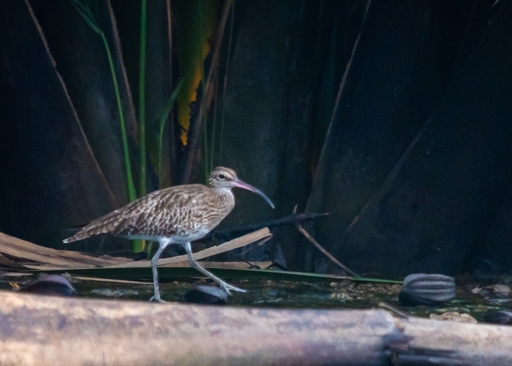
The point where land meets sea at Ayetoro, in southwestern Nigeria, is marked by the skeletons of now-submerged landmarks. Birdcalls, crashing waves, and the sounds of local fishing boats’ outboard engines wash over the crumbling remains of old buildings as well as a wetland that’s a vital stopover and wintering site for migratory waterbirds like Eurasian curlews, whimbrels, and common sandpipers. These birds are just some of the billions that travel vast distances each year in their annual migration between breeding sites far to the north and warmer climates during the Northern Hemisphere winter. They arrive at Ayetoro at varying times between October and January, where their stay in the wetland is observed by members of volunteer bird groups from the local community, who take part in an annual count at the start of each year. These volunteers are part of a wetlands monitoring project of the Nigerian Conservation Foundation, and are paid a stipend to help NCF personnel identify and count birds in the area, record their population data, and collect behavioral and photographic evidence of their activities. The work, which the NCF is also carrying out at two other sites across Nigeria, is part of the Climate-Resilient East Atlantic Flyway (CREAF) project, funded by Germany’s International Climate Initiative, to strengthen monitoring and management of migratory waterbird habitat in 11 countries on Africa’s Atlantic coastline. Coastal erosion advanced, on average, more than 10 meters per year at Ayetoro between 2010 and 2020. Image courtesy of Nigerian Conservation Foundation. The…This article was originally published on Mongabay
From Conservation news via This RSS Feed.