

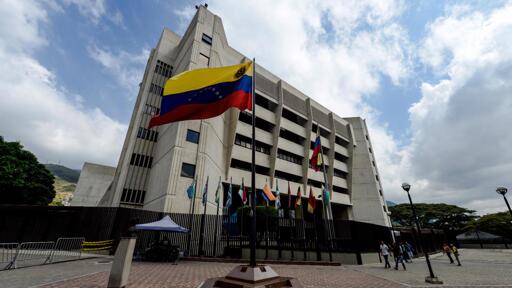
Caracas (OrinocoTribune.com)—Venezuela’s Judicial Nominations Committee will receive applications from Oct. 28 through Nov. 11 for magistrate positions at the Supreme Tribunal of Justice (TSJ), as well as leadership posts at the Inspector General of Tribunals and the National School of Magistracy. The 15-day call was confirmed by the committee and reported by Diario VEA.
This call advances commitments made during negotiations between the Venezuelan government and a sector of the far-right opposition represented by former deputies of the 2015 National Assembly.
The TSJ renewal process, which began in April and was interrupted after the June 24 earthquake, was restarted through an August 12 agreement calling for reform of the TSJ’s organic law, expansion of the Judicial Nominations Committee, a new process to appoint all magistrates, and a council to review nominees’ credentials.
Applications and requirementsLocal outlets reported that the pertinent documents will be received from 9 a.m. to 4 p.m. at the Museo Boliviano on Avenida Universidad in Caracas’ Cathedral parish in the Libertador municipality. Applicants must be Venezuelan by birth and hold no other nationality, demonstrate ethical conduct and mental capacity, possess a postgraduate degree in law, and have no criminal conviction or administrative sanction. Applicants must eschew any party membership and cannot possess close family ties to senior public officials.
Applicants from the recently closed May–June 2026 process may ratify their participation in writing. Candidates for director of the National School of Magistracy must also submit a professional ethics certificate from the relevant bar association.
Committee makeupThe committee was installed on Oct. 23, after the National Assembly swore in 12 civil society representatives the day before. These dozen joined 11 legislators to form a 23-member body; seven of the civil society representatives are women, and five are men. Local outlets reported that the assembly approved the 12 selections unanimously. Eight of the 11 legislative seats are held by PSUV deputies, with the other three held by opposition-party legislators.
In an interview with Shirley Varnagy on Circuito Onda, from the Unión Radio network, Mercedes de Freitas, director of Transparencia Venezuela, a far-right leaning NGO, said the organization had identified two of the 12 civil-society members as having ties to the Chavista socialist movement. She said they were not registered as PSUV members in the organization’s records, but they cited government-related work and public social media posts expressing political support for Chavismo. Efecto Cocuyo identified the two as Rosmely del Valle Flores Parras, who worked in the Ministry of Communes, and Anthony Gerard Pérez Negrón, whose alleged links the organization claimed were demonstrated via social media posts. The interview recording contains De Freitas’ comments. Earlier in the process, local media reported that 127 people had applied for the 12 civil society seats on the committee.
Constitutional sequence and legal deadlinesArticle 264 of Venezuela’s Constitution lays out the selection process: the Judicial Nominations Committee hears the community and preselects candidates, the Citizen Power conducts a second preselection, and the National Assembly makes the final selection. Magistrates serve one 12-year term, but the Constitution does not set one overall deadline for completing the process.
The Organic Law of the Supreme Tribunal of Justice, published in Official Gazette No. 6,684, caps the application period at 30 continuous days; the current call sets 15 as the maximum. Candidate names must be published the next working day after the intake period closes. The public then has 15 days to file objections; the committee has eight days to rule on them and must hold a hearing within three days after notifying an affected candidate. After its evaluation and preselection, the committee sends its list to Citizen Power the next day; Citizen Power has 10 days for its review, and the National Assembly has five days for the final selection.
After Months of Announcements, María Corina Machado Returns to Venezuela
An earlier Orinoco Tribune estimate of roughly 73 days assumed a full 30-day application period and all listed downstream intervals. The current call is set for 15 days. The total of 73 days is a possible timetable, not a Constitutional deadline, and the estimate excludes any additional time that the committee may need to evaluate applicants and prepare its shortlist. If the process proceeds without such delays, the National Assembly could select the new TSJ magistrates in the first half of January.
Orinoco Tribune special by staff
OT/JRE/SL
From Orinoco Tribune via This RSS Feed.