

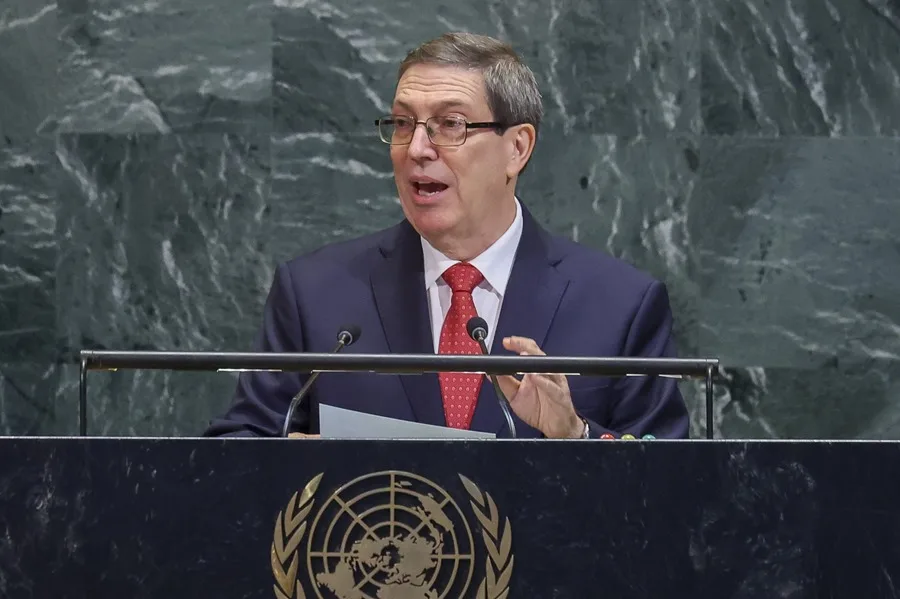
Several countries and international blocs rejected the intensified US economic, commercial and financial blockade against Cuba at the UN General Assembly on Tuesday, Oct. 27.
During the debate on the draft resolution presented by the Caribbean island, participating delegations denounced the humanitarian consequences and socioeconomic impact of these unilateral coercive measures, while urging respect for sovereignty and the principles of international law.
RELATED: Cuba Refutes Accusations by the U.S. Ambassador to the UN
Cuban President Miguel Díaz-Canel said on X that “During the debate, the U.S. representative, in evident isolation, did not have the courage to explain to the world the reason for the criminal energy siege to which they subject the Cuban people, nor for the strengthening of the extraterritoriality of the Blockade.”
Hoy en ONU se evidenció el respaldo mayoritario de la comunidad internacional a #Cuba en la condena al bloqueo y contra la política de máxima asfixia del gob. de EE.UU. La mayoría de los oradores, algunos en representación de bloques regionales, fueron claros en su denuncia.
1/3
— Miguel Díaz-Canel Bermúdez (@DiazCanelB) October 28, 2026
As usually happens since 1992, the 193 UN General Assembly member states are convened between Tuesday and Wednesday, to debate the draft resolution demanding that Washington end the blockade against Cuba.
The document, titled “Necessity of ending the economic, commercial and financial embargo imposed by the United States of America against Cuba,” has historically had near-unanimous support, at times reaching up to 189 votes in favor.
In last year’s vote, the text was backed by 165 countries, while 12 abstained and only 7 voted against: the United States, Israel, Argentina, Paraguay, Ukraine, North Macedonia and Hungary.
From teleSUR English via This RSS Feed.