


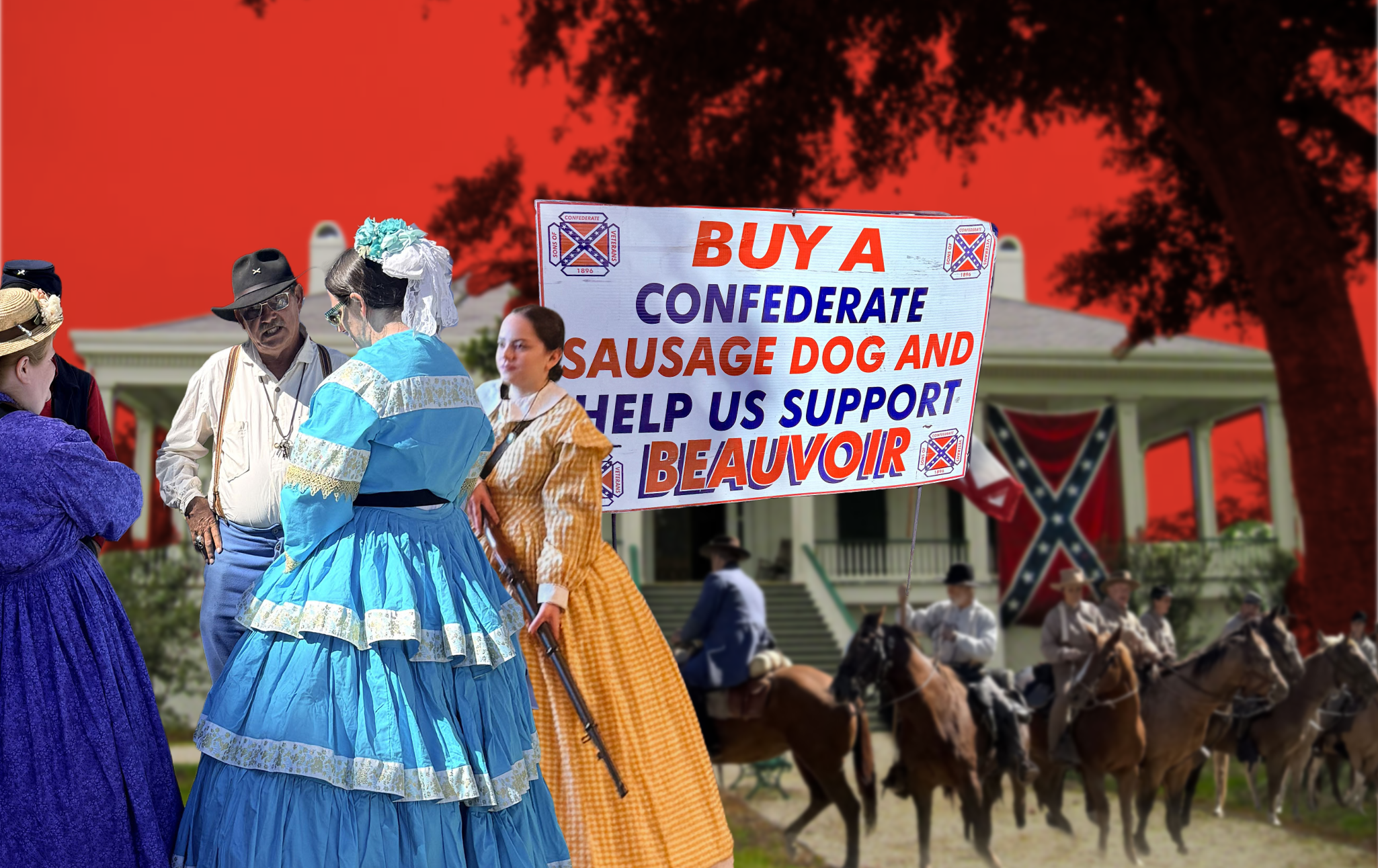
After the U.S. Civil War, instead of being hanged as a traitor, Confederate president Jefferson Davis was released on bail. His treason charges were ultimately dropped in 1869, leaving the defeated insurrectionist free to roam the land as he pleased, although he was disqualified from public office. (Jimmy Carter would posthumously restore his citizenship in 1978, citing a need to “clear away the guilts and enmities and recriminations of the past.”) So Davis traveled in Europe and Canada and dabbled in business, where he had little success, his life insurance company and trading society quickly floundering. In 1877, a widow named Sarah Dorsey offered Davis the use of a large cottage on her coastal Mississippi estate. With few other prospects, Davis accepted the offer, and lived out his days in the house. In its secluded library pavilion, and on its vast wraparound porch overlooking the Gulf, Davis would spend years penning his 1,500-page magnum opus, The Rise and Fall of the Confederate Government, a book that would become the foundational text of Lost Cause mythology.

From blog via This RSS Feed.