

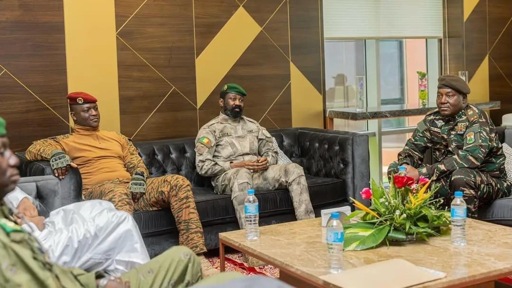

The Economic Community of West African States (ECOWAS) and the Alliance of Sahel States (AES) have opened talks to establish a framework for cooperation, marking a new attempt to rebuild relations following years of political tensions over sovereignty, military coups, and regional sanctions.
The two blocs held their inaugural ministerial dialogue in Dakar, Senegal, on October 17, 2026, where they agreed to establish joint thematic working groups to develop a Cooperation Framework Agreement. The meeting brought together representatives of ECOWAS and the AES Confederation, comprising Burkina Faso, Mali, and Niger.
In a joint communiqué issued after the meeting, both sides welcomed the “spirit of fraternity, mutual respect, and openness” that characterized their discussions, recalling the historical, sociocultural and economic ties that unite the peoples of West Africa.
The parties also agreed that their future relations should be guided by “good neighborliness, respect for sovereignty, dignity, and the well-being of West African populations.”
The dialogue marks a significant diplomatic development following the deterioration of relations between ECOWAS and the three Sahelian countries, whose military-led governments have pursued a political course centered on national sovereignty and a rejection of established Western influence.
Political tensions to dialogue
Relations between the two blocs deteriorated following military coups in Mali, Burkina Faso, and Niger between 2020 and 2023. ECOWAS imposed sanctions and threatened further measures in response to the military takeovers, while the governments of the three countries increasingly challenged the regional organization’s authority.
In January 2024, the three countries announced their intention to withdraw from ECOWAS, their withdrawal formally took effect on January 29, 2025, opening a new chapter in regional relations.
The AES had been established in September 2023, initially creating a mutual defense framework among Burkina Faso, Mali, and Niger. The three countries subsequently deepened their cooperation, formally establishing the Confederation of Sahel States in July 2024.
Throughout the confrontation, the Sahelian governments maintained that their decisions reflected the right of their peoples to determine their own political and economic futures. ECOWAS sanctions, particularly those imposed on Niger following the July 2023 coup, generated considerable opposition within the country and wider debate over the consequences of regional punitive measures for ordinary people.
For many supporters of the AES, ECOWAS’s response to the coups reinforced the perception that the organization was protecting Western, particularly French, strategic interests rather than defending the sovereignty of West African peoples.
A framework for cooperation
According to the joint communiqué, the Dakar meeting followed earlier consultations held on May 22, 2025, in Bamako, Mali. The latest session allowed the parties to exchange views on areas of common interest and discuss how future negotiations could be structured.
Both sides expressed their willingness to pursue a cooperation framework that is “balanced, realistic and preserves the interests of their peoples.”
The communiqué further states that joint thematic working groups will undertake technical consultations towards developing a formal Cooperation Framework Agreement. Their findings will be submitted to the ministers for consideration before the next session.
The agreement to establish these working groups is an initial step towards institutionalizing dialogue between the two organizations. However, the communiqué does not specify a final agreement, a timetable for completing negotiations or detailed commitments in individual policy areas.
The discussions nevertheless provide an opening for the two blocs to address practical questions arising from their separation, including the maintenance of cross-border relations and the interests of communities whose economic and social lives extend across national boundaries.
Despite their institutional differences, the populations of the two blocs remain connected through trade, migration, family ties and shared cultural histories. The three AES countries are landlocked, and their economic relationships with neighboring West African states remain important to regional commerce and livelihoods as it defends its sovereignty.
From BT News via This RSS Feed.