

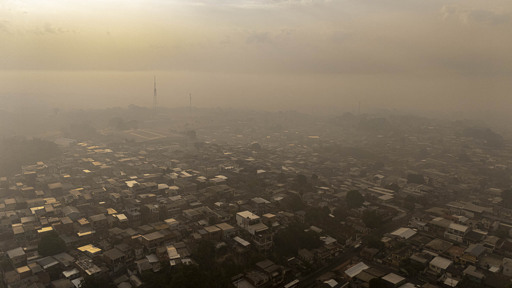
MANAUS, Brazil — Midway through the conversation with Mongabay, Otacílio Farias, a 75-year-old farmer, stops to read a message on his phone: “Right now, there’s a fire near a friend’s house.” Farias has lived his entire life near the Autaz Mirim River, near Manaus, Brazil’s largest city in the Amazon. Forest fires have affected the area for more than 30 days. “Nearby, Lake Miriti was shrouded in haze at dawn, but it wasn’t morning mist: It was smoke,” he said. Farias says the nearby municipalities of Autazes and Careiro da Várzea are experiencing the worst fire crisis of his lifetime. “My throat and nose are in terrible shape,” he said. Farias’ community WhatsApp groups are packed with pleas to save crops and reports of elderly residents rescued as flames approached. Farias was at home on Oct. 1 when friends of his 18-year-old son, Fabrício, arrived on motorcycles, calling for help against fires approaching homes. Around 100 community members joined the effort. It wasn’t until Oct. 10, however, that the Amazonas state government declared an emergency in 36 municipalities, paving the way for federal assistance. Between Oct. 1 and 19, Brazil’s space agency, INPE, recorded 1,921 fire hotspots in Amazonas, up 202% from the same period in 2025. The daily average also rose 51.5% compared with late September 2026. Of these, 584 (30.4%) were in the Manaus metropolitan area: 197 in Autazes, 134 in Itacoatiara and seven in Manaus. Hotspots also spiked after the first round of Brazil’s presidential election: INPE…This article was originally published on Mongabay
From Conservation news via This RSS Feed.