

An emergence in working-class turnout delivered Lula a historic fourth presidential term, and that outcome signals a shift in climate policy and Latin American integration.
The 2026 Brazilian presidential election ended in a runoff, determining the leadership of Latin America’s largest nation for the next four years.
RELATED:
Lula Thwarted Trump’s Strategy to Control Latin America
According to official data released by the Superior Electoral Court (TSE), incumbent President Luiz Inácio Lula da Silva of the Workers’ Party (PT) secured a fourth non-consecutive term after defeating Senator Flávio Bolsonaro of the Liberal Party.
The TSE’s final official count showed that Lula da Silva received 64,256,232 votes, representing 51.79 percent of the total valid votes. Flávio Bolsonaro garnered 59,826,041 votes, accounting for 48.21 percent of the valid ballots cast.
Voter turnout and participation figures underscored the civic engagement across the country, with total reporting reaching 100 percent of polling stations nationwide.
This electoral result marks a significant political milestone, occurring against a backdrop of intense political polarization in Brazil and the growing political influence of the far right across Latin America.
Lula’s victory sparked a wave of strong emotion in Brazil’s streets, eliciting a wide range of reactions, both positive and negative, to the outcome. In this in-depth article, we explore the discourse that has emerged following the confirmation of Lula da Silva’s win, which secures him a fourth term in office.
El triunfo electoral de Lula en Brasil redefine el tablero geopolítico y la correlación de fuerzas en América Latina.
¿Crees que la victoria de Lula puede cambiar el equilibrio político de la región?#Brasil2026 #Geopolítica #Lula pic.twitter.com/PCI6imtkpM
— Jorgepkafruny (@JorgePKafruny) October 26, 2026
The text reads, “Lula’s electoral victory in Brazil redefines the geopolitical landscape and the balance of power in Latin America. Do you think Lula’s win could shift the political equilibrium in the region?”
Domestic Mobilization and National Reactions to the Election Outcome
Brazil’s highest electoral authority, the Superior Electoral Court (TSE), announced the results of the presidential election runoff held this Sunday, October 25.
Following the official declaration, various reactions emerged within Brazil, reflecting the country’s political landscape.
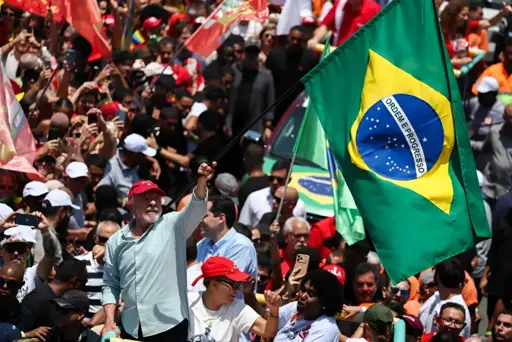
Social organizations, trade union federations, and grassroots community networks gathered in major urban centers, including São Paulo, Rio de Janeiro, and Belo Horizonte, to await the election outcome.
Once the results were known, union leaders and civil society representatives emphasized that these elections, and Lula’s victory, demonstrate public support for the social welfare programs, minimum wage adjustments, expansion of public housing, and labor protections established during the current administration.
National media outlets highlighted the narrow electoral margin between the two candidates and its implications for the executive power exercise.
Market analysts noted that investor attention will focus on fiscal discipline targets, the management of public spending, and upcoming ministerial appointments for the new presidential term.
Is important to highlight that civic mobilization during the three-week interval between the first and second rounds played a decisive role in shaping voter participation.
Campaign committees focused on reducing voter abstention in metropolitan suburbs and organizing localized voter outreach efforts. Youth organizations and community groups conducted door-to-door awareness campaigns, while labor unions like the Unified Workers’ Central (Central Única dos Trabalhadores) coordinated transportation logistics to facilitate polling access for working-class voters in distant municipal sectors.
The national reaction also reflected broader debates regarding institutional stability and social cohesion. Differences emerged among religious organizations; even before the elections, the Catholic Church had issued statements noting that Flávio Bolsonaro’s proposals diverged from the Church’s social doctrine. Conversely, evangelical leaders have supported the claims of the defeated candidate by calling for the election results to be annulled.
BRAZIL ERUPTS AS LULA DEFEATS BOLSONARO
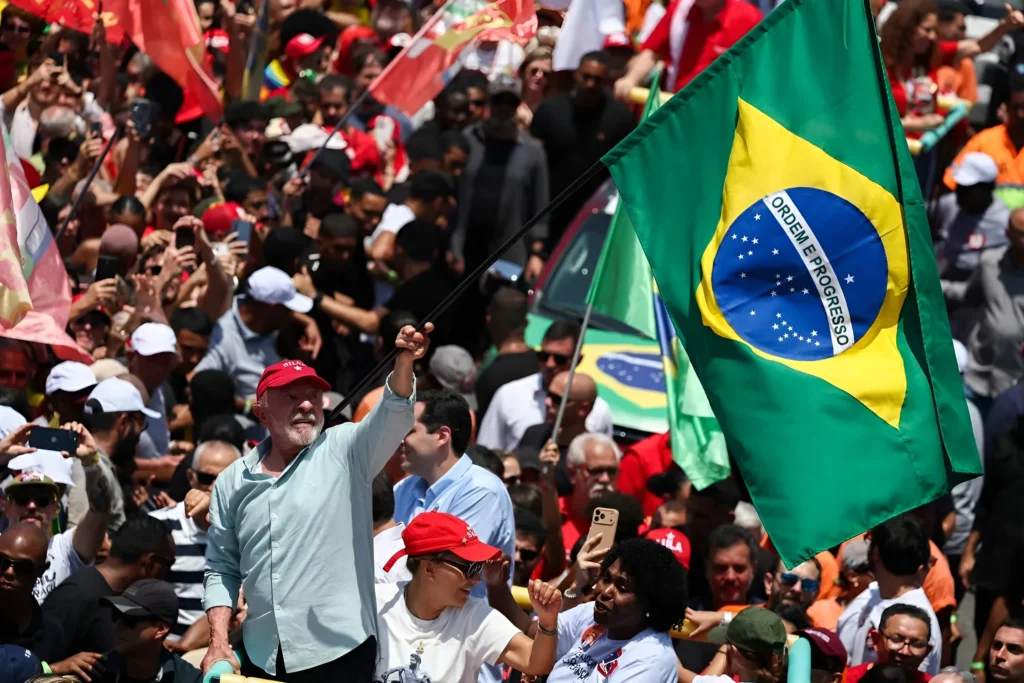
Brazil’s leftist President Luiz Inácio Lula da Silva staged a remarkable political comeback, defeating far-right candidate Flávio Bolsonaro to secure a historic fourth term, sparking mass celebrations nationwide.
With 100% of votes… pic.twitter.com/RI9moOsdcX
— Sovereign Media (@sov_media) October 26, 2026
Flávio Bolsonaro Response and Political Posture of Conservative Forces
In the immediate aftermath of the vote tabulation, Flávio Bolsonaro addressed his supporters and members of the press regarding the election results.
Bolsonaro and his campaign team requested that the TSE review procedures for voting hours at polling stations and the transmission of digital vote tallies in certain municipalities.
Candidate Flávio refused to acknowledge the election results that declared Lula the winner, stating: “It is impossible to recognize the outcome of these elections given the circumstances under which these events took place. We are going to request their annulment.”
Political analysts note that this post-election reaction aligns with common strategies used by conservative political groups in the region. Rather than immediately accepting the preliminary results, opposition leaders signaled their intention to maintain rigorous scrutiny over electoral authorities and administrative procedures.
Furthermore, Liberal Party representatives said that they will form an organized opposition bloc in the National Congress to oversee government actions, exercise legislative oversight, and challenge proposed changes to public policy throughout the legislative term.
🇧🇷 Lula’s victory. A good day for socialists and not so good for capitalists.
80 years old and will be serving his last term as President. In 2022, after months in prison, he returned and won. He wins again after losing the 1st round in early October.
"A cat with nine… pic.twitter.com/bta9c5mNHT
— Evaluator. (@_AfricanSoil) October 26, 2026
The Executive Victory Address and Focus on Institutional Integrity
President Luiz Inácio Lula da Silva delivered his victory address in São Paulo before supporters, party leaders, and domestic and international news agencies.
Lula’s speech outlined the strategic direction for his upcoming presidential term, focusing on national unity, poverty alleviation, re-industrialization, and democratic institutions’ preservation.
A central focus of the president’s address was digital communication, social media platform operations, and election administration. President Lula highlighted the impact of algorithmic distribution networks and automated messaging systems during political campaigns, asserting that digital platforms must adhere to national legal frameworks to prevent the spread of disinformation.
Lula said: “Brazil is no one’s backyard. We will change the way we run this country; we will make people participate more in the decision-making process.”
In his speech, President Lula emphasized the urgency of implementing updated regulatory guidelines for foreign technology companies operating within Brazil.
Lula stated that national sovereignty encompasses digital infrastructure, data protection, and the integrity of public communication channels.
The administration announced plans to work within the National Congress and regulatory bodies to draft legal frameworks addressing content moderation standards, corporate transparency, and digital network accountability during future democratic processes.
China takes note of the announcement by Brazil’s Superior Electoral Court of President Lula’s runoff victory @LulaOficial and extends congratulations. China stands ready to work with Brazil to advance the building of the China-Brazil community with a shared future. pic.twitter.com/1ClWUSx61b
— CHINA MFA Spokesperson 中国外交部发言人 (@MFA_China) October 26, 2026
International Reactions and Global Perspectives
International leaders and foreign governments issued statements following the announcement of the TSE election results. Despite the rejection of the results by Flávio Bolsonaro, leaders from Latin America, North America, and Europe weighed in on the outcome.
Mexican President Claudia Sheinbaum congratulated President Lula and the people of Brazil. Meanwhile, Uruguayan President Yamandú Orsi spoke with Lula by phone to congratulate him on the democratic process.
Even presidents with openly right-wing leanings, such as Noboa in Ecuador, Fujimori in Peru, and Kast in Chile, commented on the results and congratulated Brazil on Lula’s victory.
A common theme among these different heads of state was their emphasis on the importance of regional cooperation, economic integration through platforms like CELAC, and a shared vision regarding environmental sustainability.
In the United States, lawmakers such as Senator Bernie Sanders celebrated the election result, describing it as a reaffirmation of democratic governance and citizen participation in the hemisphere.
Meanwhile, Europe and Asia also reacted to the election result. French President Macron congratulated Lula on his fourth electoral victory and urged the deepening of the bilateral partnership between the two nations.
Spanish Prime Minister Sánchez described the win as a great victory via his social media channels, while Costa, the president of the European Council, spoke with Lula by phone to reaffirm the bloc’s ties with Brazil.
Additionally, a spokesperson for China’s Ministry of Foreign Affairs expressed Beijing’s full readiness to foster mutual development. Russian President Putin also sent his warmest congratulations via an official statement.
The Celebrations in Brazil for Lula’s Victory are MASSIVE
There are THOUSANDS on the streets celebrating these Presidential Elections Results
Bolsonaro says it was rigged. Doesnt looks like it buddy https://t.co/B9s80uhDNE pic.twitter.com/TKYBjRI3w0
— Ryan Rozbiani (@RyanRozbiani) October 26, 2026
Legislative Challenges and Regional Implications for Latin America
President Lula’s fourth term will be shaped by institutional dynamics and broader regional shifts. Domestically, the executive branch faces a conservative-majority National Congress, where conservative and center-right coalitions hold substantial parliamentary seats.
Pushing forward key agenda items, such as tax reform, social welfare expansion, fiscal adjustments, and climate conservation policies, will require building broad legislative alliances across party lines.
For their part, followers and supporters of Lula da Silva have announced that they will be monitoring the promises Lula made during his campaign, such as safeguarding the Family Allowance (Bolsa Família) program, strengthening food security, and increasing the real minimum wage.
Regionally, Lula’s victory consolidates left-of-center leadership in two of Latin America’s largest economies, Brazil and Mexico. This alignment provides institutional support for regional integration efforts, sustainable development initiatives in the Amazon basin, and coordinated strategies on international trade and environmental governance.
The election outcome signals sustained continuity for progressive policy frameworks while requiring pragmatic negotiation to navigate economic constraints and political polarization both domestically and internationally.
Sources: Brasil de Fato – Agência Brasil – Gov.br – O Globo – Folha de S.Paulo – O Estado de S.Paulo – El País – CNN Brasil – EFE – Instituto Tricontinental – La Base América Latina – Diario Red – TeleSUR – Al Jazeera
From teleSUR English via This RSS Feed.