

With 51.8 percent of the vote, Luiz Inácio Lula da Silva has been reelected president in a historic upset. In the first round of Brazil’s elections, he finished behind Flávio Bolsonaro, the far-right son of former president Jair Bolsonaro. Because neither received 50 percent of the vote, the election went to a runoff.
All signs pointed to a Lula defeat: no first-round winner had ever lost the runoff, and most of the parties that ran in the first round but not the second were right-wing and likely to give more votes to Flávio.
This victory goes far beyond Lula and his electoral and governing coalition known as the Broad Front. — In fact, it came despite this “anyone but Bolsonaro” big-tent coalition. The Broad Front preserved many of the anti-worker policies of previous administrations, including those implemented by Jair Bolsonaro. And the coalition maintained a policy of class conciliation towards the Far Right and big business, which helped strengthen the social base of Bolsonarism and contain working-class mobilizations.
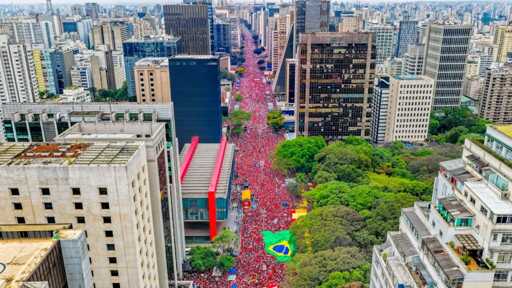
Lula’s victory on Sunday was instead the result of the massive, youth-led mobilizations that swept the country in the lead-up to the election. With millions standing up to Bolsonarism in the streets and on social media, these were the largest protests since June 2013.
These massive mobilizations also forced an important labor reform, known as the end of the six-day work week — the so-called “6×1” schedule. Brazil’s Congress approved the constitutional amendment in mid-October, with the new rules set to take effect in mid-December.
Flávio’s defeat comes despite imperialist interference in the elections, particularly from his ally, Donald Trump. The U.S. president used tariffs and threats against embassies and consulates to sway the vote for Flávio. For Trump, a far-right victory in Brazil would have served as a key foothold for his “Donroe Doctrine”: his policy of imperialist subjugation of Latin America as part of the strategic competition with China. Meta also helped tip the scales toward Bolsonaro by restricting the reach of Lula’s campaign.
Interference also came from Bolsonarist sectors. On the day of the election, cities with mayors linked to Bolsonaro restricted public transit, forcing the Supreme Court to extend voting by an hour. Even so, many polling places closed early, with military police stationed at voting sites.
The Fight Against the Far Right Isn’t Over
Lula may have won the presidency, but the Far Right remains strong in Congress, in state governments, and within institutions. The first round elections brought a significant right-wing wave to every level of government. In fact, in the lower house, Bolsonaro’s Liberal Party gained 24 seats.
This means the social force that brought about the end of the 6×1 schedule and defeated Flávio must remain mobilized.
According to Diana Assunção, a leader of the Movement of Revolutionary Workers (MRT),
It was neither moderation nor conciliation with the right that defeated Flávio Bolsonaro, but the mobilization of millions. We need to keep this social force mobilized. We must transform it into an independent organization of the working class, using the methods of class struggle to confront the far right and imperialism and defeat all counter-reforms—such as the social security and labor reforms that were maintained during Lula’s last administration. Now we must follow the example of France and Europe to effectively change the balance of power, which in recent years had subjected the working class and the Brazilian people to increasingly abhorrent conditions.
Lula’s Broad Front includes numerous politicians to the right of his Workers’ Party, including strikebreakers and politicians who carried out brutal austerity. His vice president, Geraldo Alckmin, is a former governor of São Paulo who cut teachers’ wages, closed schools, and more. For that reason, the struggle against austerity, extractivism, and imperialism, and on behalf of workers and students, must be independent.
It is important to keep fighting for the end of the 6×1 schedule, making sure that Congress voted for is implemented. The mobilizations must confront any coup attempts, and combat Trump’s imperialist plans. As the French students are showing the world, power lies in the streets and in our workplaces, and our strength lies in independent organization from below.
The strategic task is to build a revolutionary, socialist, and anti-capitalist alternative to the Broad Front of Lula and Alckmin, developed in the heat of the independent mobilization of workers and youth.
This article was translated and adapted from Portuguese and was published originally on Esquerda Diário.
The post Flávio Bolsonaro Is Defeated, but the Fight Against Brazil’s Far Right Continues appeared first on Left Voice.
From Left Voice via This RSS Feed.