

Disputes Over the 1.5-Degree Celsius Limit Highlight Deep Divisions as Countries Prepare for the Summit in Türkiye.
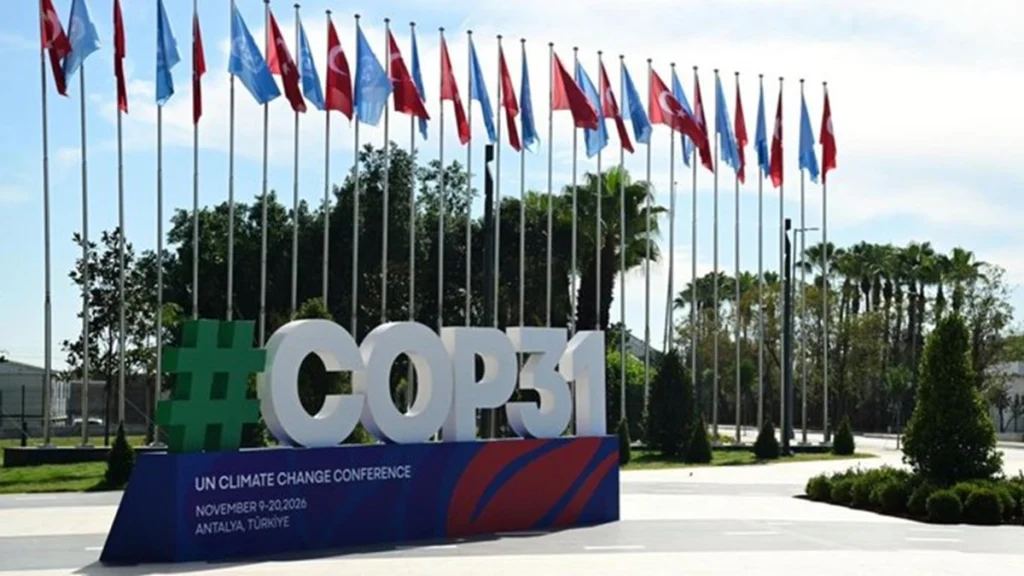
From Nov. 9 to 20, the 31st Conference of the Parties to the United Nations Framework Convention on Climate Change (UNFCCC) will take place in Antalya, Türkiye, bringing together world leaders, government negotiators, scientists and civil society representatives to coordinate international action against climate change.
RELATED:
Climate Change To Reduce French GDP Growth in 2026
The major event in global environmental governance will unfold amid efforts by major oil producers to delay the publication of new reports by the Intergovernmental Panel on Climate Change (IPCC) and prevent more ambitious measures to reduce emissions.
The divisions were already evident during the preparatory negotiations in June in Bonn, Germany, where countries such as Saudi Arabia clashed with the European Union (EU) and small island states, which defend maintaining the 1.5-degree Celsius threshold as the benchmark for assessing emissions reduction commitments.
At those meetings, representatives of countries vulnerable to the climate crisis denounced attacks on science by governments with interests in fossil fuels.
Fiji’s chief negotiator, Sivendra Michael, explained that some countries had tried to remove references to the IPCC, the leading authority on the subject, and the 1.5-degree Celsius limit from the documents.
“For Fiji and our Pacific neighbors, 1.5 degrees is not an abstract goal. It is the threshold that determines whether our islands will remain habitable. The IPCC allows the world to understand why that threshold matters and what is needed to avoid exceeding it. It is the backbone of our climate diplomacy. Removing science from the text does not change the science. It only weakens the decisions intended to respond to its findings,” Michael said.
Several sources agree that Saudi Arabia and India, among others, were among the countries that challenged those references, while Riyadh went so far as to invoke the goal of keeping warming below 2 degrees Celsius without mentioning the more ambitious 1.5-degree Celsius limit.
The difference is significant: The Paris Agreement, adopted in 2015 by nearly 200 countries, establishes a commitment to keep global warming well below 2 degrees Celsius above preindustrial levels and pursue efforts to limit it to 1.5 degrees Celsius.
Although both thresholds are part of the same agreement, scientists warn that every additional tenth of a degree of warming increases the risk of extreme weather events, biodiversity loss and irreversible damage to ecosystems.
The #UnitedNations said that the window has closed to stop the earth from heating above 1.5 degrees celsius, a target set by leaders at the #ParisClimateConference in 2015.
But, it says that it is still possible and worthwhile to limit the overshoot as much as possible, because… pic.twitter.com/ZdMlfzHSrG
— FRANCE 24 English (@France24_en) October 22, 2026
Dispute Reaches the IPCC
The confrontation has also spread to the IPCC, the leading international scientific body on climate change, which on Friday, Oct. 16, suspended its meeting in Addis Ababa without reaching an agreement on the publication schedule for its next major report.
The deadlock, which has lasted nearly three years, threatens to prevent the scientific assessment from being available before the end of 2028, when countries will have to review their progress in meeting the Paris Agreement.
Countries such as Saudi Arabia, Russia and India, and at times China and Kenya, argued that more time was needed to prepare the reports and facilitate the participation of scientists from developing countries, which have fewer resources available to take part.
Opposing them, a coalition of European, Latin American and African states, along with small island states, called for an accelerated timetable so that upcoming negotiations would have access to the IPCC’s scientific findings.
Some analysts consider expanding the participation of scientists from developing countries a positive step but point out that countries such as Saudi Arabia, which has a record of resisting climate commitments, have used obstructionist tactics at IPCC meetings, where the timetable is adopted by consensus.
The window has closed; this year’s #EmissionsGap report states that overshoot of 1.5°C is now inevitable.
What’s needed to limit the overshoot to 1.7-1.8 °C & return to 1.5°C requires gov’ts to step up. 🌎greenhouse gas emissions must drop 45% by 2035 compared to 2025 levels.… pic.twitter.com/lH7uIoC3I2
— IISD Energy (@IISD_Energy) October 22, 2026
A Goal Growing More Distant
The most vulnerable countries reject the idea that better scientific representation and the urgency of taking action are incompatible goals. “Delaying essential climate science is a betrayal of vulnerable developing countries,” said Adao Soares Barbosa, chair of the Least Developed Countries Group, which brings together more than 40 states, most of them in Africa.
“It is very concerning that the integrity of the IPCC and the available science are being eroded,” said Cosima Cassel, an expert at the E3G think tank. She called for the new reports to be available before the 2028 global stocktake to avoid relying on outdated assessments.
The dispute coincides with a warning from the United Nations Environment Programme (UNEP) that current climate commitments are insufficient and the planet will exceed 1.5 degrees Celsius of warming in the coming years. Under current policies, warming would reach 2.8 degrees Celsius this century.
UNEP considers it still possible to limit peak warming to between 1.7 and 1.8 degrees Celsius and return to 1.5 degrees Celsius or below by 2100, but doing so would require much deeper emissions cuts and the removal of CO2 from the atmosphere.
“Exceeding the threshold does not change the goal,” Michael said, warning that every additional tenth of a degree would mean more damage to the Pacific.
teleSUR/ JF
Source: EFE
From teleSUR English via This RSS Feed.