

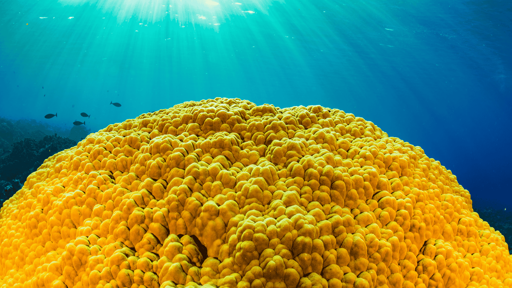
Maui, an island in the isolated Hawaiian archipelago, isn’t in one of the world’s most heavily developed or polluted coral-reef regions. Yet even there, human activity leaves an imprint in the very tissue of corals, altering their biochemistry, a recent study shows. The study, published in July in the journal Nature Communications, found 25 contaminants from cosmetic products, medicines and agricultural runoff, among other forms of pollution, in coral tissues at many Maui reef sites. Contaminant levels were higher at the sites subject to greater human influence. The research was done by analyzing corals’ metabolomes — the collection of small molecules in their tissues, such as sugars, lipids and amino acids, that does not include larger molecules like DNA or proteins. The study is among the first to use coral-tissue metabolomics to monitor chronic human-caused stress on corals in the wild. Whereas a water sample of a coral reef site provides a snapshot of what contaminants are present, coral tissue can reveal those that have accumulated over time. “We propose that this may be a way that you can actually evaluate how much impact humans are having on different sites,” Zachary Quinlan, research biologist at the University of Hawai’i at Mānoa and lead author of the study, told Mongabay in a video interview. A coral reef in 2020. Image courtesy of Tiara Stark/TNC. Under threat globally, corals are particularly vulnerable to local stressors because of their immobility. “If there’s a site that has a lot of contamination, they can’t move…This article was originally published on Mongabay
From Conservation news via This RSS Feed.