

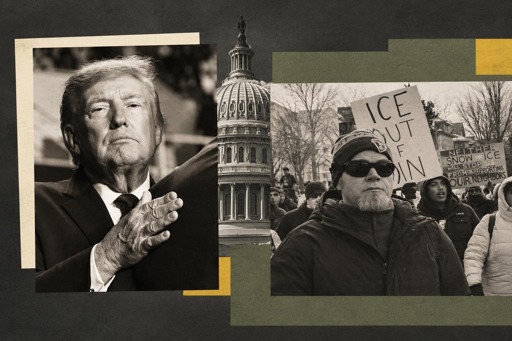
Democratic Party leaders want the weeks before the midterms to feel settled: Trump is unpopular, Democrats are poised for a blue wave, and we just need to hold our breath until November 3. But we should refuse this electoral “normalcy.” Amid attacks on immigrants, workers, and young people, we can’t afford to wait until November to fight back.
Struggles abroad show what this refusal to wait could look like. France, one of the world’s leading imperialist states, has become the epicenter of a new wave of class struggle, led largely by young people. . Broad sectors are taking to the streets against the rising cost of living and the deterioration of their schools as the government invokes public debt to justify austerity while expanding militarization. Workers and immigrant communities are made to bear the cost of these cuts, while the war on Iran drives up energy prices, deepening the crisis of affordability even further.
Some sectors in France are starting to organize assemblies to debate their demands and decide collectively how to carry the struggle forward; they are acting in the here and now because the cost of living and deteriorating schools are questions that can’t simply wait for the presidential election in April. This refusal to wait for an electoral solution echoes the determination of workers and communities in Minneapolis who, without a second’s hesitation, organized themselves against attacks on immigrants and the police killings of those defending them.
But the crisis of capitalism and the imperialist order does not drive discontent only to the Left. In countries like Brazil, the Far Right is also capitalizing on anger at the status quo, as a new wave of Bolsonarism grows in the wake of dissatisfaction with Lula’s third presidency. Despite presenting himself as a defender of working people, Lula’s latest administration has not meaningfully altered the material conditions of the Brazilian masses, who live in one of the most unequal countries in the world. Instead, he has proven once again that he too ultimately answers to imperialism.
The Far Right can turn disillusionment with governments like Lula’s to its advantage, but it cannot overcome the contradictions of the capitalist order it defends. In the United States, Trump’s strategic blunder in the war with Iran has sharpened those very contradictions, deepening the crisis of his administration.
But a crisis at the top does not automatically translate into greater strength for those below: without an independent intervention by the working class, Trump can seek to regain the initiative through new attacks on workers and the oppressed.
In fact, his administration is escalating its ICE offensive, and the mainstream media is reporting that there is a strong possibility the U.S. may launch new strikes on Iran, and that Trump may be preparing to contest the results of the midterm elections.
All of this makes the desire to defeat Trump at the ballot box understandable. While his administration is threatening immigrant communities, attacking basic democratic rights, and keeping another military escalation on the table, no one needs to be convinced that the immediate stakes are real. But the question is whether we are organizing workers and the oppressed into an independent force capable of using its own power to fight war, genocide, deportations, austerity, and police violence — or subordinating those struggles to the Democratic Party, which helps administer the same capitalist order that produces such horrors.
Who Will Build the Fight Against ICE and the Far Right?
In New York the question of how to confront the Far Right is already being tested. ICE’s escalating attacks have brought that question into the city’s neighborhoods, most recently with the shooting of Oscar Belgal in the Bronx. Mamdani’s municipal socialism quickly showed its impotence: as community members and activists mobilized against ICE to denounce Belgal’s shooting, the NYPD under Mamdani’s administration cleared the protest and arrested demonstrators. Later on, Mamdani condemned ICE in his speeches but maintained his steadfast defense of Jessica Tisch, the NYPD commissioner, backing the police leadership, even as officers under his administration repressed those resisting the raids.
This should come as no surprise, since Mamdani’s defense of Tisch is a political choice within a structural contradiction: the police question exposes the limits of municipal socialism, because the bourgeois state cannot be administered against its own coercive core.
The crisis around Tisch, at the same time, raises a question that Minneapolis had already posed on a larger scale: what kind of power can workers and communities organize to confront the state and stop the repression and attacks? Neighborhood networks gave residents the means to track ICE and defend one another, but the balance shifted when unions and neighborhood groups called a citywide strike, bringing workers, students, and communities into the same fight.
After Border Patrol agents killed Alex Pretti on January 24, University of Minnesota students called for another day of action on January 30. The unions that had helped mobilize the January 23 strike did not endorse the new call, showing why students and workers had to keep pressing union leaders to join the fight.
That strategic question of how to continue and expand our struggles is still with us as ICE raids reappear across the country. Even amid the current surge, union and movement leaders often tell their base to endure the raids and focus on November, as if defeating Trump at the ballot box could substitute for organizing to stop ICE now.
But the time to bring people together is while the attacks are happening: from the immigrant defense networks to the tenant organizers fighting rising costs, feminists confronting patriarchal violence on college campuses, the Palestine movement, and organized labor. Students, workers, and communities have to demand that the unions join that fight, instead of letting their leaders decide when our struggles are allowed to begin.
That demand needs an organized form. A united front would bring unions, immigrant organizations, students, and the Left into common action against raids and repression, without asking them to set aside their political differences. Building from below means that workers and youth are organizing within their own unions and movements to win decision-making power, coordinate across organizations, and challenge the timid or reluctant union bureaucracies. The aim is not simply to assemble a broader coalition, but to bring the power of organized workers into a confrontation with the state, a fight that elected officials linked to the interests of the ruling order have shown they will not and cannot take on our behalf.
That kind of unity has to be built through the organizations people already belong to and the networks they create together. Assemblies and networks from below can help workers and students start to coordinate action and press their unions and movements to mobilize their members against ICE and the Far Right now.
DSA, in particular, has the membership, resources, and public reach to help build these networks in neighborhoods, workplaces, and campuses. During an election campaign, it could put those resources toward demonstrations, workplace and campus actions, and immigrant defense. But doing so means confronting the strategic contradiction of calling for independent working-class politics while mobilizing people as foot soldiers for the Democratic Party. Building a movement capable of confronting Democratic officials requires refusing to subordinate that movement to their electoral success.
This contradiction is not DSA’s alone: it runs through an opposition whose leaders can either mobilize workers and students as a force in their own right or turn them into an electoral base for the party of genocide.
The broader Left must therefore demand that the unions, social movements, and organizations behind the No Kings protests organize that struggle, rather than turn opposition to Trump into electoral support for the Democrats from now through the 2028 presidential elections. That means fighting for a united front around concrete action: mass demonstrations, collective defense against raids by federal agents and ICE, and preparations for workplace stoppages and broader strikes.
That also means using the UAW’s 2028 call for a “general strike” not to postpone the fight but to put it into motion in a moment when migrant coworkers are facing raids, detention, and deportation instead of idly waiting two years to mobilize. Unity in action must preserve political independence and the right to criticize every leadership involved including figures like Mamdani, the Democrats, and even the union officials when they hold back our mobilization.
This is the deeper lesson of the experience in Minneapolis that the Left must take up in New York and beyond: building organization from below to defend immigrants and all those under attack (including our working-class siblings oppressed by the boot of imperialism around the world), bringing workers into collective action, challenging leaders who refuse to mobilize, and using our power to interrupt production and the functioning of the city to force the state to retreat.
Elections as a Terrain of Independent Politics
None of this means abandoning elections. In fact, the midterms are unfolding amid widespread disillusionment with the two-party system. Independent candidates are appearing in races across the country, and a 2025 Gallup poll found that 62 percent of Americans believe a third party is needed. That discontent gives the Left an opening to argue for an independent working-class alternative to both parties and to fight for electoral policies that strengthen the independence that workers and young people need in their struggles, rather than limiting it.
That means fighting for independent candidates who break with both parties — not simply by running on a different ballot line, but by offering a working-class political alternative to deportations, war, and the rising cost of living. Their campaigns should grow out of the bodies of self-organization we build across neighborhoods, campuses, and workplaces, with candidates accountable to those organizing the struggles rather than to Democratic Party leaders or wealthy donors. The point is not to elect a new set of politicians to act for us, but to contest elections as part of building our own political force, like a working-class party for socialism, capable of fighting both in elected office and through struggles beyond it. The committees organizing support from below for Myriam Bregman, for a party for a new working class, and for resistance to Javier Milei’s reactionary regime offer a concrete example of this approach — and point toward the kind of independent campaign DSA could build for 2028, rather than backing AOC within the party of our betrayals.
The objection is often that the electoral system in the U.S. makes this kind of independence impossible. In a recent article titled, “Where Is DSA Going?,” Paul Heideman describes how the primary system channels challenges into the major parties while ballot-access laws make it difficult to organize outside them. Those obstacles are real, but they cannot settle our political strategy for us. The question is whether we adapt to those constraints or build an organized force capable of confronting them — one rooted in struggles that can sustain independent campaigns rather than treating the Democratic ballot line as our only option.
Therefore, the weakness of independent working-class organization is not simply an external constraint. It is also a political problem that our strategy must seek to overcome.
Discontent with the two-party system will not turn itself into a working-class alternative. But neither will that alternative emerge if organizations like DSA treat the current balance of forces as fixed and their own task as finding room within it. The point of independent organizing is precisely to change that balance: to bring people into struggle, give them the experience of making decisions and acting together, and build the confidence and organization to take on fights that previously seemed out of reach. Committees can connect struggles that remain isolated; a working-class party for socialism can give them a common political direction and turn their combined strength against the system that produces these crises.
That is the choice the midterms pose for the Left: help deliver another blue wave that leaves workers and young people dependent on the Democrats, or use the election to organize a break with that dependence. DSA should put its resources toward building committee-like bodies of self-organization and fighting for independent candidates who are accountable to those bodies — not as a project postponed until the movement is stronger, but as part of making it stronger.
From France to Minneapolis, the struggles described here point toward a politics in which working people do not wait for permission to act. Therefore, our electoral strategy should help develop that capacity into a force of our own, not lead it back into a party we will have to once again fight the day after the election.
The post Against the Far Right: Building an Independent Working-Class Alternative to the Blue Wave appeared first on Left Voice.
From Left Voice via This RSS Feed.