

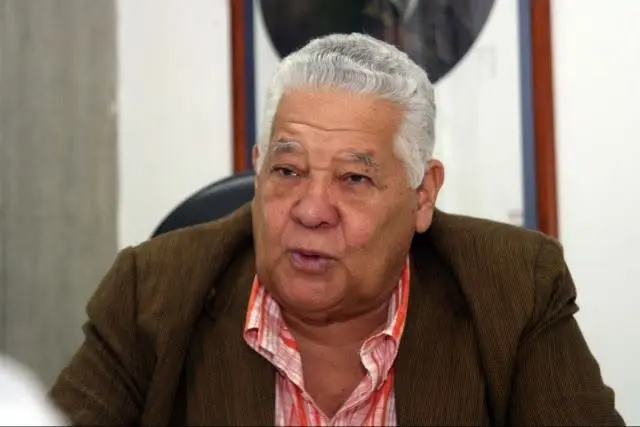
Venezuelan local history is central to Arístides Medina Rubio’s legacy, which reclaimed regional memory, oral testimony and archives beyond official narratives.
Related: Venezuela Launches Zero-Hunger Plan Targeting 2030 Goal
Arístides Medina Rubio: A Lesson in Venezuelan Local History
Venezuelan local history was the life’s work of historian Arístides Medina Rubio, who argued that no universal history is possible without the memory of towns, regions and ordinary people.
Medina Rubio believed that Venezuela’s past had been reduced for too long to the history of Caracas, independence heroes and official dates.
His central thesis was simple but powerful: without local history, universal history is impossible.
The historian was born in Puerto Cabello, Carabobo state, on April 27, 1937, and died in Caracas on October 1, 2019, at the age of 82.
He graduated as a professor of History and Geography from the Pedagogical Institute of Caracas in 1969 and earned a doctorate from El Colegio de México in 1974.
Medina Rubio founded the Chair of Venezuelan History at the Pedagogical Institute in 1976 and taught undergraduate, graduate and doctoral courses at the Central University of Venezuela.
He directed the university’s School of History from 1986 to 1989 and became one of the country’s leading theorists and promoters of regional history.
His influence extended beyond Venezuela through his work with historians across Latin America and the Caribbean.
Medina Rubio was also an editor, publisher and institution builder. He led Editorial Trópicos and co-founded the journal Tierra Firme in 1982, which has published more than 100 issues.
He served as director of Venezuela’s National Library from 2003 to 2009 and helped found and lead the National Center for History.
His books include Regional History: Seven Essays on Theory and Method (1984), A Minimal History of Venezuela (1994), Introduction to Regional History (1995) and Readings in Regional and Local History (2002).
In 2018, he presented The Venezuelan People: 15,000 Years of History, written with Mario Sanoja, Iraida Vargas, Carmen Bohórquez and Luis Britto García.
The book challenged the idea that Venezuelan history begins with Christopher Columbus or independence, placing Indigenous peoples at the center of the national narrative.
Arístides Medina Venezuelan Local History Beyond Caracas
Biblioteca Nacional de Venezuela | Centro Nacional de Estudios Históricos
Medina Rubio argued that Venezuelan local history had long been overshadowed by a Caracas-centered narrative.
He said official history focused on events such as April 19, 1810, and July 5, 1811, while ignoring the provinces that made up the Spanish Captaincy General of Venezuela.
“The great contribution of those of us who work on regional and local history is that we have reclaimed those spaces,” Medina Rubio said.
“Our history was filled with the history of Caracas, not even the Province of Caracas. The same happened with Maracaibo and Cumaná. Angostura appeared only when Bolívar was there, but beyond that, almost nothing.”
He argued that many Venezuelan towns had histories long before independence, but those stories were often reduced to the presence of famous figures.
He cited the McGregor Stone in El Socorro as an example of a place remembered mainly because a celebrated leader passed through it.
Medina Rubio insisted that local chroniclers preserved details that national histories often overlooked.
He also defended oral history as a legitimate historical source.
“The academic historian works with documents, statistics and maps,” he said. “But the people work with memory, and the only way to preserve that memory is through testimony.”
He said oral testimony passes from generation to generation and preserves events that may never leave a community but remain part of its historical memory.
Medina Rubio pointed to the Tere Tere, a traditional dish from Guatire, as an example of how local knowledge survives through community memory.
He said many people learned about the dish because residents created a magazine to document local flavors and knowledge.
For Medina Rubio, food, crafts, music and everyday practices were also historical sources because they revealed regional identities and social relations.
He noted that the hallaca, considered a national dish, has distinct regional expressions in the Andes, Margarita and central Venezuela.
The historian believed that recognizing those differences was essential to understanding Venezuela as a diverse and plural country.
Venezuelan Local History and the Independence Process
Archivo General de la Nación | Academia Nacional de la Historia
Medina Rubio also challenged traditional accounts of Venezuela’s independence, arguing that the process was broader, more complex and less centralized than official history suggested.
He explained that the people present in Caracas’ Plaza Mayor on April 19, 1810, were mainly from the Province of Caracas.
They came from Charallave, what is now the Plaza municipality, Guarenas and the valleys of Aragua.
People from Barcelona, Margarita, Cumaná, Angostura, the Andes and other regions joined the independence movement later, but quickly.
Medina Rubio said communication was decisive in spreading the movement.
In 1810, news from Caracas could take weeks to reach other parts of the country. Yet the April 19 events spread within eight to 10 days.
Caracas was the most important city in the Captaincy General, which included seven provinces.
After the Caracas council declared the Junta of the Rights of Ferdinand VII, later transformed into the Supreme Junta of Caracas, emissaries were sent to other provinces.
Their mission was to secure support for the Caracas movement and build consensus across the Captaincy General.
Of the seven provinces, only Maracaibo, Coro and Guayana did not immediately join. They later incorporated into the independence process.
Medina Rubio said the role of those emissaries remained insufficiently studied.
He also argued that many historical documents had been hidden or removed from public access for decades.
He pointed to the case of independence leader Francisco de Miranda and Juan Germán Roscio, who served as prosecutor against Miranda in 1806.
Medina Rubio said Roscio’s role in condemning Miranda and others captured at Ocumare had long been obscured by official narratives.
He said archives later revealed another side of Roscio, not to erase his contribution to independence, but to show that his life had more than one phase.
Medina Rubio said three volumes of previously unknown Miranda documents were later published, while other archives remained insufficiently studied.
Democratizing Venezuelan Historical Knowledge
Venezuelan Ministry of Popular Power for Education | Fundación Librerías del Sur
Medina Rubio believed that the democratization of Venezuelan local history required recovering archives, publishing forgotten documents and training new historians.
He said that before 1960, Venezuelan history was often presented as a nearly divine war led by elites.
He cited the 1808 Revolution of Caracas, organized by wealthy Caracas elites known as mantuanos against Spanish rule.
Although the movement was betrayed, Medina Rubio considered it more important than earlier pre-independence uprisings led by figures such as Pirela and Chirino, as well as Miranda’s invasions.
He noted that the first major study of the movement, Andrés de Ponte’s The Revolution of Caracas, was published in 1910 and not republished until after the 1960s.
Medina Rubio said that after 1960, the work of the General Archive of the Nation, the National Academy of History and university history schools began to recover Venezuela’s past.
Books written by witnesses, memoirists and military figures became available to researchers and the public.
After 1998, he said, the recovery of historical memory accelerated further.
More archives were created, and descendants of historical figures began donating documents to the National Library, the General Archive of the Nation and the National Academy of History.
Medina Rubio said those archives allowed a completely different understanding of Venezuela’s past.
He also criticized the fact that, until about 2002, Venezuelan school history textbooks were produced in Spain.
He said the government purchased millions of books from the Spanish publisher Santillana, with financing linked to international institutions.
Medina Rubio said that practice ended during the government of Hugo Chávez, when he was director of the National Library and Aristóbulo Istúriz was education minister.
He argued that replacing Santillana’s editorial capacity would take years because it involved producing and updating textbooks for millions of students.
For Medina Rubio, the transformation of historical knowledge was a long-term process tied to education, archives and public access to information.
Venezuelan Local History and Social Consciousness
UNESCO Memory of the World | Latin American Council of Social Sciences
Medina Rubio argued that Venezuelan local history helps people understand present-day problems and develop independent civic consciousness.
He gave the example of a town without drinking water or an aqueduct.
Residents may ask why there is no water system despite the existence of a large river nearby.
By investigating the issue, they may discover that a nearby aqueduct serves land owned by a powerful landowner.
That discovery can lead people to organize and fight for their rights.
For Medina Rubio, local history was therefore a tool for social awareness and political action.
He also emphasized the importance of recovering the everyday lives of ordinary people, including songs, dances, food and popular traditions.
He noted that colonial society was deeply marked by class and racial hierarchies.
The term “mantuano” referred to wealthy white elites because the Church allowed only white women to wear mantles, while Black, Indigenous and mixed-race people were excluded.
Medina Rubio said food also reflected those hierarchies. Elites ate refined dishes, while ordinary people ate sancocho, a mixture of ingredients cooked in a gourd.
He argued that history must recover those excluded voices and recognize collective actors as makers of their own history.
Medina Rubio believed that independence was not a completed event but an unfinished process.
He said Venezuela had not yet built a fully independent structure or developed independence as a collective way of life.
For him, history should not be reduced to memorizing dates, names and places.
It should reveal processes, recover local heroes and connect the past with present realities.
His legacy continues through the historians, archivists and communities working to recover Venezuela’s regional memory.
From teleSUR English via This RSS Feed.