

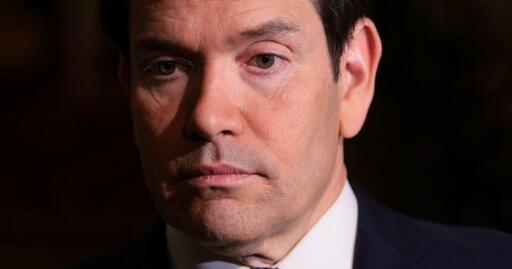
By Rosa Miriam Elizalde – Oct 22, 2026
Mafia stories have something in common with Shakespearean tragedies: crimes, betrayals, bought loyalties, and biblical revenge. In these stories, the boss rarely needs to raise his voice, because all he has to do is remind the other person of how much they stand to lose. “I’ll make him an offer he can’t refuse,” promises Vito Corleone in The Godfather, making it clear that power lies precisely in not having to utter the threat.
This method is reminiscent of the offensive led by Secretary of State Marco Rubio to undermine international support for the resolution against the blockade of Cuba, which the United Nations will consider on October 27 and 28. Washington has been losing that vote for more than three decades and is now trying to reduce the majority, secure abstentions, and encourage absences. If it cannot prevent the public condemnation of a policy that is killing 70 people daily from cancer and has multiplied infant mortality in Cuba, it seeks to intimidate the international jury that will convene next week in the UN General Assembly hall.
Every mafia organization has its structure: a boss who makes decisions, lieutenants who carry them out, and operatives who patrol the territory to make it clear who’s in charge.
U.S. diplomacy has deployed a similar machinery, and we’ve just seen it at the United Nations, where Ambassador Mike Waltz took on the role of a mouthpiece. On October 19, he organized an event to discredit Cuba and urge diplomats to vote against the resolution.
He brought together well-known U.S. government employees, funded by budget allocations earmarked for “regime change,” including figures who openly call for military intervention on the island.
A superpower that fails to convince the world of the virtues of its policy expects the world to change its mind by listening to those who have spent years justifying it. Meanwhile, Rubio’s embassies are canvassing for votes among governments whose relationship with the United States is marked by commercial, financial, and immigration dependencies. The exact scope of these efforts still requires documentation, but the campaign to alter the outcome is public.
At the same time, Miami is contributing its own black comedy. While Rubio’s ambassador was cavorting with terrorists in New York, the Florida Attorney General’s Office announced a new arrest warrant against Raúl Castro. There is not the slightest indication that the historic Cuban leader will appear before a Miami court, but, with two weeks to go before the U.S. midterm elections, the timing is far too convenient to ignore its electoral and propaganda implications.
An arrest warrant against Raúl Castro makes for headlines, photographs, and applause in Miami, and perhaps it will also help the boss secure a few wavering votes at the UN. But people forget that, in January, 32 Cuban fighters died confronting the U.S. military operation that culminated in the kidnapping of Nicolás Maduro and his wife, Cilia Flores, in Venezuela. Thirty-two dead in defense of a friendly president.
What calculations might Washington have made regarding the response such an operation would encounter on Cuban soil? It is much easier to announce an arrest warrant in front of the cameras in Miami than to attempt to execute it in Havana, which proves another pattern: the bravery of crime bosses is often inversely proportional to the risks they are willing to take.
The 2000 Palermo Convention reserves the legal concept of organized crime for structured groups that commit serious crimes to obtain material gains. The diplomatic Cosa Nostra has appropriated a repertoire of procedures recognizable in these criminal organizations, which manifests itself in hierarchies, conditional favors, intimidation, and exemplary punishments against UN member states. The capo di tutti i capi of the anti-Cuba political campaign knows that an offer is more convincing when the recipient understands the consequences of rejecting it.
Marco Rubio’s Covert Bribery Scheme to Distribute Business Opportunities in Venezuela
But Macbeth ended up surrounded by men who obeyed him, even though they did not believe in him, because Shakespeare understood that fear can buy obedience, but never legitimacy. Don Rubio should remember this when the General Assembly votes again. Sometimes, even silence has a price. Dignity does not.
From Orinoco Tribune via This RSS Feed.