

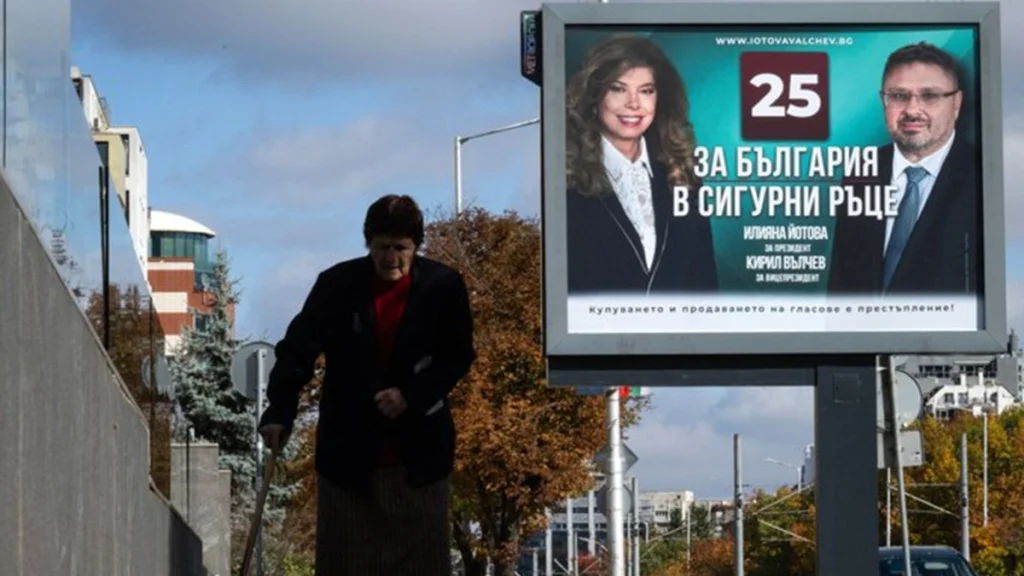
Iliana Iotova, the favorite to reach the second round, advocates for ending military aid to Ukraine.
On Sunday, Bulgarians went to the polls to elect their next president. As many as 6.59 million voters are eligible to choose from 27 candidates, including incumbent President Iliana Iotova.
RELATED:
Bulgaria Recovers Tsar Samuel Remains, Resistance Leader Against the Byzantine Empire
Polling stations across the country opened at 7 a.m. local time and are scheduled to close at 8 p.m. The first exit polls may be released immediately after voting ends, while the official results must be announced no later than Tuesday evening.
The president is elected for a five-year term. To win in the first round, a candidate must secure more than half of all valid votes, provided that voter turnout exceeds 50%.
Pre-election opinion polls suggest that a runoff is inevitable, as turnout is expected to remain at or below 50% and no candidate is projected to secure more than half of the vote in the first round.
🇧🇬 Bulgaria’s presidential election, 2:30 PM update:
Iliana Yotova leads with 35.2%, followed by Andrey Gyurov at 31.8%. The gap has narrowed to just 3.4 points.
Reported turnout: 13.6%.
Source: Dnevnik YouTube. pic.twitter.com/2WnGnOuaCP
— JazzBG 🇧🇬🇪🇺🇺🇦 (@JazzBulgaria) October 25, 2026
On Sunday, the first round of the presidential election proceeded normally, but voter participation was historically low, reaching just 5.8% of the electorate by noon.
According to the Central Election Commission, this figure was barely more than half the turnout recorded at the same time during the previous presidential election, held in 2021, when participation stood at 10.2%.
Acting President Iotova, a former journalist and former member of the European Parliament with socialist leanings, is the clear favorite to advance to the second and decisive round of voting.
She will most likely face former interim Prime Minister Andrey Gyurov, a former deputy governor of the Bulgarian National Bank and former lawmaker with pro-European leanings.
According to the latest polls, Iotova could win up to 47% of the vote, compared with 30% for Gyurov. Iotova was the right-hand woman of Rumen Radev, who served as president until January and is now prime minister.
.
Support for Ukraine in Central and Eastern EuropePublic opinion across the region remains divided on military aid to Ukraine, according to the GLOBSEC Trends 2025 survey.
Strongest support for providing Ukraine with all the military assistance it requests comes from the… pic.twitter.com/6dGqS4JmDi
— World Data Analysis (@World_Data_A) October 25, 2026
Iotova and Radev support ending military aid to Ukraine to prevent the conflict from dragging on and favor diplomacy as a means of ending the war.
Gyurov, by contrast, advocates greater military assistance to Ukraine, as well as a more active Bulgarian policy within NATO and the European Union in support of the invaded country. He believes a Russian victory would pose a threat to the security of all of Europe.
Political scientist Dimitar Ganev attributed voters’ lack of interest, on the one hand, to the parliamentary elections held April 19, which Radev won by a landslide, and, on the other, to Iotova’s substantial lead over her rival in the polls.
“I firmly believe that there will be a boom in Bulgaria and that there must be peace, stability and security. More than anyone else, we Bulgarians need dialogue, agreement, conversation, and unity,” Iotova told reporters after casting her ballot.
According to polling projections, turnout will not exceed 50%, and none of the candidates will win an absolute majority. As a result, a second and final round will be held Sunday, Nov. 1, between the two candidates who receive the most votes.
teleSUR/ JF
Sources: Xinhua – EFE
From teleSUR English via This RSS Feed.