

Bolivia prison project “La Tumba” would isolate high-risk inmates in Santa Cruz, inspired by El Salvador’s controversial CECOT model.
Related: Seven People Killed by Flooding in Santa Cruz, Southern Bolivia
Bolivia Prison Project Would Follow El Salvador’s Bukele Model
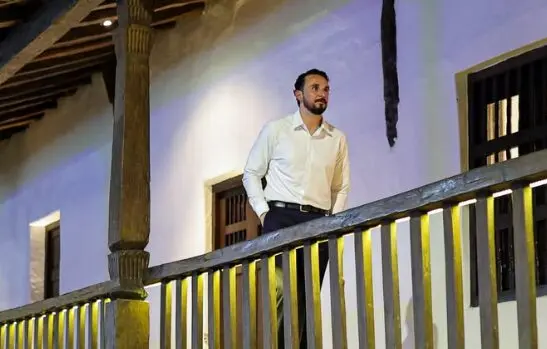
The Bolivia prison project announced by Santa Cruz Governor Juan Pablo Velasco would create a maximum-security facility in the Chaco region, inspired by El Salvador’s controversial Terrorism Confinement Center, known as CECOT.
Velasco said his administration is seeking international financing to build the prison, which would be named “La Tumba”—The Tomb.
The facility would be located in an isolated area of the Chaco cruceño, far from major urban centers, to ensure a strict confinement regime.
According to the governor, the prison would operate with permanent surveillance and severely restricted communication with the outside world. Inmates would be allowed to contact relatives only through authorized video calls.
Velasco presented the proposal as a response to organized crime networks that operate from inside Bolivia’s prisons.
“Prisons turned into offices for organized crime are over,” the governor said. “Dangerous criminals must be isolated from society, not running their businesses from a cell.”
He added that the project would respect rights but end what he described as criminal privileges inside detention centers.
The proposal takes direct inspiration from the CECOT prison built in El Salvador under President Nayib Bukele. That facility was created as part of Bukele’s hard-line security strategy against gangs and organized crime.
CECOT has become a symbol of Bukele’s security policy, but human rights organizations have raised serious concerns about due process, prison conditions and allegations of abuse.
The Santa Cruz governor did not provide details about the cost of the project, the source of financing, the construction timeline or the number of inmates the facility would hold.
The announcement comes amid growing pressure to address crime and violence in Bolivia’s prison system.
Santa Cruz is Bolivia’s most populous department and includes Palmasola, the country’s largest and most conflictive prison.
Bolivia Prison Project Seeks to Isolate High-Risk Inmates
Bolivia’s Defensoría del Pueblo | United Nations Human Rights Office
The Bolivia prison project is intended to separate inmates considered high-risk from the general prison population.
Velasco argues that the current system allows criminal organizations to continue operating from prison cells. He says the new facility would prevent leaders of criminal networks from directing illegal activities while in detention.
The governor’s proposal is part of a broader security agenda that includes efforts to strengthen police patrols and increase the number of officers on the streets.
The Santa Cruz governorate has also promoted a legislative route to return command authority over the police to the departmental government.
Currently, Bolivia has only one maximum-security prison: Chonchocoro, located in the highland department of La Paz.
Santa Cruz has four main detention centers administered by the General Directorate of the Penitentiary System.
The most important is Palmasola, an urban prison located within the city of Santa Cruz. It houses both men and women and is considered the country’s largest, most populated and most violent detention facility.
Palmasola has been the scene of serious episodes of violence between inmates in previous years.
The proposed prison in the Chaco would seek to decentralize the custody of high-risk detainees and reduce the risks created by locating large prisons near residential areas.
The project would also aim to prevent criminal groups from maintaining control over prison populations.
However, the proposal raises questions about the legal framework, the definition of “high-risk” inmates and the safeguards that would protect due process.
Human rights organizations have warned that maximum-security facilities can become sites of isolation, abuse and lack of transparency if they are not subject to independent monitoring.
The Defensoría del Pueblo has repeatedly warned that Bolivia’s prison system is facing a structural crisis.
The institution reported that the country’s prison population reached 33,058 people in 2025, nearly double the 17,305 inmates recorded in 2020.
The increase has intensified overcrowding, weakened security and reduced access to health services.
Bolivia’s prisons are currently operating at approximately 109 percent of their installed capacity, according to the Defensoría del Pueblo.
More than half of the prison population is being held under pretrial detention, meaning they have not received a final conviction.
The institution has warned that overcrowding, poor nutrition, limited medical care and inadequate security are creating a humanitarian crisis inside the country’s 46 detention centers.
The Defensoría has called for measures to reduce overcrowding, including judicial congestion programs, alternative sentences and legal reforms.
It has also urged the state to guarantee food, medical care and dignified conditions for all people deprived of liberty.
Bukele Model Raises Human Rights Concerns
Amnesty International—El Salvador | Human Rights Watch—El Salvador
The Bolivia prison project is inspired by a model that has generated significant controversy in El Salvador and across Latin America.
El Salvador’s CECOT was inaugurated in 2023 as part of President Nayib Bukele’s campaign against gangs. The facility was designed to hold up to 40,000 inmates.
The prison became the centerpiece of a state of exception declared in March 2022. That measure suspended several constitutional protections and expanded police powers to arrest and detain suspected gang members.
El Salvador’s government says the policy has drastically reduced gang violence and restored public security.
The administration argues that the state of exception was necessary to dismantle criminal organizations that had controlled neighborhoods, extorted businesses and committed violent crimes for decades.
Bukele remains highly popular among many Salvadorans who credit his government with improving safety and reducing gang activity.
However, human rights organizations have documented serious concerns about the policy.
Amnesty International and Human Rights Watch have reported mass arbitrary detentions, lack of due process, mistreatment of detainees and restricted access to legal defense.
Rights groups have also raised concerns about prison conditions at CECOT, including overcrowding, prolonged isolation and limited contact with families and lawyers.
Reports by human rights organizations have alleged that detainees have faced beatings, sexual violence, denial of medical care and incommunicado detention.
The Salvadoran government has rejected those accusations and says its policies respect human rights while protecting citizens from criminal violence.
The debate over the Bukele model has become increasingly influential across Latin America. Several governments have expressed interest in adopting tougher security policies, including mass detention, military deployment and the construction of large prisons.
Supporters argue that the model responds to public demands for security in countries affected by organized crime, extortion and drug trafficking.
Critics warn that it can weaken democratic institutions, criminalize poverty and allow abuses to occur without accountability.
The Bolivia prison project will therefore be closely watched by human rights organizations, legal experts and regional governments.
The proposal could mark a significant shift in Bolivia’s approach to crime and incarceration.
Impulsamos una ruta legislativa para devolver al gobernador facultades de mando sobre la Policía, fortalecer los patrullajes y garantizar más efectivos en nuestras calles. pic.twitter.com/UXKDT0ip18
— Gobernación de Santa Cruz (@GobSantaCruz) October 21, 2026
Geopolitical Context
The Bolivia prison project reflects a broader regional debate over security, democracy and the limits of state power.
Latin American governments have faced growing pressure to respond to organized crime, drug trafficking, extortion and prison violence.
In several countries, public demand for security has strengthened political leaders who promise hard-line measures, including mass arrests, military deployment and the construction of maximum-security prisons.
El Salvador has become the most visible example of that approach. Bukele’s government has used the state of exception to detain tens of thousands of people and build large-scale detention facilities.
The model has gained influence across the region, but it has also raised concerns about the erosion of constitutional protections and judicial independence.
Bolivia’s proposal could place the country within that wider trend. Santa Cruz is a key economic and political region, and its governor has made security a central issue of his administration.
The project could also affect relations between the departmental government and Bolivia’s central authorities.
Prison administration, criminal justice and policing are areas that require coordination between national and subnational governments. Any new prison would need to comply with national law, budget rules and human rights obligations.
The proposal comes at a time when Bolivia’s prison system is already under severe strain. The Defensoría del Pueblo has warned that overcrowding and pretrial detention are weakening the rule of law.
A new maximum-security prison could reduce pressure on existing facilities, but it would not solve the underlying causes of prison overcrowding.
Experts say that reducing pretrial detention, improving judicial efficiency and addressing poverty and inequality are essential to creating a sustainable solution.
The Bolivia prison project will therefore test whether the country can strengthen security while preserving human rights and democratic institutions.
From teleSUR English via This RSS Feed.