

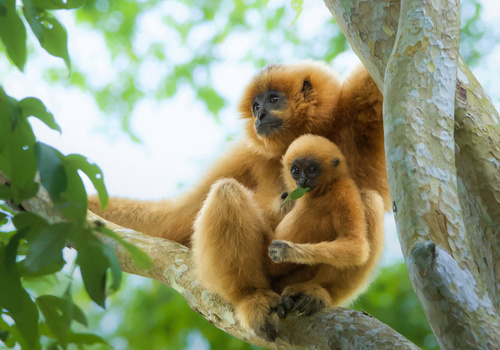
Twenty species of gibbons swing through the tropical forests of Asia, all are threatened by human activities like deforestation, hunting and trafficking baby gibbons for the exotic pet trade. In recognition of International Gibbon Day on Oct. 24, here are three recent Mongabay stories about the threats gibbons face and the people working to protect them: A growing demand for the exotic pet trade In 2025, gibbon trafficking seizures reached an all-time high; 336 individuals were recorded between January and August alone, Mongabay’s Ana Norman Bermúdez reported. A Malaysian woman who asked to be called Esther (not her real name) unwittingly became part of the illegal trade. “When we first got Joy, we thought she was a monkey,” Esther said. A hunter had come to Esther’s village on the island of Borneo, to sell wild meat. He showed Esther and her husband a weeks-old primate with long arms, dark skin and large, round eyes. Worried the animal might otherwise be killed for food; Esther decided to take her home. It was only later that she realized Joy was not a monkey, but a gibbon. Gibbons are small apes, more closely related to chimpanzees and humans than to monkeys. They are highly social animals and will defend their young to the death, so the capture of an infant gibbon often represents the annihilation of an entire family group. Trafficked baby gibbons overwhelm rehabilitation centers in North Sumatra To capture baby gibbons for the illegal pet trade, hunters often shoot mothers in…This article was originally published on Mongabay
From Conservation news via This RSS Feed.