

Bullets:
China is the source of most of the sales growth for luxury brands over the past two decades.
Louis Vuitton (LVMH) enjoyed great success in China, which briefly made LV Europe’s most valuable company, and its founder the world’s wealthiest man.
Sales growth in luxury segments across Asia is slowing, and shares of most global high-end brands are down on the year.
LV, however, has seen a collapse in sales, after a trademark dispute against a local tea company created a public backlash.
Inside China / Business is a reader-supported publication. To receive new posts and support my work, consider becoming a free or paid subscriber.
Report:
Good morning.
People’s Square in Shanghai is the cultural, and actual, center of the city.
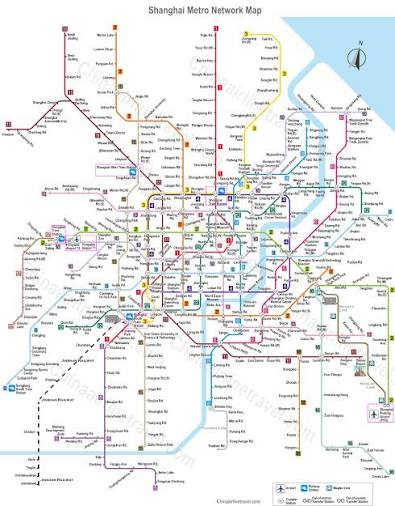
Shanghai’s metro system—the subways—is the largest in the world, and People’s Square station in Shanghai is the busiest metro station in the world.
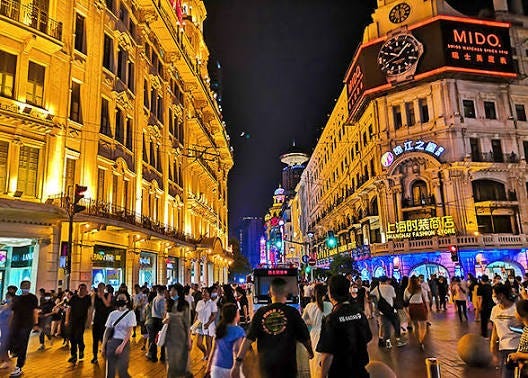
Come out of that station and Nanjing Road runs East - West. Nanjing Dong Lu—Nanjing East Road, is the iconic pedestrian street, that looks like Times Square in New York City, if Times Square were a lot bigger:
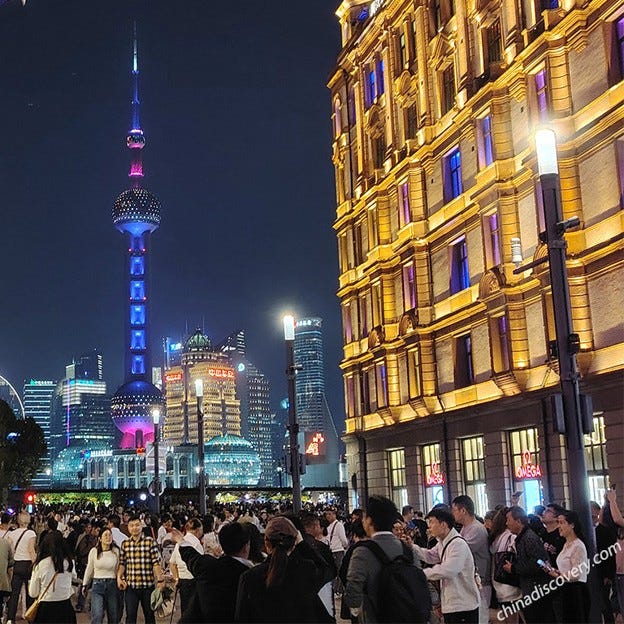
Nanjing East Road ends at the Bund, and the view of Pudong and Lujiazui.
Go the other way out of People’s Square, and that’s Nanjing West Road. It runs two miles or so from People’s Park to Jingan Temple and Kerry Center, and Nanjing Xi Lu is probably the most valuable commercial real estate in China. It was there that the most famous Western and luxury brands first opened their doors in China.
In the decades since, other luxury areas sprang up in Shanghai, such as in Xintiandi and on Huaihai Lu, and in Changning district there’s a giant luxury mall shaped like a boot. Lujiazui itself is also home to the high-end brands. And they’re all fairly close together, too, fifteen minutes or so by car. Lujiazui is on the other side of the river, but just one metro stop past East Nanjing Road.
The world’s top premier brands have stores in all those areas as well. But Nanjing Road is still where the multibillion-dollar companies compete for space, in the center of Shanghai.
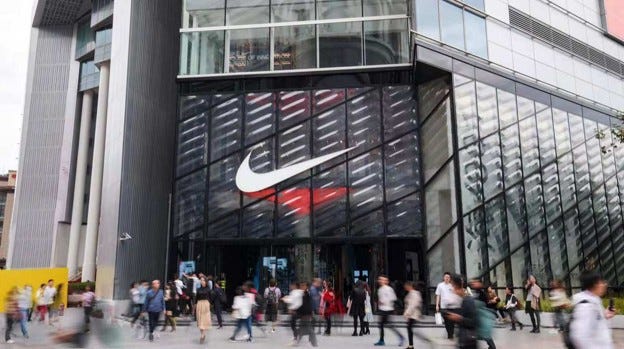
The world’s first Nike flagship store opened on that street.
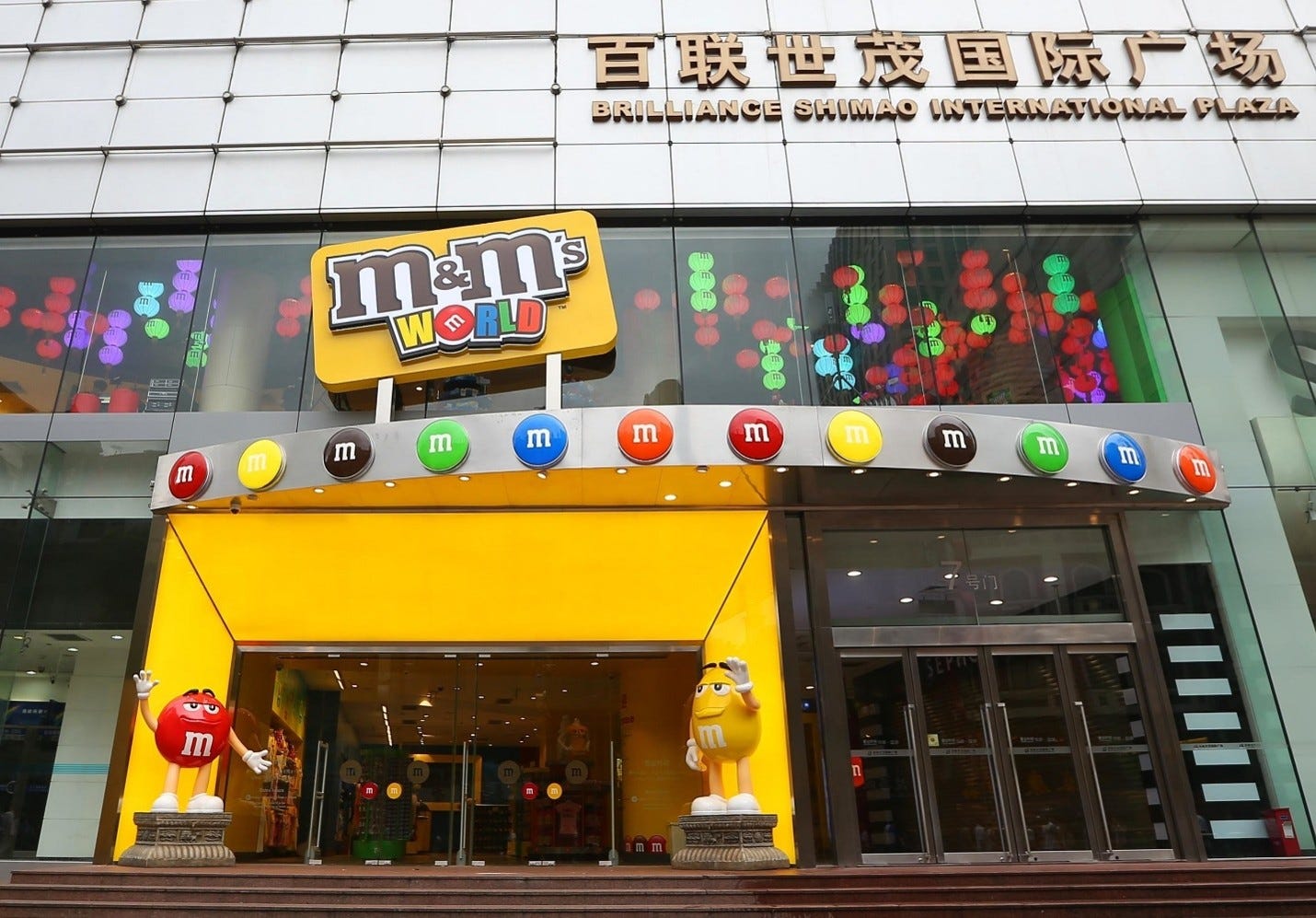
M&M’s World.
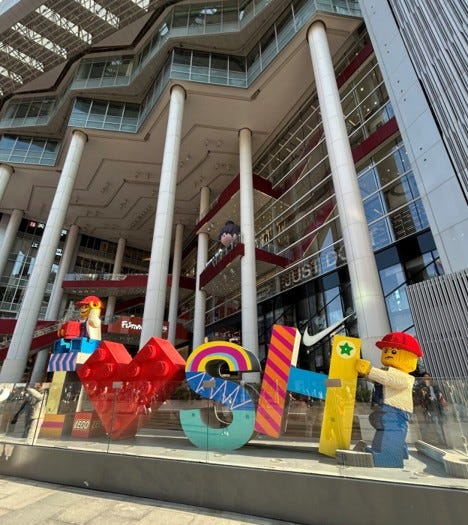
LEGO’s first flagship in Asia. No idea why Huawei feels the need to advertise in China at all, but they put their Shanghai flagship store in the neighborhood.
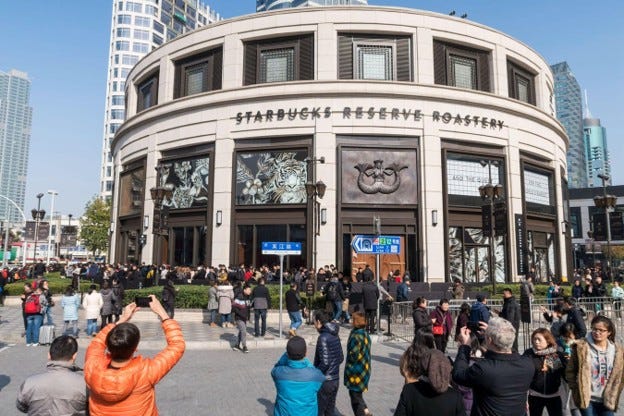
The world’s largest Starbucks isn’t in Seattle or New York—it’s on Nanjing West Road in Shanghai.
And just around the corner from that Starbucks, Louis Vuitton built a giant cruise ship replica flagship store, on one of the most expensive corners in the world.
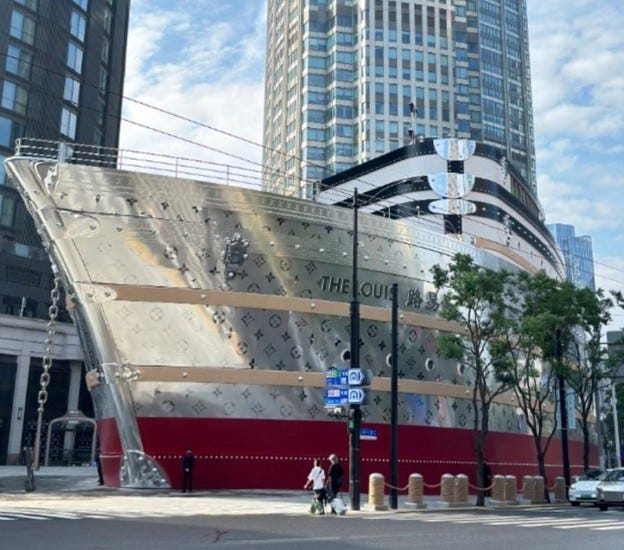
And saying again that LV does have lots of stores in Shanghai, but their China flagship store is there, on Nanjing Xi Lu.
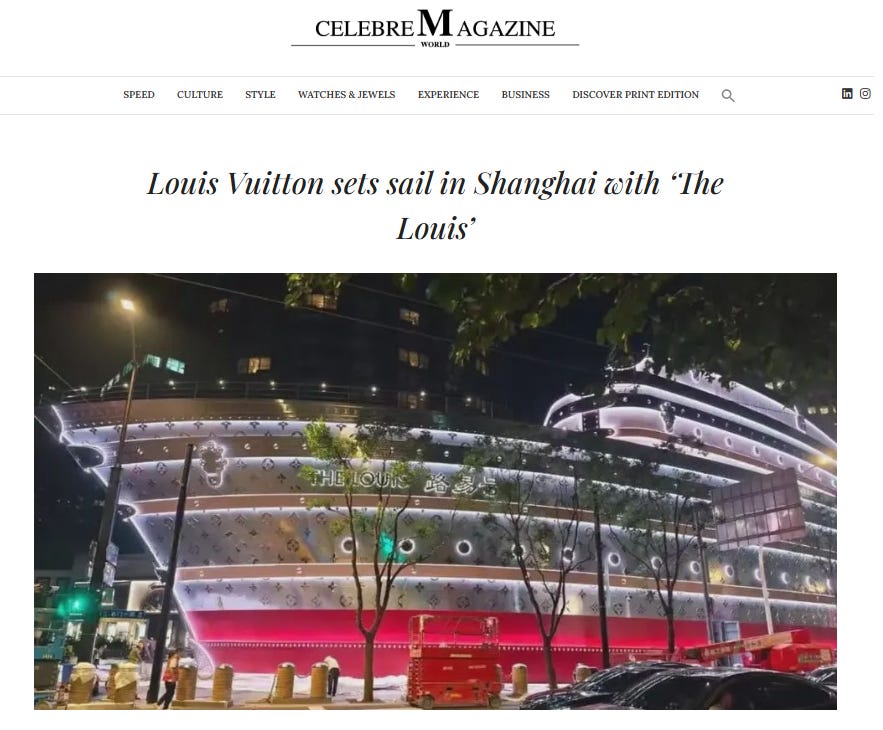
I’m thankful for this article here that explained that it isn’t just a big shiny boat—it’s instead a “colossal, deconstructed LV trunk” and a “nod to the brand’s iconic luggage heritage.”
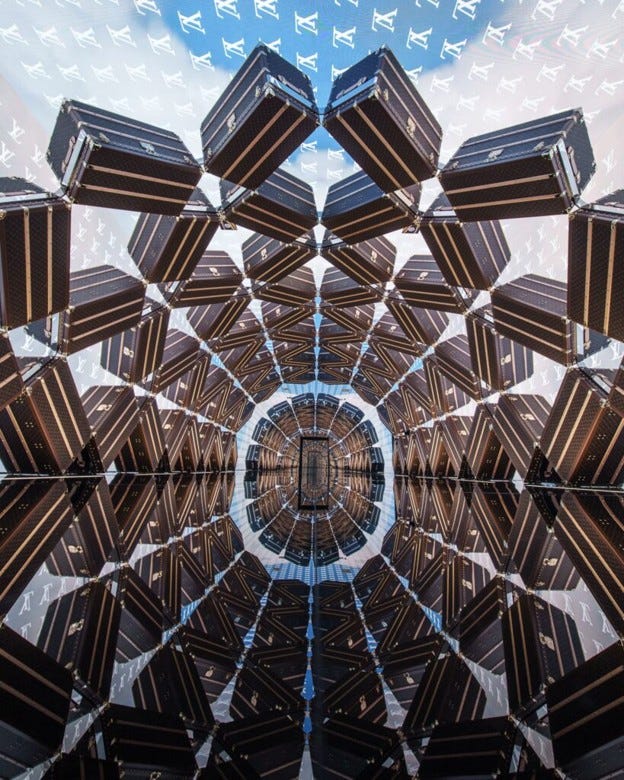
The lobby entrance is suitcases, I think, and the stores inside are more suitcases. And perfumes, and a café that presumably sells expensive champagne.
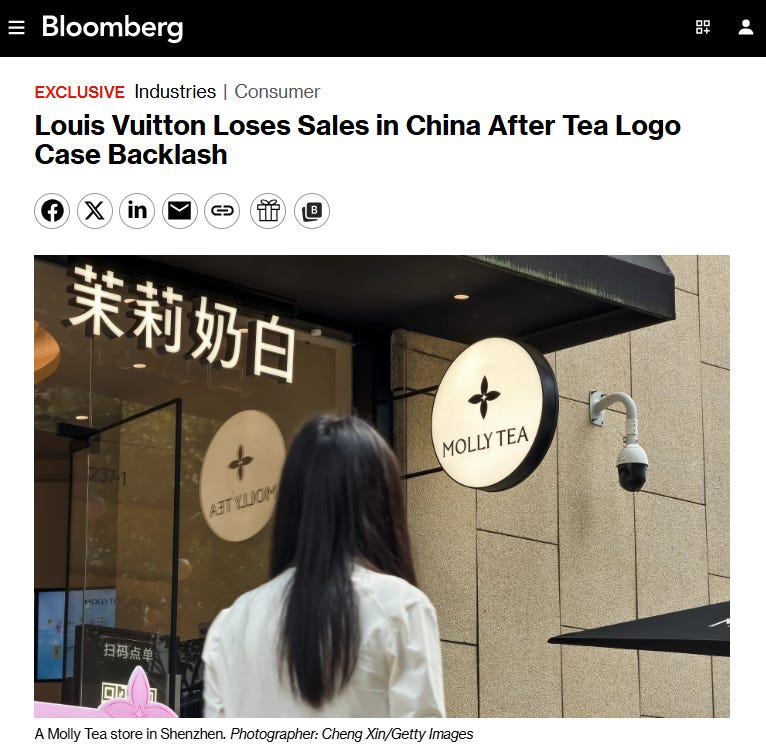
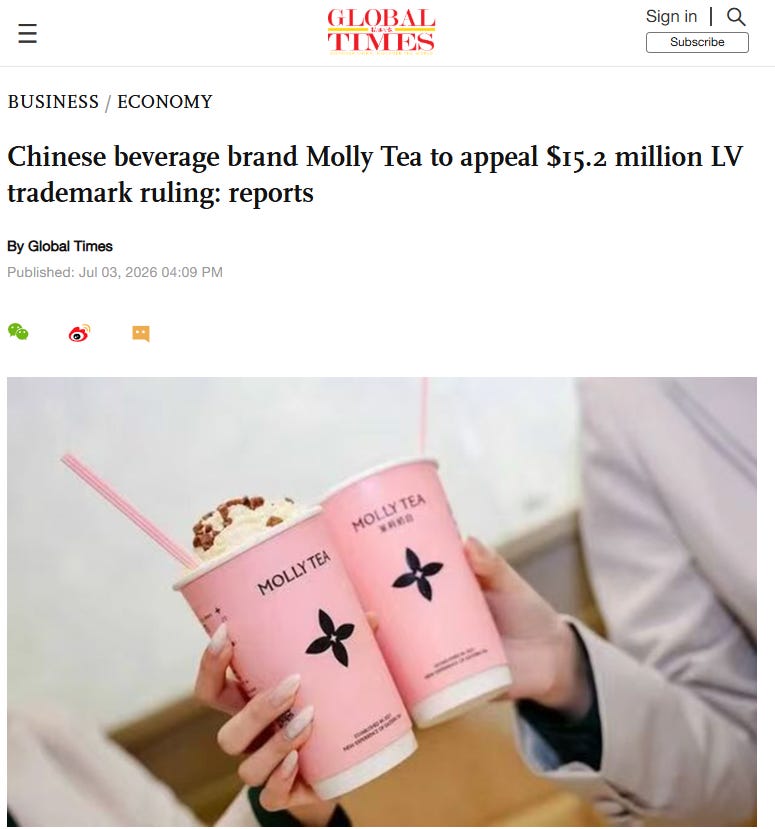
What’s newsworthy here is a very China-specific problem that Louis Vuitton suddenly has, and it involves a trademark dispute with a local tea company – Molly Tea-- who was using that logo, right there. LV and other luxury brands in China were already seeing a slowdown in their sales growth, but it hit Louis Vuitton especially hard. Sales dropped 30% in July, and a quarter or so in August.
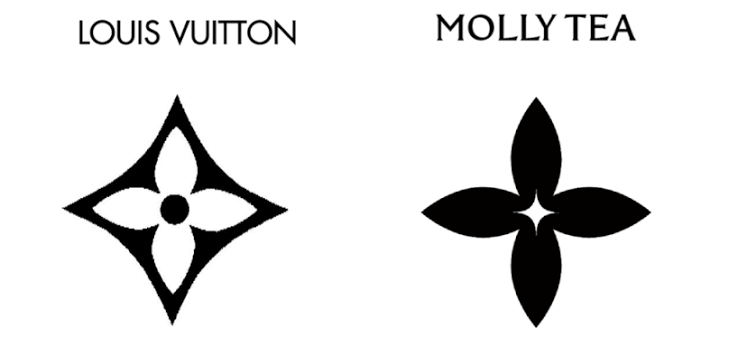
It was just a year ago that LV built the big ship in downtown Shanghai. But then came the logo trademark fight, and the “patriotic backlash” that followed. LV sued Molly Tea over their use of the flower pattern design.
That’s what they look like, side-by-side:
Chinese right away took to their social media to defend Molly Tea, and pointed out that their logo—and LV’s—are very similar to the baoxiang flower patterns from the Tang Dynasty, from over a thousand years ago.
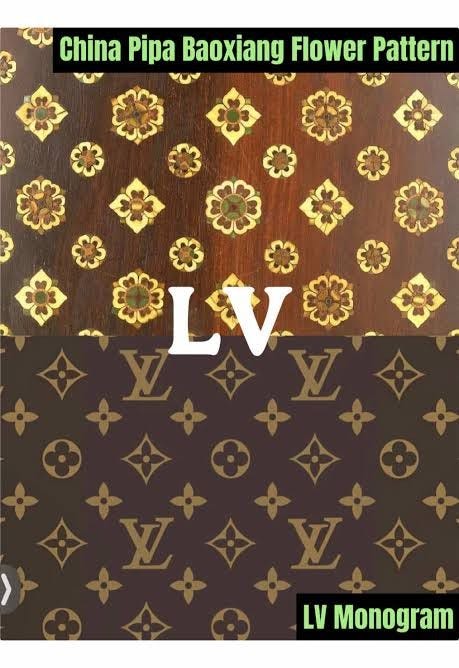
They are implying here that it should be LV who needs to explain to a Chinese court where the inspiration for their logos came from.
Worst of all, though, is the now-mainstream point of view that Louis Vuitton was being “cheap”. For a brand that charges thousands of dollars for a handbag, that is not a perception they can afford. The impact was immediately felt on LV’s top-line numbers in China.
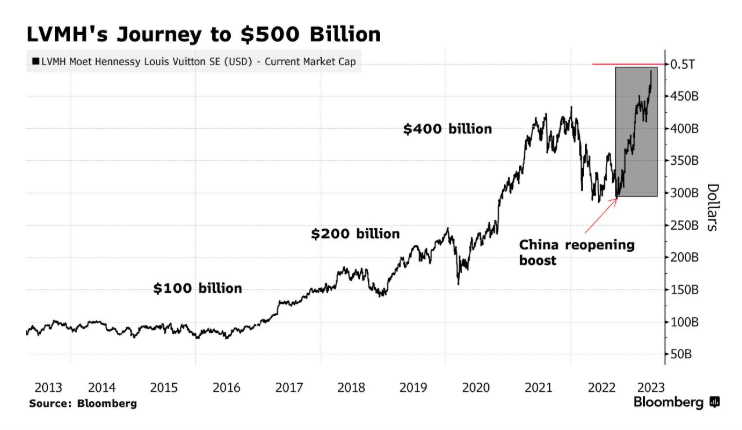
China may be the most important market for luxury brands, now that Europe, North America, and Japan are mature. It was booming demand here in China that made LVMH one of the world’s most valuable companies, just a few years ago.
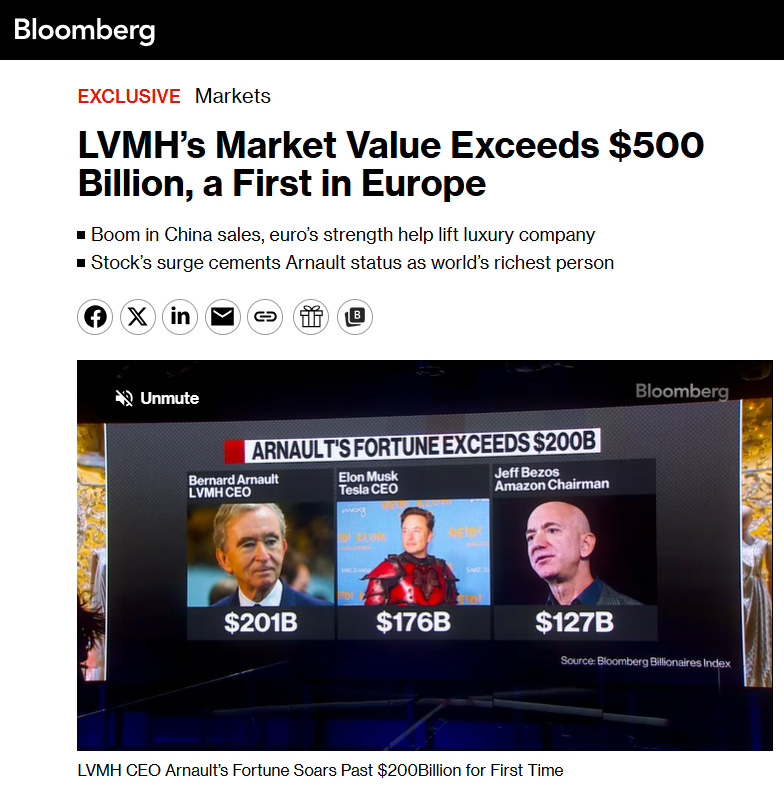
Bernard Arnault is LV’s founder and controls just under half of the company shares, and he was briefly the world’s richest man in 2023, as China’s economy reopened and sales boomed.
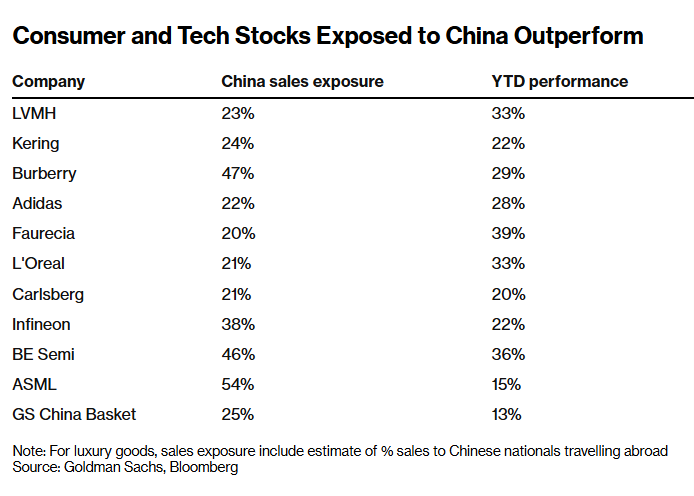
The Western brands with deep retail exposure to China saw double-digit gains in their stock prices in that first full year after COVID:
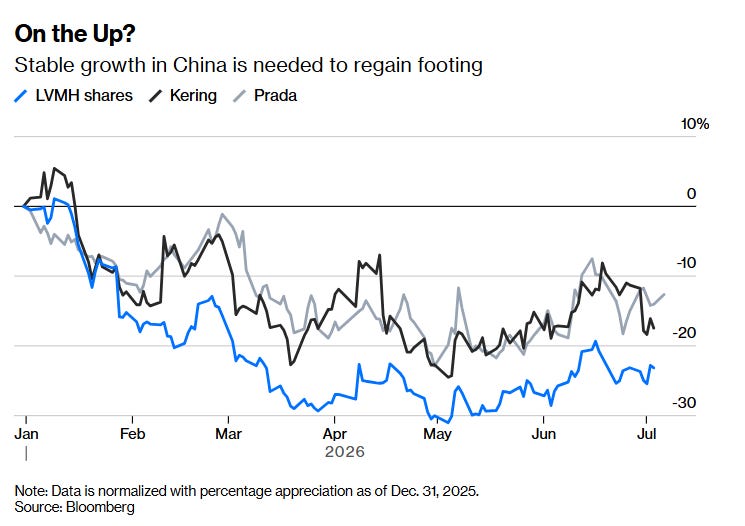
It’s a different world today, with Elon Musk now worth a trillion dollars, and Arnault heading in the other direction. The Chinese make up 30% of LV customers in Asia, and that collapse in Chinese sales of over 30% is in line with the decline in LV’s stock price, also down over 30% for the year:
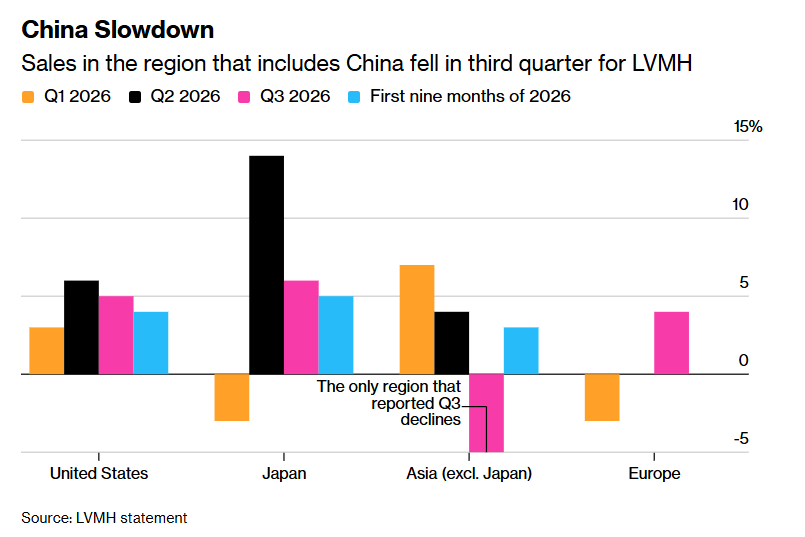
And the following chart shows the China-sized problem for the company—Asia ex-Japan is China, and is the only market that registered a decline in Quarter 3:
Louis Vuitton’s IP “Is an absolute key asset”, and they “diligently protect” those properties. LV did win their case against Molly Tea, who was ordered to pay fines of $1.5 million. But Louis Vuitton got killed in public opinion.
I don’t know much about the luxury market. But I can say some about the Chinese tea market. I’m in Yunnan, and Pu’er tea comes from an area about a hundred miles south of here, and there are probably a hundred tea brands, just from that region. And there are lots of other tea-growing areas elsewhere in Yunnan, and in other provinces, and across other countries in Southeast Asia, and all those brands want to expand in China too.
That’s to say that I’m hard put to think of a more competitive market, anywhere, than the one for Chinese tea, in China. And I’m a salesman for a living and know some things about how marketing works, and wouldn’t have the first clue how to help a company like Molly Tea compete with a tea shop across the street, let alone become a Chinese household name. So that trademark dispute with LV is maybe the best $1.5 million dollars Molly Tea ever spent.
“They lost the lawsuit but won the public”. Today, Molly Tea is growing like crazy. Meanwhile, LV’s market cap is down by over one hundred thousand times what they got from their lawsuit against Molly. It’s off $160 billion US, and LV’s CEO and Deputy CEO were booking flights to China to figure out what to do. “It’s not uncommon for top executives to visit their most important markets”—there’s an understatement, even for Bloomberg. The trip is “an attempt to get a better handle” on what’s happening in China. That was in July.
Here’s their China strategy now: LV has a “special bond” with China, and the company has a “dialogue with Chinese culture.”
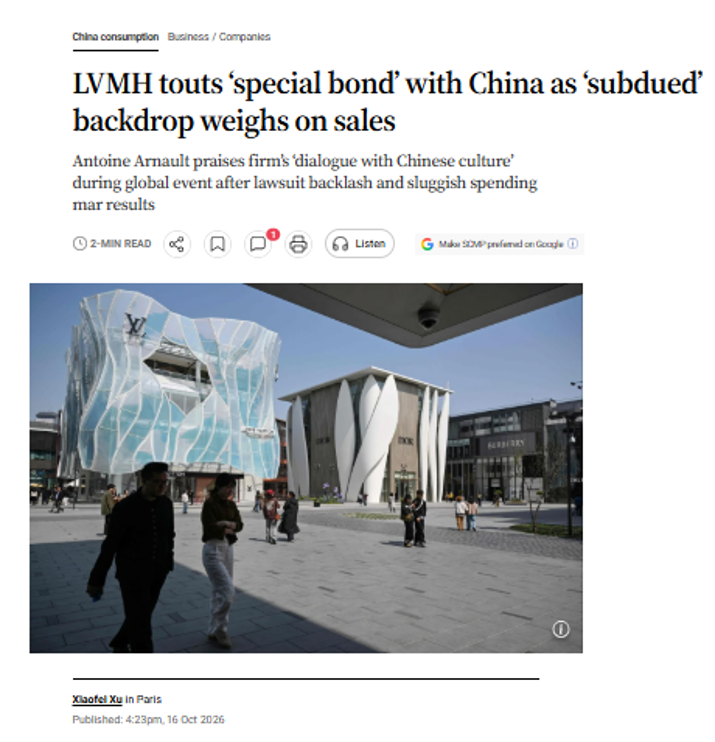
They’re back in Shanghai to kick off a global tour of 13 countries. LV is bringing together several “houses” to share a special bond with China and their Chinese customers.
Their opening ceremony was in Zhangyuan, one of Shanghai’s most culturally significant neighborhoods. Zhangyuan is famous for Shikumen-style architecture, and it was in Zhangyuan where Shanghai got its first electric lights, the first outdoor photo studio, and the first public cinema.
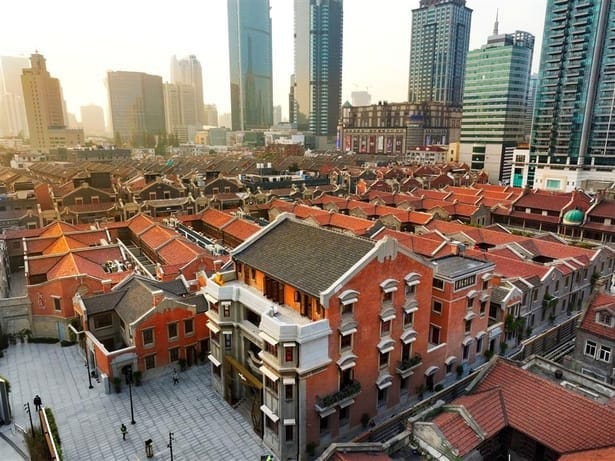
This district was not razed to the ground to make room for M&M’s or Starbucks, or replicas of ocean liners that look like luggage. Now the beautiful people from Paris are there to learn about Chinese calligraphy, and maybe find new logo ideas.
Be Good.
Resources and links:
Louis Vuitton sets sail in Shanghai with ‘The Louis’
https://www.celebremagazine.world/style/fashion/louis-vuitton-sets-sail-in-shanghai-with-the-louis/
Louis Vuitton Loses Sales in China After Tea Logo Case Backlash
https://www.bloomberg.com/news/articles/2026-09-10/louis-vuitton-loses-china-sales-after-legal-fight-with-tea-chain
China Molly Tea’s US$1.5 million Louis Vuitton fine sparks fierce debate, customer support
https://www.scmp.com/news/people-culture/trending-china/article/3359864/china-molly-teas-us15-million-louis-vuitton-fine-sparks-fierce-debate-customer-support
LVMH’s China Slump Dims Hopes for Broader Luxury Recovery
https://www.bloomberg.com/news/articles/2026-10-13/lvmh-s-china-slump-threatens-hopes-for-broader-luxury-recovery
Chinese beverage brand Molly Tea to appeal $15.2 million LV trademark ruling: reports
https://www.globaltimes.cn/page/202607/1365056.shtml
LVMH Sales at Key Unit Tumble on Weaker Demand in China
https://www.bloomberg.com/news/articles/2026-10-12/lvmh-sales-at-key-unit-fall-as-china-woes-hurt-louis-vuitton
LVMH Needs to Beware China’s Luxury Minefield
https://www.bloomberg.com/opinion/articles/2026-07-07/lvmh-needs-to-beware-china-s-luxury-minefield
Guide to Pu-erh Tea Regions: Exploring Yunnan’s Tea Mountains
https://orientaleaf.com/blogs/tea-101/pu-erh-tea-regions-yunnan-guide
LVMH’s Market Value Exceeds $500 Billion, a First in Europe
https://www.bloomberg.com/news/articles/2023-04-24/lvmh-s-market-value-surpasses-500-billion-a-first-in-europe
LVMH touts ‘special bond’ with China as ‘subdued’ backdrop weighs on sales
https://www.scmp.com/business/companies/article/3371145/lvmh-touts-special-bond-china-subdued-backdrop-weighs-sales
Molly Tea, company page
https://usa.mollytea.com/about-us/
Inside China / Business is a reader-supported publication. To receive new posts and support my work, consider becoming a free or paid subscriber.
From Inside China / Business via This RSS Feed.