

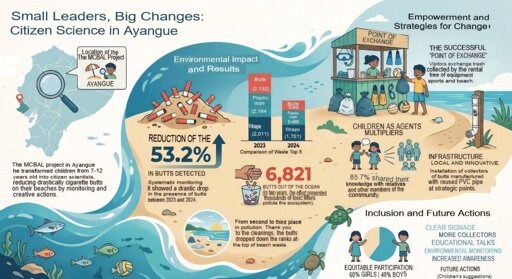
Pollution from human-generated waste in marine ecosystems has reached critical levels, with cigarette butts (CBs) among the most persistent and harmful pollutants. Globally, an estimated 4.5 trillion cigarette butts are discarded annually, making them the most common type of litter on beaches over the past three decades.
From Earth News - Earth Science News, Earth Science, Climate Change via This RSS Feed.
Pollution from human-generated waste in marine ecosystems has reached critical levels, with cigarette butts (CBs) among the most persistent and harmful pollutants. Globally, an estimated 4.5 trillion cigarette butts are discarded annually, making them the most common type of litter on beaches over the past three decades.
This material, composed primarily of cellulose acetate (a nonbiodegradable plastic), acts as a reservoir for more than 7,000 toxic compounds, including nicotine and heavy metals, which threaten the integrity of food webs through bioaccumulation and biomagnification.
