

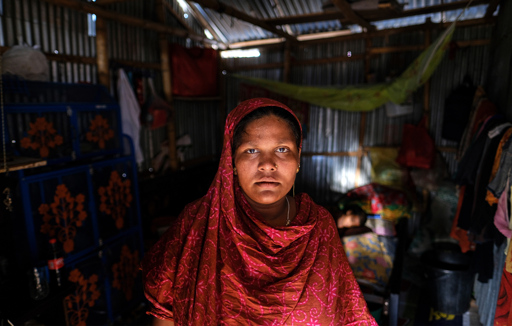
In 2024, disasters displaced 2.4 million people within Bangladesh even as the International Monetary Fund predicts that rising seas could eliminate more than one-seventh of Bangladesh’s land area and nearly one-third of its food production by 2050. As environmental pressures drive people from their homes, researchers are examining the risks migrants face in the secondary cities where they relocate and whether these cities are equipped to accommodate growing numbers of climate-displaced people. To cope with increasing climate-related pressures, migration is often viewed as an adaptive strategy because moving away from areas exposed to hazards such as flooding, cyclones, river erosion and sea-level rise can help people reduce their exposure to climate risks and seek safer housing and more stable livelihoods. In these circumstances, urban informal settlements are often among the first destinations for displaced people. Yet, in Bangladesh, these settlements are risky in nature because of the structural formation, and the residents are exposed to various hazards. This raises a broader question: Are the cities receiving climate migrants equipped to support a safer, more stable future or leaving them more exposed? A new study published in Climate and Development on climate migrants living in informal settlements in southwestern Bangladesh examines what happens to migrants after relocation to secondary settlements. The study findings suggest that moving away from regions affected by climate hazards does not necessarily mean moving toward safety, particularly when urban planning and social protection systems fail to account for their needs. In Shariatpur district, Billal Hossain breaks his…This article was originally published on Mongabay
From Conservation news via This RSS Feed.