

https://www.spreaker.com/show/2952221/episodes/feed
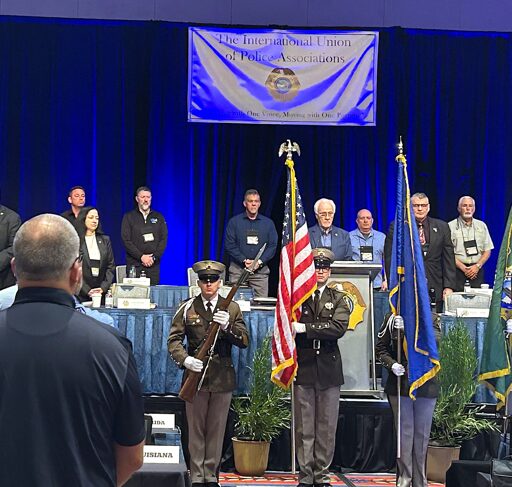
Far from all the political bluster about police being “defunded,” six years after the earth-shaking George Floyd protests swept the US and public approval for law enforcement plummeted, police have never been more politically and monetarily supported than they are now. But when veteran labor reporters and union activists Hamilton Nolan and Jacob Morrison attended the 23rd Quadrennial Convention of the International Union of Police Associations in Las Vegas, Nevada, they found a different kind of union, and a different kind of convention, than they were expecting…
In this special episode of Working People, we speak with Nolan and Morrison about their August reporting trip to the IUPA Convention in Las Vegas.
Additional links/info:
- Hamilton Nolan Substack (How Things Work) and Bluesky page
- Jacob Morrison’s Twitter/X page
- The Valley Labor Report website, YouTube channel, Facebook page, Bluesky page, and Twitter/X page
- Hamilton Nolan & Jacob Morrison, The Real News Network, “Beards and loathing: A cop union convention comes to Las Vegas”
- Hamilton Nolan, How Things Work, “We infiltrated a police union convention in Las Vegas”
Featured Music:
- Jules Taylor, Working People Theme Song
Credits:
- Audio Post-Production: Jules Taylor
Transcript
The following is a rushed transcript and may contain errors. It will be updated.
Jacob Morrison:
All right. Welcome everyone to Working People, a podcast about the lives, jobs, dreams, and struggles of the working class today. My name is not Maximillian Alvarez. It is Jacob Morrison, host of the Valley Labor Report, the largest union talk radio program in the South.
Hamilton Nolan:
And I’m Hamilton Nolan, a labor journalist based in New York City.
Jacob Morrison:
Hamilton and I marched on the boss and took Max’s microphone so we could introduce the special episode about the recent reporting trip we both went on in Las Vegas and wrote about for The Real News Network and how things work.
Hamilton Nolan:
The conference that we went to took place in late hot August in the Las Vegas desert at the beautiful Paris Las Vegas casino underneath a fake Eiffel Tower.
Jacob Morrison:
Here’s the intro to the piece that we wrote together for The Real News.
Hamilton Nolan:
On a plain blue lit stage in a plain event space at the Paris Hotel in Las Vegas, a gruff man with white hair and a thin goatee is complaining about Las Vegas. How it is too hot, how it is too expensive, and how the hotel’s convention management bureaucracy is driving him nuts. You can’t even move a box from left to right without contacting someone to do that, he barks into the microphone.
Jacob Morrison:
This will become a communal ritual by the end of the week. Without fail, like some sort of morning prayer, the convention begins every day with opening grumblings about the convention itself.
Hamilton Nolan:
We can see why. After all, the organization convening here is supposed to be a strong union representing nearly 20,000 members around the country. Far from all the political bluster about the police being defunded. Six years after the earthshaking George Floyd protests sweat the US and public approval for law enforcement plunged to a generational low. These guys have never been more politically and monetarily supported than they are now.
Jacob Morrison:
But there are only about 50 people here in the room with us. Only 28 delegates, 10 alternates and some wives and family members mixed in. The proceedings are pretty boring and energiless. The attendees are grumpy and the air is thick with middle age resentment.
Hamilton Nolan:
Clearly, the convention organizers and speakers were expecting something much different than this. To be honest, so were we, because it’s 2026, Donald Trump is president again, and this is the 23rd quadrennial convention of the International Union of Police Associations, IUPA, which represents tens of thousands of cops and departments from coast to coast.
Jacob Morrison:
The convention was billed as the premier gathering for law enforcement leadership, an event that you don’t want to miss.
Hamilton Nolan:
But it’s absolutely dead here. Even the speakers and attendees don’t want to be here. In fact, they won’t shut up about it.
Maximillian Alvarez:
Man, that piece is so fire and anyone listening to this, you guys have to go read what Jacob and Hamilton wrote from Las Vegas and thinking about this police union convention that took place in Las Vegas. And I can’t recommend it highly enough. We’ve linked to it in the show notes for this episode. We’ve linked to the additional writing that Hamilton did on it for how things work. But I’ve been dying to actually get you guys on the podcast to talk about it. Now that the reporting trip is over, the pieces are out. There’s so much that I just want to ask you guys about what it was like to be there, what the vibe was, the conversations that you were having that didn’t make it into these pieces. So we got a lot to talk about here, but I guess by way of setting things up and really setting the stage for folks, how the hell did you guys end up at this convention?
Who the hell invited you two assholes to Ayupa’s quadrennial convention in Las Vegas?
Jacob Morrison:
I guess I’ll answer that since I’m the one who got the invitation and I’m not totally sure why, but my best guess is that I got an invitation because I’m the principal officer of an AFL – CIO Labor Council. I actually got multiple invitations in the mail to my house. So IUPA knows where I live, which potentially is a terrifying prospect, but maybe it’ll be okay. Maybe I made a couple of friends who will protect me in IUPA. So I got invitations in the mail to Las Vegas, to the IUPA convention. And I say I’m not totally sure because I did ask a couple of Labor Council presidents if they also got that invitation and they said no. But I think that’s probably
Maximillian Alvarez:
It. Maybe they looked you up and saw the mustache and were like, “Oh yeah, this guy’s with us.”
Jacob Morrison:
Yes, maybe that was it. So I got an invitation in the mail and I thought it would be really funny to go. And so I started asking around for somebody to give me the money to go and I found Max.
Maximillian Alvarez:
Enter Max, they left baby.
Jacob Morrison:
My sugar daddy, Maximilian Alvarez. So I was able to go to Vegas. I though it would be very funny. And so I though it would be funny to go, but I also wanted to turn it into sort of a real piece of reporting. And I’ve done some reporting and I’ve done some journalism, but I’m still not super comfortable with that as a label for myself. And Hamilton has been in the space for a lot longer than I have. He’s done a lot of really serious journalism and in this space specifically. And so I thought that it would be made a lot better by having somebody a little bit more experienced to be tag along with me. So I registered with Hamilton as my guest. Nobody asked any questions at the registration phase. And so that’s how we got the invitation. We can maybe talk about when we actually showed up a little bit later, but Hamilton, is there anything else that you would want to add to the how did we end up there?
Hamilton Nolan:
No. As you said, I was just along for the ride on this. Jacob got the invite for some reason still unknown. Max paid the bills and I just tagged along and I had done some reporting on Ayupa, particularly in 2020 when we were trying to get him kicked out of AFLCO and I’ve never in my life been able to get Ayupa to respond to any of my emails or phone calls. So the chance to attend the convention to me was very exciting and I was excited to tag along.
Maximillian Alvarez:
So at any point walking in there, I mean, I don’t know, you guys are two white guys walking in there who maybe probably feel differently than I would walking in there. But at any point did the sort of like high teenager in you kick in and be like, “Oh shit, these guys know who we are. They’re going to come for us” kind of thing?
Hamilton Nolan:
We both look a little bit like cops to be fair. So either one of us could be a cop. Yeah.
Jacob Morrison:
I’ve got the mustache. Hamilton has the build. So together we make a cop.
Maximillian Alvarez:
Well, one of the reasons that the pitch was so compelling to me, we all thought it was funny, weird, interesting. There was something fateful about that invitation ending up in Jacob’s mailbox, just like Harry Potter’s Hogwarts letter, finding him somehow. And I think we could all sense that, but we didn’t quite know what we were going to find there. But like you guys lay out in that intro, you had very different expectations for the convention than what you found. So talk about that. What were you expecting and why? And then when you got there, what were you seeing and how were you processing it?
Hamilton Nolan:
Well, I will point out, first of all, that Jacob was very concerned about kind of OPSEC while we were doing this, cloak and dagger, are they going to find us out? And when we arrived to register for the convention, we said, “Here we are.” We gave them our names and they were like, “We can’t find you.” So they just typed our name and printed it out and gave us a badge. So there was no security at all. And my initial impressions at least, and you can say yours too, Jacob, but I’ve been to a fair number of union conventions and this was probably the most low energy union convention that I’ve ever been to in my life, which was a surprise to me.
Jacob Morrison:
Yes. On the OPSEC thing, there was a continued sort of incuriousness about who we were at the time. I don’t think anybody ever asked you, Hamilton, what you do for a job, which is crazy.
Hamilton Nolan:
Jacob was trying to workshop his cover story and actually nobody gave a damn at all. Yeah.
Jacob Morrison:
Yeah. I talked to this one guy for literally an hour after the convention proceedings were over for the day, and I just kept asking him questions about his job. It was the local president who said in the piece that they’re affiliated with their labor council, but they don’t really do anything over political differences. I spoke to this guy for an hour. He never was curious about me at all. Who is this guy who’s not in IUPA? I mentioned, I’m not in IUPA and no further questions at all.
Maximillian Alvarez:
I’m sure every woman listening to this is saying, “You mean a man didn’t give a shit about anything you had to say?” It’s like big story of the year there, but I guess that’s kind of what I was getting from the reportage that you guys did for this piece is because some of the big questions you and we and you guys as ambassadors for the labor movement were going in there to ask is like, “Why are these guys in the labor movement and do they feel like they’re part of it?” And then you add on all the other politics of the police state that has been ramping up, especially ever since the George Floyd uprisings in 2020. But before we dig into that, I wanted to just ask a little more about the setting here and the sort of Noir-ish kind of presence in this story.
A, because you guys have to humor me and I promise that I was like, “I won’t turn this piece too much into a fake Hunter S. Thompson piece, but I feel like there’s something genuinely kind of overlapping here with what Fear and Loathing in Las Vegas was actually doing and observing at the time in the America that existed back then. And you guys are doing the same in a very different kind of America in a very different Las Vegas where most of that noir has been paved over, blown up and rebuilt and consolidated under a few kind of mega owners of the Strip. So talk a little more about the sort of setting and the proceedings of the convention itself before we dig into the kind of politics of it.
Hamilton Nolan:
Yeah. I mean, Fear and Low in Las Vegas, for those of you who haven’t read it, a large scene in the book is them attending a cop convention while high on a lot of powerful drugs. And Jacob refused to take any mescaline despite my trying to peer pressure him. So we didn’t have the drug part, but Vegas is an extremely fucking weird setting as anybody knows who’s been to the Vegas Strip. Paris, Las Vegas has a huge fake hot air balloon out front and a huge fake Eiffel Tower inside. There’s chandeliers hanging from the ceiling. There’s huge oil paintings of Louis XIV on the outside of the ballroom where we were. And then five steps away is a sign leading to the strip club and the next hotel and a cigar bar where middle-aged guys are sexually harassing the waitresses. So that was kind of the setting that we were in.
And ironically, Vegas, of course, the entire Vegas strip is unionized and the Kulinary Union in Las Vegas, one of the most powerful local unions in America. So Vegas is in a very real sense a union town and we were here for union convention and then the guys proceeded to kind of bitch about the fact that the union imposed a bunch of rules in the hotel. So that sort of came full circle for me.
Maximillian Alvarez:
And Jacob, let me ask, had you ever been to Las Vegas before?
Jacob Morrison:
No. No, I’d never been to Las Vegas.
Maximillian Alvarez:
All right, country boy. What was it like going into that for the first time?
Jacob Morrison:
It was definitely crazy. Not only grew up sort of out in the county, but also very religious. And so very different vibes. They call it Sin City for a reason, obviously. And there’s an energy in Las Vegas, obviously, all of the gambling, the drinking, the girls and everything like that was just so contrasted with the very sort of dull, except for Rizzo. And I hope that, Hamilton, you’ll be able to talk about Rizzo, but even that was kind of dull a little bit, people kind of got tired of it. But the convention was just like… There was one time when I got up because there was a part of the convention that was clearly not newsworthy. It was very internal stuff and just not very interesting. So I left to go get lunch, I think. And I happened to be in the elevator up to my room with another officer or with an officer, I’m not an officer, with an officer.
And I asked him where he was going. He was like, “I’m going to take a nap. This is terrible.” I was like, “Oh, is this your first convention?” He said, “Yeah, it’s awful. I hate it basically.” I very, very much underestimated, like you talked about the contrast of what we were expecting. I was expecting not a huge convention, 20,000 members is not a very large international union, but I expected at least a hundred delegates and then some alternates and some family. That’s sort of what I was expecting at the least. The sort of mean I was expecting was maybe 200, maybe 250. And so getting there, there’s only 28 people who can vote on… That was crazy to me. So I was way overestimating how many people would be there and I was way underestimating how big Las Vegas is because part of my plan was I’m going to go down after the convention proceedings to the hotel bar and find one of these guys after the proceedings and shoot the shit with them for a few hours and get super drunk.
I really wanted to do that. And as soon as the proceedings was over and people left, they blended into the thousands of people that were there and there was just no finding anybody or connecting after the convention if you do not get their phone number and talk to them and make plans. There were so few people there and it was kind of… I don’t know.
Hamilton Nolan:
Jacob was envisioning a Holiday Inn. And in fact, the Paris Las Vegas has 3,500 rooms.
Maximillian Alvarez:
Yeah. Well, it’s so wild because I grew up with Las Vegas being a big part of our lives as it was for so many people in the Southwest, particularly Southern California. Because in those sort of post mob town days of Las Vegas in the ’80s and ’90s, they were really trying to and succeeded in rebranding Vegas as the family friendly haven of these massive hotels, these big ridiculously overdone shows and buffets and pools and arcades. It was awesome. I’ve honestly had more fun in Las Vegas with my siblings and cousins in the ’90s when I was a kid than I’ve ever had being there after I was 21 and could drink. I don’t know what that says, but it’s also like I’ve watched Vegas change a lot over the years. A lot, a lot. I’ve seen some of those old hotels get blown up or live television feeds of them getting blown up.
And then you go there after a few years of not going there and all the things you remember are gone or renamed or under a new theme and new ownership. There is something uniquely American that is very intensely expressed in Las Vegas. And again, I feel like that is still the case now in the settings that you guys were in, but I want to talk about the union and what state is IUPA in? What the hell do they do and what were they doing at this convention?
Jacob Morrison:
The state of IUPA, it’s funny, because the turnout was so low, the energy was so low, it felt very familiar to me as the member of a public sector union where we have little… There’s not a whole lot of activity among our members and we don’t have very much power, which was very surprising because of all the reasons that we say in the introduction to the peace, the power of police has basically never been better. The police unions are politically feated and they didn’t even have a congressperson at their convention. I was expecting at least one sort of right-wing congressperson to be there. And the highest ranking official that they got was some deputy assistant under secretary of Homeland Security who is the liaison to local governments. I mean, that was sort of surprising to me. I guess
Maximillian Alvarez:
The state doesn’t need the police when we have a police state.
Jacob Morrison:
That may be part of it or it may be that IUPA, I mentioned this in the piece as well, that because IUPA is such a small union and there are other big police unions like the FOP, the PBA, that maybe this union in particular, and potentially because of its affiliation with the AFL – CIO, I’m not really sure and I wasn’t able to get an interview with Sam Cabral, the international president. I tried multiple times while we were on the trip and wasn’t able to make that happen. He would’ve been the one to answer those questions about sort of national politics within the labor movement and with the administration and with other politicians. And I really hate that I wasn’t able to get that interview, but those are questions that still remain. Is it because the police state doesn’t need the police unions or is it primarily because of the way that IUPA itself as an entity is situated in the political environment and there’s not really much of a need for them when they have the PBA and the FOP to be a liaison to them for law enforcement?
I’m not sure.
Hamilton Nolan:
So yeah, IUPA is a relatively small police union. The Fraternal Order of Police and the Police Benevolent Association are bigger. What makes IUPA interesting is they’re the only police union in the AFL – CIO. So they’re the only pure police union that is formally aligned with what is effectively the labor movement, the AFL – CO, America’s biggest labor federation. So they’re in an interesting political place. I mean, the convention itself, if you say, was this a union convention or a cop convention? It was much more a cop convention. And part of a cop convention, I think this is sort of maybe the symbolic part of all this is like they want to go to Vegas and play golf, man. That’s why people would attend the IUPA convention in Vegas is to go play golf. And part of the reason why Sam Cabral, IUPA’s president, sounded so pissed off every day as he was conducting this convention is I think they had so much busy work to do that he wasn’t able to just let everybody go out and play golf.
But the vendors that showed up next to the convention were like cop stuff, body cams, several of which were stolen from the reception at the last night of the convention, which was funny.
Jacob Morrison:
Yeah, there was a vendor for assault boats, right?
Hamilton Nolan:
Yeah. Assault boats.
Jacob Morrison:
Which is correct. The union is not going to be the ones purchasing assault. And so that adds to
Hamilton Nolan:
The – Right. It wasn’t like DSA was there in the vendor section. I mean, it was stuff that cops would want, although they were not allowed to have actual firearms in the hotel. So when they auctioned off a rifle, they just had to have a picture of it and I think to deliver it later on. I
Jacob Morrison:
Tried to get the rifle myself because that would’ve been funny, but unfortunately, my raffle was not picked.
Maximillian Alvarez:
Yeah. I mean, you can only commit so far to the bit, I suppose. And insofar as this was still a labor conference and a union convention where stuff was getting done, I want to talk about that, right? I mean, because there’s so many big questions here that we… And by we, I mean people in the broader labor movement, people connected to it, who support it, who have family members in it, who believe in it, and just working people in general who believe that workers banding together and fighting for our needs together is the way forward. And people like us who have questions of what the hell kind of relationship are we supposed to have to the police? There’s so much kind of intensity in those debates online and in person that also seem to contrast so much with the setting you were in, the discussions that were being had, and the mentalities of the people attending this conference.
So talk more about that. Do they see themselves as part of the labor movement? Do they still operate like a union?
Hamilton Nolan:
Well, the most fascinating part of this conference to me was getting to be in the room when a police union is talking to itself, presumably with nobody else in the room, right? There was no obvious press here or anything. So that was actually a very interesting kind of look behind the curtain because of the tone that a lot of the speakers had at the convention. And you saw really the qualities, I guess, that people think about police, but maybe don’t get to see so directly. The defensiveness, the kind of military mindedness, the us against the world thing, the we’re the good guys and they’re the bad guys thing. All of that was very much manifested in the speakers that we had, including some of the speakers were so wacky and sort of bizarre and crazy that you start to worry, these are the guys who are talking to the guys with guns.
I mean, that doesn’t make me feel very good. One of the ones that stood out to me crossing over for the union part is there was a guy who spoke from a legal defense fund that serves police unions and all police unions can pay in to tap into the services of this legal defense fund and they will fund legal defense if you, as a police union member, do anything. And he was like, “It could be easy stuff like a dead body in the back of your car or basic stuff like you walk into the jail cell, the guy’s dead, and next thing you know –
Maximillian Alvarez:
Quick question, wasn’t Harvey Keitel from Pulp Fiction doing this?”
Hamilton Nolan:
I mean, to me it sounded awesome. I was like, “I would love to be in a legal defense.” He was like, “Even if you’re here in Las Vegas off duty, if something happens and something goes down and you got to shoot a guy, I mean, we will come to your defense if it was sort of a police action.” So that was pretty interesting to me.
Jacob Morrison:
And absolutely no sort of hemming and hawing about that either. That’s the thing that really kind of stuck out to me about that. And I guess it makes sense because they’re talking to themselves and they don’t feel like they have to justify it, but there really was no attempt to justify why should you as an off-duty cop from Florida be able to shoot and kill somebody in Las Vegas and have a Cadillac legal defense for it? I mean, why should you have that? No attempt to justify that at all and no attempt to reckon with the way that folks who are asking for more police accountability feel about the police and the reason that they would say they don’t have to, even beyond the fact that they felt like they were talking to themselves and so they don’t have to do that. But they cited approval polls from Gallup and stuff about how something like 74% of Americans have some or a great deal of confidence in their local police.
And so they feel like they have sort of won the propaganda war and it’s us actually who are wrong.
Hamilton Nolan:
I was just going to add, if you’ve been to a lot of union conventions or you spent time in union world period, at any union events, there’s usually a lot of talk about solidarity, the basic union buzzwords, and there was almost none of that at this convention. And that really leapt out to me too. I mean, I’ve never been to a union convention or event of any type where almost nobody said solidarity, union, we’re all together, very little of that at all.
Jacob Morrison:
Certainly no attempts to make alliances or highlight alliances that they have with other unions, which do exist, and you can read the piece for more of that locally, but there were no other unions that were speakers there. I mean, at most union conventions, you’ll have other unions speaking. I mean, I think that at the Letter Carriers Convention, Sean O’Brien spoke, at the UAW convention, Sarah Nelson has spoke.That’s a pretty common thing. At the AFL – CIO conventions in Alabama, we have bunch of union speakers. We’ve had people from the UMWA, we’ve had Sarah Nelson, and no other unions at all, not even other cop unions.
Maximillian Alvarez:
Well, and for that reason, there was so much in the figure of Sam Cabral, IUPA president, and the sort of vibe and mentality that he embodied that echoes the steward of Gondor, just really having this sense of we have no friends, we are the thin blue line defending everyone from the darkness that is always ever creeping, but now the darkness is creeping from within our own ranks and we’re the ones holding society together, yada, yada, yada. It feels like so much of that was dripping from the details that you guys gave in this incredible piece, but –
Jacob Morrison:
Can I say something really quick about Cabral? He gave his speech, I think it was either right before or right after he was reelected president of the International, and not a good speaker, which is fine. Lots of people aren’t good speakers, but he was not a good speaker. I don’t think he would say he was a good speaker, but he had some interesting stuff in his backstory that I really would’ve loved to have asked him about. He said that a big reason that he decided to join the union was because of his dad who was in the Meat Cutters Union, which was a union that ultimately became a part of the UFCW, and about how inspired he was by his dad fighting for people that were being bullied, and how he doesn’t like bullies, and how that was such an inspiration to him. And so when he got on with the police force, he wanted to do that for rank and file officers who were being bullied by management.
And I thought that to me was basically the only time that I heard anything from Cabral that sounded like it tracked with my theory or the way that I think of unions. It seemed like there was a real sort of grain of unionism there in Cabral that I found interesting and I would’ve really liked to have talked to him about, because it seems like that sort… Of solidarity with the common every man, like the every man outside of law enforcement has really been buried. And it made me think of Bill Fletcher. I spoke to him for this piece and he talked about how in AFGE, among some of the law enforcement sections, particularly the federal prison guards, he told me, and this wasn’t in the piece, he told me that these guards, literally every single day, they are surrounded by people who would kill them.
They would, a lot of them would kill these guards at the drop of a hat. And doing that and not having a community outside of this law enforcement community to keep you grounded and to make you realize that that is not the rest of the world, the real world does not operate like everybody is out to kill you. If you don’t have a community that can ground you in a reality that’s outside of that, it sort of breaks your brain and it gets kind of boiled alive. And I wonder if something like that sort of happened to Cabral. It was something that I would’ve loved to have asked him about.
Maximillian Alvarez:
Well, and in terms of what you guys were able to ask other attendees and speakers about, like we said, there’s so much here that you guys got the chance to kind of pose to these union members who are part of the only cop union affiliated with the AFL – CIO. And you write beautifully in this piece, and I’m just going to read it, where you guys say, “It is by no means the largest police union in America, but AIUPA has the distinction of being the only police union that is a member of the AFL – CIO. It joined the Labor Federation in 1979, making it a formal but uncomfortable partner to every progressive labor union and every rank and file union member in the AFL – CIO who has ever had to question why they should be affiliated with a union representing the same kind of cops who beat and arrest them, their union siblings, and their neighbors at protests and on picket lines.” So when you guys talked to them about that, what did they have to say?
Hamilton Nolan:
Well, first of all, I’ll say Sam Cabral, all three of us would love to interview you, Sam Cabral, so please reach out to us anytime, open invitation. I, as I mentioned, have covered IUPA a bit, particularly in 2020. Their media relations are kind of interesting to me. They’re very quiet. Absolutely, not only do they not do outreach very much, but they rarely respond to not just me from the left wing magazine, but to almost anybody. If you look them up in Google News, very little news about them apart from the fact that they had to go bankrupt because one of their people got sued for sexual harassment, but that’s a different story. But when you look at what Sam Cabral is on the record having done in the past decade or so, when Ferguson was going on and Michael Brown was killed and Richard Trumpka, who was the head of the AFL – CIO tried to make some positive statements about police reform, Sam Cabral sent a very angry, scathing letter to the AFL – COO, rejecting the idea that there was any racism in policing.
Then fast forward to 2020, George Floyd, once again, the AFL – CO, Richard Trumpka, tries to make some supportive gestures towards Black Lives Matter. And again, Sam Cabral sends an angry, scathing letter saying that the AFL – CO is demonizing police and how dare you do this and how dare you suggest police are racist. And then at this convention, a huge theme of the convention was like the crazies are trying to defund police and putting us all in danger and we’re fighting back and there’s this horrible danger on the horizon in the form of the democratic socialists who are going to defund police once again. And it’s fictional in a sense, but it’s also an interesting kind of look into the mind state. And when you talk about their PR strategy, one thing I learned at this convention, which I did not know before was that IUPA gives an award to journalists almost every year at their conventions.
And they’ve been doing so for decades now. And a lot of them are, it’s sort of like you’re the journalist who wrote great stuff about the cops, an actual award with a plaque and everything. And a lot of them were to, because they had a list of all of them in the brochure. And a lot of them were to sites like lawenforcementnews.com or some of them were to Fox News figures, Greta Van Sustran and stuff like that, who you wouldn’t really be surprised by. But some of them were also to Bob Schaefer from CBS News and people like that who had apparently accepted this award from IUPA. And again, it’s like that bunker mentality of talking to the world that Jacob touched on. It’s like it’s us and our friends and then it’s our enemies. And I think that came through a lot at this convention for me.
Jacob Morrison:
It was funny that this year’s recipient did not come to pick up her prize.
Maximillian Alvarez:
Well, again, it sounds like hardly anyone came, so I guess we shouldn’t be surprised there, but I wanted to save this for the last 10 minutes after all the heavy lifting you guys have done to go there to Vegas, to be there for this convention, to write about it, to go through all the editing, co-publishing, all that. But we got 10 minutes here to sort of address the big question that the feature piece leads with is are cops part of the labor movement or are they an existential threat to it? I mean, I wanted to sort of ask for your guys’ thoughts on that, understanding that there are plenty of people, including people who listen to the show, people that we have interviewed and worked with who are not your typical sort of DSA defund, all cops are bastards kind of people. But as listeners can hear, you guys have been invested in this question, Hamilton, for longer than any of us, but it’s been something that you’ve looked at, seen, talked about, analyzed for many years.
So I wanted to ask where you stood on that question before the convention, if anything from the convention has changed your mind. And I guess having somehow gotten into this sad, decrepit, soulless convention and seeing a bit how the sausage is made, what do you think the rest of us on the outside who never get to see that need to understand about these kinds of cops and this kind of union?
Hamilton Nolan:
Well, I’ll put my cards on the table because I really do have an opinion on this that’s maybe stronger than a typical journalist you might think of. But in 2020 when the George Floyd protests were happening and Black Lives Matter was happening, there was a national movement within the labor movement to kick IUPA out of the AFL – CO. I was active in that. My union, the Writers Guild of America East, which is an AFL – CO member, passed a resolution. So that came from our entire union urging the AFL – CO to kick out IUPA, which the AFL – CO did not. And I also reported on the AFL – CO and IUPA. And what I saw really was the AFL crazily trying to sweep it under the rug, really, really trying to minimize it. Eventually they sort of formed a commission that came out with the report a year later that they totally buried and didn’t publicize.
And that report, in fact, rejected calls to defund police and rejected calls to kick out IUPA. And the same people that put out that report are still running the AFL – CO. So my belief, and it’s a belief that a lot of other people share and have written eloquently about, is that the goals of police unions are fundamentally incompatible with the solidarity that defines the labor movement. My personal belief is police can have unions. They are workers. They work, they have a job. They can, as far as I’m concerned, have collective bargaining and bargain over their wages and working conditions. But that is a different proposition from them being in our labor federation and being a formal part of the labor movement, because being a part of labor movement demands solidarity. Solidarity is a give and take. You give solidarity and you get the benefit of solidarity.
And that is not something that I think police are existentially capable of doing or that we’ve ever seen police do in the history of America. And everybody who says that, “Oh no, no, we need to keep them close and this is going to make them better,” it’s never come true. And I think at some point we have to recognize that. So I would love to see this issue, and thanks for bringing it up, Max, but I’d love to see the issue once again get elevated because the only way the labor movement’s going to make progress on this is for a lot of people to agitate around it and organize around it within your local unions and elevate that up the chain.
Jacob Morrison:
Yeah. When I talked to Bill Fletcher about this, he has basically the same position as Nolan. And I asked him if that position was, does that sort of run counter to what you told me you’ll recall about the federal prison guards, how if these guards, they don’t have a community outside of law enforcement that sort of grounds them in the real world, then they sort of fly off the handle and become crazy. Is that not an argument for maintaining them as part of our labor movement and engaging with them? And he said that the problem with that is that within the Labor Federation, within the AFL – CIO and within unions that have sections of law enforcement, that never actually happens. Potentially he said that maybe that’s an argument to do it actually, but in the real world that hasn’t happened. I mean, like Hamilton talked about, there was this report and they said, “We believe that there would be more good from engaging our police affiliates than isolating them.” And maybe that’s true.
And I think potentially my interviews with leaders of the Memphis Police Association, maybe they speak to the value of that. I have a full hour up on the Valley Labor Report with the vice president of the Memphis Police Association. And long story short, I was able to write some in The Real News and talked about some in my interview about the ways that the Memphis Police Association very much unlike other police associations has stood in solidarity with unions in Memphis, has supported collective bargaining rights, not just for themselves, but for the other city unions, has supported striking workers and not arrested striking workers when they were called on to harass them by the boss and anti-union forces. And so maybe the unique history of Memphis, maybe there’s a path forward there, but you can’t talk about that as a path forward without recognizing that even though that has been talked about in other places within AFGE, within the AFL – CIO, the leaders of these federations show no appetite to actually make that happen.
And the leaders of the police associations by and large show no appetite to allow that to happen to them. I mean, there’s just no appetite at the international level from IUPA and certainly not from the FOP or the PBA for any sort of reform. And I talked to Covington about this, the vice president of the Memphis Police Association, John Covington, about why would you want to be sort of burdened with the responsibility of responding to the homelessness crisis in this country, the mental health crisis in this country, and every societal ill should not be handled by an armed agent of the state is sort of how I feel about it. And he had his response and it was basically like that these things can get dangerous and so basically we need somebody with a gun who can kill somebody if it gets out of hand.
And he actually even pushed back against having social workers in addition to cop teams because he was like, “If we have a social worker there, then that’s another person that I have to protect as the one with the gun.” And I think that is sort of part of his brain being broken and being always in the world of it’s us against them and everybody is out to kill me. And I don’t think that that is actually the world that we live in. Even when we’re talking about the mental health crisis and the homelessness crisis, I think that by and large, most of those people are not going to be violent unless violence is threatened against or put against them. And that’s just not really something that cops seem willing to tolerate.
Maximillian Alvarez:
Well, and at a certain point, you really got to be able to see past the goodness real are perceived of the individual people wearing badges and think about, to borrow Hamilton’s term, the sort of existential basis of this job and the sort of powers of that badge. There are certain built-in structural foundational incentives that are literally pushing those people, good or not, to do the opposite of what everyone else would have to do in that situation. It’s like arguing why business owners all turn into Jeff Bezos want to be power hungry monsters because they’re literally incentivized to. They’re rewarded for being that. And the state apparatus is constantly giving them benefits for doing that. And the same sort of thing applies to cop unions, right? Why would they have solidarity when they are constantly being kind of enabled by the state to get by without it?
My mind always goes to what union workers and retirees in Wisconsin told me about Act 10 in 2011. When Governor Scott Walker and the Republicans during the Great Recession were capitalizing on people’s pain to just go all out against public sector workers and unions, go after their collective bargaining rights, their wages, their ability to even maintain their unions. But of course, there were carve outs for cop unions, firefighters, and deputy sheriffs. And that kind of pattern has been repeated in so many ways around the country. So it does sort of beg the question of why would they show solidarity with us if they are always sort of incentivized not to and rewarded for it?
Hamilton Nolan:
Something that is so relevant to this discussion I think is that this summer, 2026, the AFL – CO’s convention was held in Minneapolis. They purposely held it in Minneapolis in order to celebrate the Minnesota labor movement’s actions in opposition to ICE. So the whole kind of underlying theme of the AFL – CO convention this year was we are celebrating the Minnesota Labor Movement and what they did to resist ICE, particularly in Minneapolis. And at IUPA’s convention, they have speakers up there celebrating the agreements that local unions strike to help out ICE and help them in their deportation campaign. And it comes down to which side are you on? Everybody in the labor movement knows the song, which side are you on? And I would challenge the AFL – CIO to tell me how you reconcile these two points, how you believe you can have a union in your federation that is celebrating and assisting ICE’s deportation campaign at the same time you as a federation are purportedly celebrating our resistance to that thing.
It doesn’t work.
Jacob Morrison:
The International Union of Police Associations was the only affiliate of the AFL – CIO to not attend the quadrennial convention in June in Minneapolis.
Maximillian Alvarez:
All right gang, that’s going to wrap things up for us today. I want to thank our special guests, the incredible labor journalists and real news contributors, Hamilton Nolan and Jacob Morrison. Go follow and support Hamilton Substack, how things work and read his book, The Hammer. Go follow and support Jacob and the Valley Labor Report. My God, we need their work now more than ever. And I cannot stress this enough. Go read their amazing pieces about the IUPA Convention in Las Vegas that we published on the Real News website and that Hamilton published at How Things Work. We’ve linked to both of those in the show notes for this episode. And of course, I want to thank you all for listening and I want to thank you guys for caring about this. We do all of this work for you, but we cannot do it without you.
And that goes for us here at Working People in the Real News and also for Hamilton, Jacob, and every other labor journalist that you support. Working People is brought to you in partnership with In These Times Magazine and The Real News Network. This show is produced by the great Jules Taylor and is a proud member of the Labor Radio Podcast Network. We’ll see y’all back here next time for another episode of Working People. And in the meantime, go explore all the great work that we’re doing at The Real News, where we do grassroots reporting that lifts up the voices and stories from the front lines of struggle. Subscribe to our YouTube channel, check out our great podcasts like Under the Shadow and the Battle for Free Speech, and connect with us on social media and get updates on our reporting there and help us do more work like this by going to therealnews.com/donate and becoming a supporter today.
I promise you guys, it really makes a difference. I’m Maximilian Alvarez.
Hamilton Nolan:
I’m Hamilton Nolan.
Jacob Morrison:
I’m Jacob Morrison.
Maximillian Alvarez:
Take care of yourselves.
Jacob Morrison:
Take care of each other.
Hamilton Nolan:
Solidarity forever.
From The Real News Network via This RSS Feed.
Police don’t think of their unions and labor unions as the same thing. They will happily use deadly force to help the billionaires break real unions.
Cops are not workers, they are class traitors
