

By Pedro Labayen Herrera – Oct 20, 2026
In this edition of the Ecuador News Round-Up:
Elections and Rule of Law: Efforts to Block the Opposition From Elections Spark International Concern
- After barring several opposition parties from participating in upcoming local elections, electoral officials target individual candidacies.
- Former presidential candidate Luisa González barred from running under Indigenous Pachakutik party umbrella after rival meets privately with head of local electoral body.
- Inter-American Commission on Human Rights calls on Ecuador to “ensure pluralist political participation” while NYU’s Rule of Law Lab publishes report on threats to judicial independence posed by President Daniel Noboa.
- Critics accuse Noboa of unfairly using government spending to influence voters.
Security and Human Rights: Noboa Declares New State of Emergency as Human Rights Abuses Persist
- Despite past abuses, Noboa declares new state of emergency and curfew for several provinces.
- Human rights experts highlight military’s refusal to cooperate with investigations into forced disappearances and allegations of sexual abuse in women’s prison.
- The National Assembly passes new legislation allowing the military to be deployed to support police without a state of emergency.
- Press freedoms threatened as major outlet stops printing after intense government scrutiny.
US-Ecuador Relations: SOUTHCOM Expands Its Presence and Activities in Ecuador
- US troops join Ecuadorian police in unprecedented raids and deepen presence at an Ecuadorian air base.
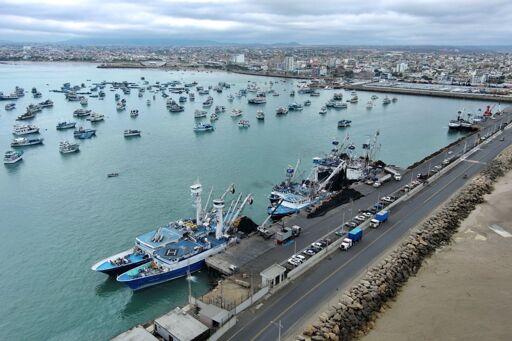
- US forces interdict fishing boats at least eight times, detaining and allegedly abusing their crews and destroying the boats.
- UN expert expresses concern regarding reports of violations of international law by US-Ecuador joint operations.
- US Departments of State and the Treasury impose sanctions and visa restrictions on Ecuadorian targets, while Secretary of State Marco Rubio pledges millions in new US commitments to Ecuador.
The Economy: Escalating Energy Shortages Amid Mounting Financial Pressures
- Industrial power cuts expand from 24 to 72 hours per week amid mounting energy crisis, prompting business groups to warn of job losses and production disruptions.
- Fuel distributors protest government pricing policies as Noboa announces fuel subsidy expansion to ease pressure on consumers.
- Potentially strong El Niño threatens to worsen inflation, electricity shortages, and economic growth.
- Bond prices fall following the departure of the Minister of Economy and Finance as Ecuador awaits $780 million in IMF financing.
- Noboa seeks foreign investment in the Sacha oil field and backs indefinite extension of tax benefits for the banana sector.
Elections and Rule of Law: Efforts to Block the Opposition From Elections Spark International Concern
Ecuadorian electoral and judicial officials, who have largely acted in support of President Daniel Noboa and his National Democratic Action (ADN) party, are escalating efforts to prevent the opposition from participating in the upcoming local elections. As described in previous editions of the Round-Up, authorities have already controversially moved the elections forward by several months, prosecuted opposition candidates, and barred Ecuador’s largest opposition party, Citizen’s Revolution (RC), from running, along with an allied party, Amigo, which had agreed to field RC candidates. The latter measures were taken at the request of the government–aligned interim prosecutor general, who cited classified investigations into the two parties.
Since then, officials have prevented Luisa González, a prominent RC member and RC’s last presidential candidate, from participating in the elections. In late August, a provincial branch of Ecuador’s National Electoral Council (CNE), the country’s electoral authority, ruled that González could not run for prefect (the equivalent of governor) of Manabí under the banner of Pachakutik, an Indigenous party. Pachakutik had invited González to run after RC and Amigo were suspended, but a member of President Noboa’s ADN party challenged her candidacy. The provincial branch of the CNE for Manabí ruled that González could not run with Pachakutik because the party’s bylaws require candidates to have been active members for at least two years. This decision came despite Ecuadorian law allowing parties to field candidates from outside their ranks and Pachakutik’s internal rules allowing up to 20 percent of its slate to be made up of such candidates in this specific election. With both RC and Amigo suspended, Pachakutik was González’s only viable option.
The Manabí Provincial Electoral Board’s decision to disqualify González has since come under intense scrutiny. A video emerged showing Marco Zambrano, a candidate from President Noboa’s political party who is competing for the same office as González, privately meeting with provincial electoral officials at a hotel. The meeting reportedly lasted an hour and a half and took place just two days before the ruling against González. Although the substance of the discussions is unknown, the meeting itself has raised serious questions about the Manabí provincial CNE’s impartiality and independence. In Quito, the national CNE subsequently opened an investigation and removed the head of the provincial CNE but in a split vote ultimately upheld its decision. The Electoral Dispute Tribunal (TCE), Ecuador’s electoral court, likewise upheld the ruling on appeal.
During this time, Pachakutik itself was also targeted by the head of the national CNE, who filed a complaint against the party over alleged campaign finance violations dating back two years. Although the sanctions could have included the party’s suspension, the TCE instead fined Pachakutik’s leader.
Following González’s removal from the ballot, the RC turned to another candidate, Jaime Estrada, who registered with the local party Sí Podemos (Yes We Can). Mishel Mancheno, an ADN member who also presides over Ecuador’s National Assembly, challenged Estrada’s candidacy, and electoral authorities then barred Estrada from participating over a missing signature on his registration documents. Estrada also had his bank accounts frozen as part of what a government official described as a money-laundering investigation. The same measure was taken against Andrés Roche, the Social Christian Party’s candidate for mayor of Guayaquil.
Analysts expect the RC’s exclusion from the elections to negatively impact its candidates, who may be less recognizable without a unified ticket and the party’s established branding. RC reported that out of the 5,742 candidates the party had originally fielded with Amigo, only 2,512, running under 27 different parties, were allowed to stand.
Against this backdrop, the Inter-American Commission on Human Rights (IACHR) issued a press release on August 31 calling “on Ecuador to ensure pluralist political participation in upcoming local elections.” The release highlights the CNE’s decision to move the elections forward, as well as measures restricting political participation. These include the suspension of RC and Amigo and the revocation of the legal status of the left-wing Popular Unity Party and right-wing Construye movement. The IACHR stated that “all restrictions of political participation must be established by law, have a legitimate purpose, and be necessary and proportionate,” adding that the commission “acknowledges the need to ensure that [judicial and electoral] bodies are autonomous and free from any form of interference.” In a rare move, especially regarding developments over the past few years in Ecuador, Secretary General of the Organization of American States Albert Ramdin publicly said that he “took note” of the IACHR’s press release and would “closely follow the [electoral] process.”
Critics also argue that President Noboa is attempting to influence the election’s outcome in his party’s favor through government spending. In late September, the president announced that the mandatory Christmas bonus for public-sector employees, typically paid on December 24, would instead be paid on November 16, less than two weeks before the local elections on November 29. In addition, Noboa announced an expansion of a sporadic government-branded youth engagement initiative that has been deployed during electoral campaigns. Scheduled for October 30 and November 27, the program will distribute two $400 payments to 700,000 citizens aged 18 to 29 who engage in volunteer activities and other vague professional training programs at an estimated cost of around $560 million. Noboa implemented these same moves ahead of his own presidential election and referendum last year.
Beyond the electoral authorities, concerns have also been raised about interference in Ecuador’s Constitutional Court. On September 22, New York University’s Rule of Law Lab published a report documenting “how President Daniel Noboa’s government has retaliated against Ecuador’s Constitutional Court for enforcing constitutional limits on executive power.” The report found that the Noboa administration’s actions “threaten the independence of the country’s principal independent check on the Executive.” As we have also noted in previous editions of the Ecuador News Round-Up, the report highlights that:
The Executive has retaliated against the Court by (i) publicly delegitimizing the Court; (ii) intimidating and publicly exposing its justices; (iii) weaponizing criminal proceedings against justices who issue decisions adverse to the government; (iv) curbing the Court’s institutional powers and independence; and (v) imposing administrative restrictions on the Court’s operations.
Security and Human Rights: Noboa Declares New State of Emergency as Human Rights Abuses Persist
President Noboa declared a new 60-day state of emergency across eight provinces on September 15, along with a nighttime curfew in four provinces through September 30. This announcement followed the expiration of a previous state of emergency — originally issued in June and extended into August — and marks Noboa’s third curfew declaration this year. Ecuador has been under a continuous series of states of emergency since January 2024, when President Noboa declared an “internal armed conflict” against gangs and deployed the military to carry out police functions and manage prisons. This militarized security policy, however, has failed to reduce homicide rates and has been linked to serious human rights abuses.
Late last month, DW reported on the rise in gender-based violence in Ecuador, detailing that 411 femicides were recorded in 2025 and that the figure for 2026 is expected to surpass that total. The report notes that, on average, one woman is killed in Ecuador every 22 hours. Child homicides are also surging, while homicides overall remain at alarming levels, only slightly below those recorded in 2025, Ecuador’s deadliest year on record.
Meanwhile, Amnesty International issued a press release providing updates on the military’s forced disappearance of Ecuadorian civilians during states of emergency, which the human rights organization first documented in detail in a report published a year ago. Amnesty states that, although there has been some progress toward securing justice for victims in the past year, “the lack of cooperation by the Armed Forces in the criminal investigations and the deepening of the policy of militarization of the public security continue to be the main obstacles preventing all victims’ families from obtaining truth, justice, and reparation, and from ensuring the non-repetition of these crimes.”
These statements are consistent with broader patterns of abuse documented by international human rights organizations during the states of emergency. On September 10, seven organizations, including Front Line Defenders, CIVICUS, Peace Brigades International, and the Observatory for the Protection of Human Rights Defenders, published a report warning of a “rapid deterioration of human rights in Ecuador” following a visit to the country. The document describes how:
declarations of states of emergency have created conditions conducive to abuses by enabling an increased military deployment in a context where fundamental rights are suspended for periods of 60 to 90 days. Police and military personnel operate under strong institutional pressure, seeking to show immediate results in the fight against organized crime, and are supported by official rhetoric that offers support in the event of potential criminal liability.
Despite these concerns, President Noboa’s ADN party and its allies in the legislature recently passed a law allowing the military to be deployed in support of the national police without requiring the president to first declare a state of emergency. Under the new framework, the head of the national police can trigger military support by submitting a request outlining the operation’s location, duration, and rationale to the presidency. Once approved, deployments can last up to 180 days, with an option for a 30-day extension. Additionally, the military, which has managed the prison system since 2024, is authorized to help police restore order during riots and other disturbances within detention centers. RC parliamentarians, who voted against the measure, contend that it lacks adequate oversight mechanisms and other safeguards against excessive use of force. The law has now taken effect.
The law’s provisions on the military’s role in prisons are especially concerning given recent allegations of sexual abuse at a women’s detention center in Guayaquil. Last month, human rights advocates published video evidence appearing to show soldiers groping detainees under and over their clothes in at least two instances. A human rights lawyer shared the account of one of the women who reported the abuse: “Look, this was during the guard shift this afternoon … and this happens during all the guard shifts.” Following the release of the videos, soldiers reportedly used tear gas against detainees. Ecuador’s military has opened an investigation into the sexual abuse allegations.
Press freedom has also been under recurrent attack under the Noboa government. Most recently, Diario Expreso, a major national news outlet, ended its print edition after 53 years. The newspaper claims that it was compelled to stop printing due to government pressure, which had scared away advertisers. Granasa, Expreso’s parent company, began facing intense government scrutiny in August 2025 after publishing investigations into Ecuador’s health-care crisis and the alleged economic interests driving it. Following the reporting, a state enterprise linked to the presidency asked the Superintendency of Companies to intervene in Granasa’s operations and audit its activities. The enterprise claims to hold a 2.5 percent stake in Granasa as a result of a 2008 asset seizure. In addition, the Prosecutor General’s Office has opened a money-laundering investigation into Granasa, which has also alleged that it faced pressure to dismiss certain employees.
US-Ecuador Relations: SOUTHCOM Expands Its Presence and Activities in Ecuador
Ecuador has become a key testing ground for the Trump administration as it seeks to expand its so-called war on narco-terrorism beyond the illegal strikes in the Caribbean and eastern Pacific, which have killed at least 239 people. In recent months, security cooperation between Quito and Washington has reached heights unseen elsewhere in the hemisphere, encompassing direct US participation in land-based and maritime operations, the deployment of US troops to an Ecuadorian air base, high-level diplomatic visits, and sanctions on Ecuadorian targets. Taken together, these developments reflect the approach outlined by SOUTHCOM Commander Francis Donovan in a September 29 interview with the Wall Street Journal, in which he said the US wants “all options at the table” in its engagement with regional partners, including “strikes, arrests, or the takedown of a safe house.”
Land-Based Joint OperationsIn practice, the US and Ecuador have been implementing Donovan’s plan for months. In March, as we have previously covered in detail, US and Ecuadorian forces carried out joint operations near the Colombian border that included land strikes and allegations that Ecuadorian soldiers tortured civilians, prompting a congressional letter questioning the US’s role. Additional joint operations and patrols have taken place in northern Ecuador. Most recently, on September 24, 50 armed US troops and US Drug Enforcement Administration (DEA) officers joined 320 Ecuadorian police officers in unprecedented raids across eight towns and cities targeting suspected members of a Mexican drug cartel. It marks the first time in Ecuadorian history that joint raids have been conducted on its soil.
Just a day earlier, President Noboa had published graphic and uncensored images of the blood-soaked bodies of an alleged high-profile criminal and others killed by the Ecuadorian military during an operation conducted “in cooperation with Southern Command.” In response, Donovan applauded Ecuador’s “unwavering resolve in addressing the scourge of violent narco-terrorist organizations threatening our citizens and the Western Hemisphere.”
In a report released on September 21, Ben Saul, the UN Special Rapporteur on the Promotion and Protection of Human Rights and Fundamental Freedoms While Countering Terrorism, was especially critical of US military cooperation with Ecuador, noting that the joint operations from March resulted in reported “violations of international human rights law … involving the use of potentially lethal force (outside of any armed conflict), destruction of property, arbitrary detention and enforced disappearance, torture, and forced displacement, along with the absence of prompt, thorough and independent investigations by the authorities.” Saul added:
The United States has not explained the nature of its military activities or the rules or bilateral arrangements governing them. States must refrain from aiding or assisting Ecuador to violate the right to life, thus precluding the provision of logistical support, intelligence, weapons or munitions to Ecuadorian forces where they would be used in violation of international law.
Maritime OperationsAt sea, the US military has been interdicting Ecuadorian fishing vessels in cooperation with Ecuadorian authorities since August 28. SOUTHCOM claims the boats serve as refueling stations for drug traffickers linked to the Ecuadorian gang Los Choneros, which the US designated as a foreign terrorist organization last year. Rather than bombing the vessels outright and killing their occupants — as the US has done in other recent maritime operations — US forces have boarded the boats, detained their crews for hours, and destroyed the vessels before transferring the crew members to Ecuador. The Washington Post reported that, “according to an Ecuadorian intelligence official, the U.S. proposed the joint operations as it became clear the Pentagon’s broader boat strike campaign wasn’t significantly disrupting the drug trade.” Ecuador reportedly agreed to cooperate on the condition that the boats would not be blown up with their crews aboard. These interdictions occurred eight times throughout August and September, affecting 160 crew members.
Human Rights Watch has alleged that US forces kicked and punched some crew members, in addition to denying them food, water, and access to toilets for hours and coercing them into signing documents they did not understand. After the crews were returned to Ecuador, most were released by Ecuadorian authorities. However, prosecutors charged 90 people with “unlawful association,” a charge that Front Line Defenders and other rights groups describe as vague and overly broad and that has also been used to prosecute politicians and human rights defenders. Of those charged, 32 have been acquitted so far.
The recent maritime operations come amid allegations that three Ecuadorian fishing boats were struck as part of a covert Central Intelligence Agency program earlier this year. One of the vessels and its crew have been missing since January, while the crews of the other two say US flag-bearing personnel transferred them to Salvadoran authorities after drones bombed their boats. They were subsequently repatriated to Ecuador, where they have not been charged. Neither Ecuador nor the US has claimed responsibility for these incidents. In August, the victims and their families went to Ecuador’s National Assembly to seek answers about the operations. Assembly President Mishel Mancheno, a member of President Daniel Noboa’s ruling ADN party, denied them entry.
The US Presence at Taura Air BaseUS forces are currently present in Ecuador under a Status of Forces Agreement (SOFA) that has been in force since early 2024. The agreement establishes the terms under which US military personnel may temporarily operate in Ecuador. Among other provisions, it states that US vehicles, aircraft, ships, and personnel can freely enter and travel to and within Ecuadorian territory with US driver’s licenses as sufficient identification and that US military personnel are immune from prosecution. On August 18, Ecuador’s Ministry of the Interior issued a decree outlining more detailed procedures for implementing the SOFA, specifying that US military personnel and military contractors may remain in the country for up to 180 days per year and reiterating that they enjoy immunity from Ecuador’s courts.
To facilitate US military activity in Ecuador, US personnel have been photographed installing barbed wire and operating heavy machinery to modify the Ecuadorian Air Force’s Taura Air Base, where some US forces, possibly including the 24th Marine Expeditionary Unit, are currently stationed. At least two US MV-22B Osprey aircraft have been deployed to support operations in Ecuador, along with Black Hawk helicopters, RQ-20B Puma drones, MQ-9 Reaper drones, and other aircraft. President Noboa told Bloomberg on September 21 that US forces were improving runways to support joint operations and that Ecuador asks for more US cooperation “every day.”
However, the US military presence and base improvements appear to run directly counter to the outcome of a November 2025 referendum, in which Ecuadorians overwhelmingly voted to uphold Article 5 of the country’s constitution, which prohibits foreign military bases on Ecuadorian soil. On September 8, the commander of the Ecuadorian Air Force sent a letter to his superiors seeking clarification on the legal framework governing the US military’s presence at and use of Taura Air Base and specifically highlighting the importance of safeguarding Article 5. He was dismissed by Noboa two days later.
Sanctions, Visa Restrictions, and Rubio’s VisitBeyond the military realm, US-Ecuadorian cooperation has extended to sanctions and visa restrictions. On August 20, the US Department of the Treasury imposed sanctions on 15 “Ecuador-based targets,” alleging that “Foreign Terrorist Organizations” used Ecuadorian fishing boats to covertly ship drugs, according to a statement. The Department of the Treasury claimed the targets were affiliated with the Ecuadorian gangs Los Choneros and Los Lobos. On the occasion of Secretary of State Marco Rubio’s visit to Quito shortly after, the Department of State unveiled additional sanctions against seven former Ecuadorian officials, mainly judges accused of “involvement in significant corruption linked to Foreign Terrorist Organizations.”
During that same visit, Rubio praised Ecuador as “the most involved and aggressive partner we have” within the Americas Counter Cartel Coalition. He pointed out that “our elite forces are working jointly on a day-to-day basis in a way that has no precedence in order to try to dismantle these terrorist organizations.” Rubio also announced that the administration would ask the US Congress for $45 million in “new commitments to help Ecuador”; designate the Los Tiguerones gang as a foreign terrorist organization; transfer a 110-foot US Coast Guard cutter to the country; and launch a $10 million initiative targeting illegal mining, gang recruitment, and drug trafficking. In recognition of Washington’s support, President Noboa — who has signed every Shield of the Americas joint statement to date — awarded Rubio the National Order of Merit in the degree of Grand Cross, Ecuador’s highest civilian honor.
On September 28, the Department of State revoked the visas of two more unidentified Ecuadorians and their families as part of a broader package of measures targeting current and former officials across the region, including Bolivia’s then–attorney general.
Immigration EnforcementImmigration enforcement has been another tool that Washington has leveraged to support President Noboa. On September 16, the US deported prominent Noboa critic and former Ecuadorian Minister of the Interior José Serrano to Ecuador.
Serrano served under former President Rafael Correa (2007–2017) and received a DEA award in recognition of Ecuador’s antinarcotics efforts during his tenure. Following his time as minister, Serrano became a member of the National Assembly and broke with Correa, backing his successor, former President Lenín Moreno.
Immigration officers detained Serrano in August 2025, days after former Secretary of Homeland Security Kristi Noem met with Noboa. A Biden-appointed immigration judge subsequently ruled that Serrano could not be deported, finding he was likely to be tortured. During these proceedings, Serrano admitted to serving as a voluntary witness for US authorities since at least 2019 in connection with corruption cases in Ecuador.
The New York Times reported last month that three Trump-appointed appellate judges overturned the original judge’s decision in late August, just one day after being briefed on the case; Serrano was deported hours later. Such appeals typically take months or, when expedited, weeks.
Noboa has long called for Serrano’s arrest. The former minister has been charged in Ecuador for his alleged involvement in the 2023 assassination of presidential candidate Fernando Villavicencio — a case covered in previous editions of the Round-Up. In 2024, Drop Site News and The Intercept Brasil reported on leaked messages from Ecuador’s former Prosecutor General, Diana Salazar, revealing that she had been in contact with the US embassy in Quito and had helped shape a public narrative implicating RC in Villavicencio’s assassination shortly before the 2023 presidential election. This narrative benefited Noboa, who had been trailing in the polls.
Following news of Serrano’s deportation, Noboa triumphantly posted a photo of the shackled former minister with the caption “we said it, we did it” and issued a direct threat to former President Correa, declaring, “Soon it will be your turn.”
On landing in Ecuador, Serrano was taken to Encuentro prison, a maximum-security facility built by Noboa and modeled after El Salvador’s notorious CECOT prison. Several other Noboa opponents, including former Vice President Jorge Glas and Guayaquil Mayor Aquiles Álvarez, whose cases we have also covered, are incarcerated there. Both have alleged that they have been abused at Encuentro, where there are also broader concerns relating to reports of deaths, torture, and a tuberculosis outbreak.
The Economy: Escalating Energy Shortages Amid Mounting Financial Pressures
Throughout September, Noboa announced he sought to attract foreign investment to Ecuador against a backdrop of renewed electricity shortages and growing tensions with the country’s business sector. During his visit to New York for the United Nations General Assembly, Noboa participated in forums, gave an interview to Bloomberg Television, and met with Michael Bloomberg to discuss investment. Back home, however, power cuts for the industrial sector, falling bond prices, and disputes between the government and fuel distributors continue to complicate his economic agenda.
Ecuador’s electricity crisis, which the country has been experiencing for the last four years, has intensified in recent weeks. On September 22, authorities announced weekly power cuts of 24 hours for industrial consumers. By October 12, the restrictions had been extended to 48 and then 72 hours per week, affecting some 9,000 companies. Officials said the measures were necessary to preserve hydroelectric generation, on which the country heavily relies, and to protect electricity supplies for households. The Ecuadorian Business Committee warned on October 10 that the restrictions threaten employment and production, and business and export associations requested an urgent meeting with Noboa to discuss their concerns about the power cuts.
At an October 2 meeting, engineering specialists had called for immediate rationing to protect the Mazar reservoir, one of the country’s most important water storage facilities. They cited declining water levels, reduced generation at the key Coca Codo Sinclair hydroelectric facility, and Colombia’s decision to suspend electricity exports to Ecuador. Despite these warnings, on October 5, President Noboa categorically ruled out residential electricity rationing, stating “no Ecuadorian family will experience any power cuts.” Seeking to reassure households ahead of the local elections, he pointed to additional generation, the government’s contracting of power barges, and private-sector supply, even as industries faced prolonged outages. Nevertheless, blackouts struck households in major cities between October 10 and 14, with some lasting up to 12 hours.
Fuel policy has sparked another confrontation between the government and the business sector. Fuel distributors have demanded an increase to their regulated margin on diesel sales, arguing that current rates no longer cover operating and financing costs. In protest, distributors have announced restrictions on credit sales and suspended their participation in local government supply contracts. Meanwhile, Noboa announced a further four-cent-per-gallon subsidy for gasoline and diesel, effective October 12. The reductions offer some relief to consumers in the context of upcoming elections.
Climate risks could further compound Ecuador’s economic difficulties. Following its October 1 meeting, Ecuador’s El Niño monitoring committee reported strengthening warm conditions and forecast above-average coastal rainfall in October. According to Citi Research estimates, a very strong El Niño could increase Ecuador’s headline inflation by 2.08 percentage points, with effects lasting approximately 20 months. The World Bank’s regional outlook likewise warns of potential impacts on Ecuador’s electricity supply, agricultural production, prices, and economic growth.
Growing Financial Difficulties and Dubious Tax ReformsFinancial pressures have mounted as well. Ecuadorian bond prices fell following the September 28 departure of Minister of Economy and Finance Sariha Moya, who had been involved in negotiations with the International Monetary Fund (IMF) and has been appointed as Ecuador’s representative to the Inter-American Development Bank (IDB). (The Ministry of Economy and Finance is now the Ministry of Economic and Productive Development.) The country’s sovereign risk indicator has since hovered around 534 basis points, its highest level this year. These developments point to renewed unease over unprogrammed spending via transfer payments (described above) and subsidies ahead of the local elections. Meanwhile, the government awaits roughly $780 million in disbursements under its IMF loan program. These funds are contingent on the IMF completing its pending sixth and seventh reviews of Ecuador’s program. The most recent completed review was the fifth, released in April.
In addition, Noboa has revived efforts to award a concession of Sacha, Ecuador’s most productive oil field, currently operated by state-owned oil company Petroecuador. He identified the United Arab Emirates’ ADNOC and Petromal as potential investors and signaled possible partnerships with US companies, in line with the yet unratified trade deal signed with the United States. The renewed push follows the collapse of the government’s attempt last year to award a concession to Chinese Sinopetrol and Canadian New Stratus Energy without a public tender.
Even as the government seeks external financing, it has backed legislation indefinitely extending a special tax regime for the banana sector, raising fresh conflict-of-interest concerns. On October 6, the National Assembly approved tax-code reforms removing the regime’s expiration date, previously set for the end of this year. Pachakutik legislator [Mariana Yumbay](https://www.facebook.com/watch/?v
Post truncated. Read the full article at https://orinocotribune.com/political-repression-and-militarization-intensify-while-noboa-turns-ecuador-into-washingtons-testing-ground/.
From Orinoco Tribune via This RSS Feed.