

By Franco Vielma – Oct 21, 2026
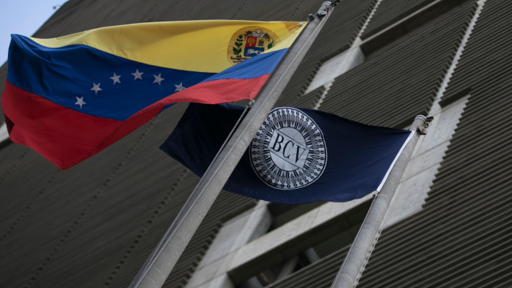
The performance of the Venezuelan economy has had significant variations so far this year, compared to its status in January. One of the most important elements for the internal dynamics and daily life of the population is the so-called “exchange rate gap,” or the percentage distance between the exchange rate referred to by the Central Bank of Venezuela (BCV) and the stablecoin USDT.
The average gap in January was 65.7%, while the October record, so far, is 11.7%. This suggests that the gap has narrowed by 82.1% from the levels reported at the beginning of the year.
This indicator began to stabilize and consolidate at levels close to 15% (and even a minimum of 12.3%) starting in the months of July and August 2026. In the last three months, the variable has stabilized between 12% and 13%, marking a sufficiently consistent trend.
The Difficult Path of Governing the Exchange Rate
The mitigation of the asymmetry between the BCV dollar and the USDT has been driven by a combination of macroeconomic policies from the Venezuelan Executive, along with market conjunctural dynamics.
First, the BCV drastically increased its foreign exchange intervention policy. The authorities have supplied the formal banking system with billions of dollars.
Only during the first six months of the year (assuming that in January the disruptive features of the naval blockade on the country were still in place), the exchange system received about 7.738 billion dollars. As of October, the figure would have exceeded 12 billion dollars.
This is a significantly higher figure than reported in 2025. During the past year, a total amount of 3.154 billion dollars was placed exclusively for the purpose of direct exchange intervention by the BCV.
Of the total of more than 12 billion dollars that have moved in the exchange system, the BCV directly contributes about 88.5% of the funds, which mainly come from oil exports. The remaining circulation in the system comes from private suppliers.
Throughout this year, it was noticeable how the differential did not yield simply because corporate and informal demand far exceeded what banks could settle at the official rate. It was necessary to impose a change of approach. By changing the strategy toward a daily and intensive injection (calculated by economic firms at an average required between 1.2 and 1.8 billion dollars monthly, according to market pressure), the BCV managed to satisfy the demand of the private sector, at least temporarily, continuously in recent months.
By substantially increasing the official supply of dollars, the need and incentive for companies and citizens to turn to the parallel market (or the digital dollar USDT) to meet their operational needs were reduced.
The second component of the narrowing of the gap is the sliding and depreciation due to the adjustment of the national currency according to the official rate.
Unlike previous periods where the exchange rate was rigidly anchored, the BCV has allowed for a gradual and accelerated adjustment or devaluation of the official dollar. By allowing the BCV dollar to rise faster to approach the real market price, the mathematical differential with the parallel dollar has narrowed drastically.
As the third major component, there is the monetarist policy. The formula combines three elements: a high legal reserve requirement, the absorption of liquidity in bolívares, and high interest rates for loans.
The legal reserve is the percentage of public deposits that commercial banks are required to freeze at the BCV, without being able to touch them. By keeping this reserve requirement at historically high levels (close to 73%), the BCV takes away the bolívares that banks would normally use for lending.
The next element, the elimination of speculative credit, is the result of the government’s learning curve. In the past, many companies would request loans in bolívares, buy dollars on the parallel market, wait for the dollar to rise, sell a small fraction of those dollars to pay off the loan in devalued bolívares, and keep the net profit.
Since there are no bolívares available to lend (due to the reserve requirement) and by indexing or raising interest rates to restrictive levels, arbitrage or speculative credit has been completely eliminated. Commercial loans, micro-loans, and credit cards operate at an annual rate of 13-16%, indexed in USD.
The absorption of liquidity implies that, by issuing coverage bonds or selling dollars directly on the exchange desks, the BCV withdraws (“drains”) from circulation the bolívares issued by public spending, containing liquidity in the real economy.
Due to a structural shortage of bolívares in circulation, economic actors (companies and citizens) do not have the necessary liquidity to pressure the purchase of dollars on digital or informal platforms. This brings the parallel dollar rate to a halt and forces the gap to narrow toward the official channel.
The High Collateral Damage
The difficult path of monetary governance also imposes high costs.
Companies do not have broad access to traditional bank financing for working capital, raw material purchases, or machinery maintenance. Consequently, industries and businesses can only operate and grow with what they generate from their own cash flow, severely limiting their production scale.
This element contravenes economic growth, as the economy grows based on the trickle-down effect of oil revenues that fall on the economy as a whole, while many companies lose their ability to grow in their environment through credit mechanisms.
The few loans that are approved are indexed to the BCV dollar at high interest margins. The high cost of money, to the point that for some small businesses, financing with a bank becomes a risk, discouraging any medium or long-term investment projects.
Regarding the population, the average citizen has difficulty accessing usable credit cards, vehicle loans, mortgage loans, or microloans. This condition is what has opened the door and new opportunities for the Cashea platform, widely popular in Venezuela, by facilitating purchases in stores with short-term installment payments.
In the long run, without suitable consumer credit conditions benefiting the population, the domestic market is also harmed, as consumption is reduced to strictly necessary purchases (food and medicine), causing unsold inventory accumulation in stores and inhibiting the flow of many goods and services.
Benefits versus Costs
For the Venezuelan Executive, the cost-benefit relationship of its economic policy to narrow the gap hinges on one premise: containing the exchange rate gap implies mitigating a distortion that has consolidated during the economic dynamics in the country in recent years. In the opinion of the government board, this is more important than the credit constraint to contain liquidity.
The first positive effect is the containment of the extremely high inflation at the end of 2025 and the beginning of 2026, boosted by the economic stranglehold and naval and oil blockade imposed by the Trump administration on the country.
In January, the monthly inflation started the year at 32.6%. This was the highest point of inflationary pressure in three years, driven by a sharp devaluation and high exchange rate volatility.
In September, the monthly indicator closed at 8.4%. This represents the second consecutive month of the year in which the indicator stabilizes in a single digit (after the 8.9% recorded in August), consolidating a trend toward moderation following the spike observed in the middle of the year.
From the perspective of President Delcy Rodríguez’s government, the contraction of the exchange rate gap attacked one of the main drivers of inflation in Venezuela: devaluation expectations.
Among its key effects is the anchoring of replacement costs. When the gap was high, businesses set prices at the BCV dollar, calculating a “coverage dollar” (well above the parallel rate) for fear of not being able to restock merchandise. As the gap stabilized around 12%, this uncertainty surcharge disappeared, halting the monthly price increases.
Consequently, the economy is experiencing less distortion in the supply chain. Raw material suppliers and wholesale distributors unified their billing criteria. This prevented the cascading effect of price indexation that inflated the Consumer Price Index (CPI) month after month.
At the retail level and its impact on the consumer, the double pricing or the charging of informal commissions in stores to “compensate” for the exchange rate difference has decreased, improving consumer confidence at the point of sale, which implies greater transparency in consumer prices.
Subsequently, by allowing a controlled adjustment of the official dollar to align with the real market, prices denominated in bolivars adjusted in a more organic and predictable manner, avoiding abrupt inflationary jumps, thus mitigating the official “lag effect.” This helped to stabilize prices in the chains of goods and services, mitigating instability and degrading inflationary causes.
Companies that are legally required to invoice at the official BCV rate suffered severe asset losses when selling at the official rate but had to replenish inventories or pay for services in the parallel market. The closing of the gap stopped this lag and protected profit margins.
Beyond these effects that fall on the majority of the population, there are other attributes that possess a meaning that could be considered political.
One of them is the reduction of arbitrage, financial street vending, and currency round-tripping coexisting in the gaps and weaknesses of the Venezuelan exchange system itself. Narrowing the gap discourages the speculative practice of buying cheap foreign currency in the official sector to immediately resell it in the parallel market, a distortion that drained productive liquidity from the system and allocated the available foreign currency for speculation.
Another component is the recovery of the bolívar’s competitiveness. With a small gap, consumers have fewer incentives to desperately get rid of bolívares on P2P platforms (like Binance), which stabilizes the circulation speed of the national currency and encourages the use of formal methods like mobile payment.
For the Venezuelan government, the challenge is to maintain a minimal gap.
Precisely, the next few months are the most difficult in this effort, and the trend is already typical every year. The payment of bonuses in bolívares and December purchases increase the demand for foreign currency at the moment. But the pattern of high demand extends until January, when many businesses push to exchange their bolívares for foreign currency, creating pressures on the supply systems for both dollars and USDT.
The scenario for the coming months will challenge the economic board to offer additional foreign currency in the market, but at the same time contain other liquidity accelerators. A difficult context.
Translation: Orinoco Tribune
OT/SC/CD
From Orinoco Tribune via This RSS Feed.