

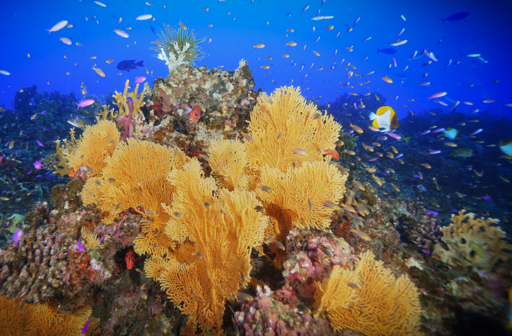
Nearly every shallow-water coral reef ecosystem on Earth is at high risk of ecological collapse by 2075, according to the first coral reef assessment of the IUCN Red List of Ecosystems (RLE). The RLE is a scientific framework for assessing the risk of ecosystem collapse. More than 250 experts assessed shallow water coral reef ecosystems across 127 tropical and subtropical ecoregions worldwide including the Great Barrier Reef in Australia and the Coral Triangle of Southeast Asia. The Oct. 22 report concluded that 24% of coral reefs are already critically endangered. When scientist include projected heat stress from climate change, they found 96% will be critically endangered in the next 50 years. One coral reef ecosystem, the Western Galapagos Islands, has collapsed already, the assessment found. The assessment identified heat stress from climate change as the single most consistent threat driving coral reef decline worldwide. Heat stress causes coral bleaching, a process in which corals expel the symbiotic algae living in their tissue. Algae provide most of the coral’s food via photosynthesis and prolonged bleaching events leave coral weakened, vulnerable to disease and lead to death. Coral reefs are crucial for marine biodiversity; they “cover less than 1% of the ocean floor,” but support approximately 25% of marine life. In an email to Mongabay Marcos Valderrábano, programme manager for the RLE at IUCN, said that if climate projections are accurate, most corals will suffer repeated severe bleaching, resulting in a less biodiverse ecosystem as corals are replaced by algae and turf.…This article was originally published on Mongabay
From Conservation news via This RSS Feed.