


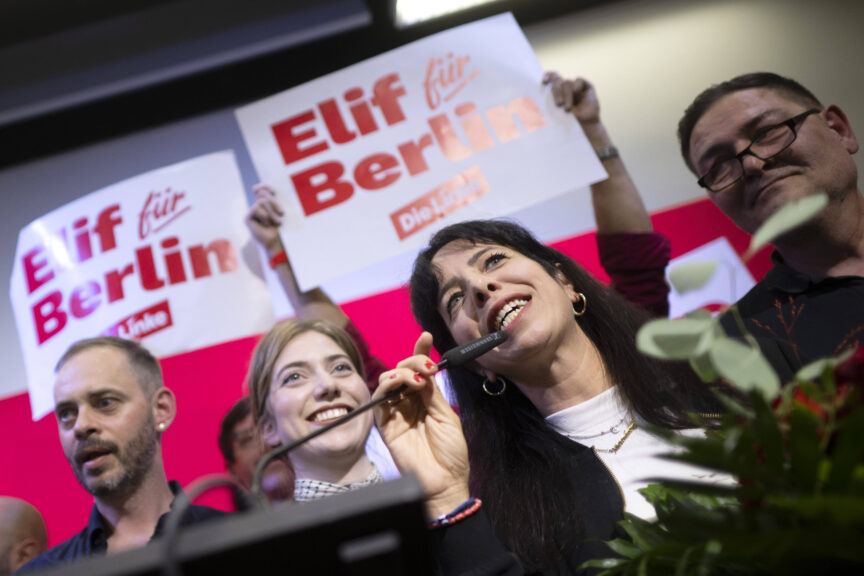
Europe’s largest residential landlord is set to lose €8.4bn (£7bn) as a result of plans by leftwing political party Die Linke to bring more than 140,000 Berlin flats into public ownership.
The real estate company Vonovia, which owns roughly 130,000 apartments in the city and 528,000 across Europe, would be the most affected by the plans, with 120,000 of its apartments set to be put into public ownership. Real-estate giant Heimstaden would also be hit hard with a projected loss of $1.5bn (£1.26bn), according to the Financial Times.
Die Linke, which won Berlin’s state elections in September, has agreed to talks with the city’s Greens and Social Democrats as part of plans to transfer ownership of flats from companies that own more than 10,000 apartments, with the legislation scheduled to be brought forward in 2028.
Any apartments owned above that 10,000 threshold would have to be transferred into public ownership as part of the policy, with Die Linke proposing an average compensation of around €100,000 per apartment – around 40% below the market value.
Vonovia’s 130,000 Berlin properties have an average market value of $130,000, meaning the company would lose a projected $8.4bn if the legislation becomes law. The company’s chief executive Luka Mucic has labelled the plans as “unconstitutional”, adding that the country needs “reliability, legal certainty and a stable investment environment.”
Housing was a key factor in September’s Berlin elections and has been growing in importance over the last half-decade, with 10% of the city’s residents currently living in housing poverty and 160,000 reported to have left the capital in 2025. In 2021, Berlin’s residents voted in favour of the city’s government seizing privately-owned flats from large corporate landlords, although that vote was not legally binding.
In order to govern in Berlin, Die Linke has had to form a three-way coalition with the progressive Greens and centre-left Social Democrats, leading to potential political concessions from the leftwing party. The Greens came fourth in September’s election on a commitment to push the property law through, but the Social Democrats’ leader publicly opposed the policy en route to a fifth place finish.
Support for Israel is also a sticking point between the three coalition parties, with the Greens and Social Democrats insisting that “Israel’s right to exist” be non-negotiable if they are to govern together. The parties rejected general boycotts against Israel and did not state whether Palestine has a right to exist in a joint document announcing the talks.
From Novara Media via This RSS Feed.