

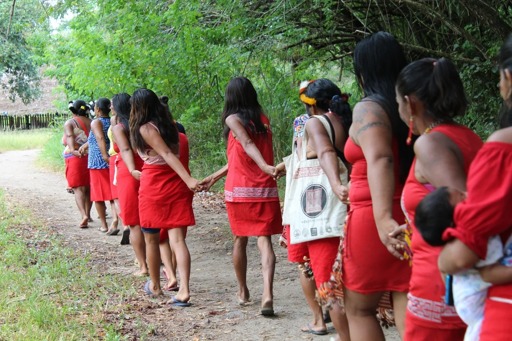
Two Indigenous women who do not speak Portuguese were denied assistance from their interpreter while voting in Brazil’s Oct. 4 election. The translator who accompanied them to the polls, community leader Mitore Tiriyó Kaxuyana, is a relative of the women and spoke to Mongabay about what happened. Racela Tiriyó, 23, and Mirami Tiriyó, 33, are from the Tumucumaque Park Indigenous Territory in the northeastern Brazilian Amazon. They were both voting for the first time in Macapá, the capital of Amapá state. “They wanted to vote, since they had gotten their voting card, and they asked me for help,” Kaxuyana said. “If we cannot vote in our own language, we need translation … just because we are Indigenous and speak another language we can’t be impeded from voting and exercising our rights.” According to Kaxuyana, poll workers informed her that only voters with disabilities were authorized to receive help from a translator. A supervisor confirmed this to her, she said. The women then voted alone with poll workers unable to provide assistance in Tiriyó, the pair’s native language. Kaxuyana was not allowed to explain the process to them and they left unsure whether their votes had gone through as intended, Kaxuyana said. “They don’t speak Portuguese, only our language,” Kaxuyana said. “For me, it was like prejudice.” The Tumucumaque Park Indigenous Territory is home to about 2,800 people. Kaxuyana said her territory, which she represents as the coordinator of the Articulation of Indigenous Women of the Tiriyó, Kaxuyana and Txikiyana Peoples…This article was originally published on Mongabay
From Conservation news via This RSS Feed.