

Venezuela’s National Assembly leadership reaffirmed sovereign control over the country’s oil revenues and reported 61 active energy agreements alongside 44 contracts under negotiation, framing the figures as evidence of a sector revival after years of financial restrictions.
The statements came amid what officials called a strategic reconfiguration of the Venezuelan hydrocarbon industry. After years of intense global financial restrictions, the gradual operational reactivation of agreements between state-owned oil company Petroleos de Venezuela (PDVSA) and international firms aims to restore a steady flow of foreign currency into the national treasury.
RELATED: Venezuela’s Acting President Reviews Wage Consensus With Business, Unions
Sixty-one agreements are currently in force, while another 44 contracts are being negotiated. For the government, that volume confirms an operational momentum geared toward diversifying investment across the country’s main extraction fields.
The National Assembly President presented this dynamism as the result of a deliberate push to reopen the sector to international capital without surrendering control. Over the past several years, sweeping financial measures limited Venezuela’s ability to sell crude, collect payments and maintain production infrastructure. The current wave of deals represents a step-by-step return to commercial activity.
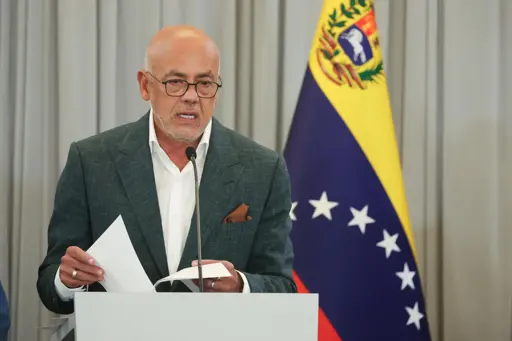
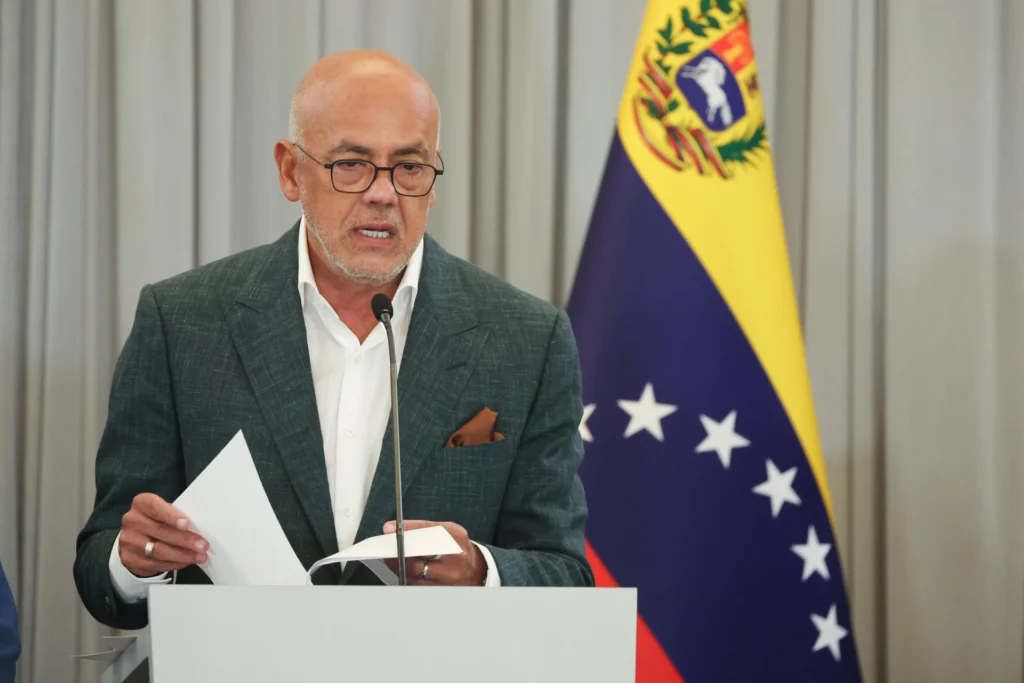
#EnVideo📹 | Coordinador del diálogo por el Gobierno Nacional, Jorge Rodríguez, aseveró que Venezuela mantiene el control sobre los recursos financieros obtenidos a través de la comercialización de petróleo hacia distintos países del mundo. pic.twitter.com/MUoEuwKXQI
— Ministerio de Comunicación e Información (@mippci_ven) October 22, 2026
Text reads: “Coordinator of the dialogue by the National Government, Jorge Rodríguez, asserted that Venezuela retains control over financial resources obtained through the marketing of oil to different countries in the world.”
Each reactivated agreement carries a single objective, officials indicated, the capture of hard currency for the public coffers. That revenue is meant to fund the productive apparatus and national infrastructure rather than remain subject to outside oversight.
The consolidation of the 61 agreements and the active negotiation of 44 more point to a strategy built on scale. By spreading investment across the country’s principal extraction zones, the government seeks to reduce dependence on any single field or partner.
Sovereign Control Defended
Reaffirming sovereign control over monetary flows stands as a central pillar of the government’s message. The leadership projected institutional stability at a moment when Washington continues to review and adjust the licenses it grants for oil operations.
Against that backdrop, the Venezuelan government is working to shield energy agreements legally, dismiss any suggestion of foreign tutelage and guarantee direct financing for public budgets. The stated goal is to protect those contracts from the uncertainty of shifting U.S. policy.
Official strategy insists that autonomous management of oil income is an indispensable guarantee for preserving fiscal balance, defending the national currency and sustaining social development programs. None of that, the argument runs, should depend on foreign political conditions.
By presenting the 61 agreements and 44 negotiations as proof of a functioning, sovereign industry, the government pushes back against narratives that portray the sector as externally managed.
For the Bolivarian government, legal protection of the energy agreements goes hand in hand with financing priorities. The revenue is meant to flow directly toward the productive apparatus and public infrastructure, a framework the leadership described as essential to institutional stability.
From teleSUR English via This RSS Feed.