

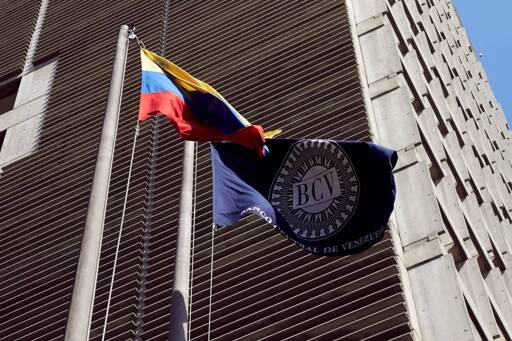
Caracas (OrinocoTribune.com)—Venezuela’s central bank has introduced a differentiated reserve requirement that opens up a larger share of banks’ bolívar-denominated term deposits for potential lending, while maintaining the requirement for demand and savings deposits at 73%. The rules, set out in Resolution No. 26-08-02, were published in Extraordinary Official Gazette No. 7,073 and took effect on September 15.
Under the resolution, both universal and commercial banks must hold 50% of net obligations from bolívar-denominated term deposits as reserves at the Central Bank of Venezuela (BCV), down from the previous 73% requirement applied to bolívar obligations. For qualifying microfinance banks, the term-deposit requirement is 27%, while a 40% rate remains in place for demand and savings deposits. Those microfinance institutions must show a credit-intermediation index of at least 50% to qualify. The 31% reserve requirement for obligations in foreign currency remains unchanged.
The reserve adjustment is one part of a broader regulatory framework. The resolution also substantially raises the cost to banks of reserve shortfalls; local media reported that the base annual charge rises from 48 to 144 percentage points above the BCV’s rate for ordinary discount, rediscount, and advance operations. The rules therefore ease the reserve burden on term deposits while tightening penalties for banks that fail to meet the requirements.
For years, banking representatives and financial analysts have argued that Venezuela’s high reserve requirement sharply restricted lending and left banks with little room to expand credit. In 2019, during the escalation of the reserve requirement, the Venezuelan Bank Association called for the “extreme” requirements to be lifted. Contemporary reporting cited Sudeban figures showing that by May of that year, banks were placing 17 out of every 100 bolívars deposited into loans, compared with a rise to 48 out of 100 in 2018. Banking-sector critics have continued to identify the reserve requirement as a major obstacle to credit.
The reserve requirement was also used to restrain the growth of bolívar liquidity and reduce pressure on prices and the exchange rate. In 2019, Chavista economists Luis Enrique Gavazut and Tony Boza described the measure as a way to contain circulating liquidity and prevent bank funds from being channeled into purchases of dollars on the informal parallel market. The government’s stated concern was that bolívar credit could feed currency speculation and deepen pressure on household purchasing power.
Chavista economists have also argued that tighter reserve rules were meant to curb what they call the bicicleta cambiaria: using bolívar liquidity or credit to obtain dollars through preferential or official channels, then reselling them at higher parallel-market prices. That rationale formed part of the state’s effort to limit currency arbitrage during a period of severe exchange-rate and inflationary pressure.
The latest change may allow banks to lend more against term deposits, particularly if the revised deposit rates encourage customers to place more funds for fixed periods. Economist Hermes Pérez described the adjustment as limited because it applies only to term deposits; Finanzas Digital estimated that its effect could add between 0.1% and 0.4% of GDP to the credit portfolio by year’s end, depending on how much term-deposit funding grows. Lending will also depend on deposit growth, bank liquidity, demand for credit, and the conditions attached to financing.
Some analysts have interpret the move as a sign that the BCV believes it can manage any added currency pressure while allowing more financing to reach productive activity. Others see it as an effort to support credit and economic activity during the final quarter, typically an important period for spending and production.
The continued 73% requirement on demand and savings deposits, alongside steeper penalties for reserve shortfalls, shows that the BCV is still seeking to control bolívar liquidity even as it gives term deposits more room to support lending.
Featured image: already there
Special for Orinoco Tribune by staff
OT/JRE/AU
From Orinoco Tribune via This RSS Feed.