

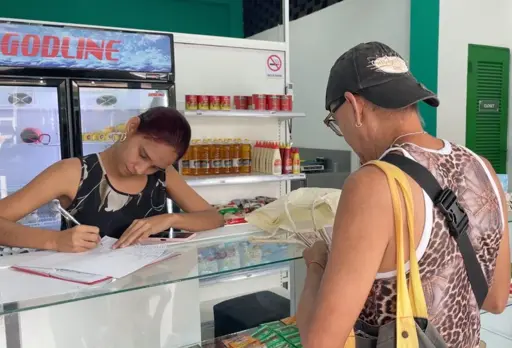
Currently, Cuba is transforming part of its state network of warehouses, markets, and butcher shops into Neighborhood Markets, establishments that remain state-owned but whose management can be taken over by the private sector, cooperatives, state-owned enterprises, or foreign investors.
According to Cuban authorities, this initiative aims to bring food and other supplies closer to communities, expand the commercial offer, and reduce the prices of a group of essential goods. In addition, it is part of a broader change: the gradual transition from the regulated family basket to subsidies directed at people in vulnerable situations.
Neighborhood Markets constitute one of the 176 economic and social transformations approved by the Cuban government in June of this year. It is part of the axis 19 of the reforms, dedicated to commerce, food, and services.
In statements to Sputnik, Marpessa Portal de Villiers, director general of Merchandise Sales at the Ministry of Domestic Trade (MINCIN), explained that each municipal trade company must decide what to do with the premises located in that territory: convert them into Neighborhood Markets, allocate them to supply markets, lease them, or connect them to other economic sectors.
Cheaper basic products?
The central purpose of this model is for certain food and hygiene items to reach the population at lower prices than at other points of sale.
The prioritized list includes rice, sugar, grains, pasta, instant soups, coffee, canned tomatoes, meats, fish, eggs, dairy products, soaps, toothpaste, deodorant, and toilet paper. Neighborhood Markets can sell other products, but those do not receive tax benefits nor are they subject to price reductions.
According to Portal de Villiers, “the essence of these establishments is selling essential goods with a community focus, because it is in the council, in the corner store of the community. Their sale must be conducted below the remaining markets that offer this same variety of supplies.”
To make it possible, the Cuban government applied tax incentives, including the exemption of the 10% tax on wholesale sales and a 5% bonus on the retail tax. In addition, the managers of the establishments are exempt from paying rent during the first two years, a period that can be extended if they make investments in the premises.
However, Portal de Villiers acknowledged that the experience still faces difficulties, especially in contracting with suppliers and in the stability of products benefiting from tax incentives. “There are a number of aspects to improve and continue perfecting; everything at the beginning goes through a process of adaptation and adjustment.” Even so, she maintains that the reception has been positive.
The reform also impacts the network of bodegas and the ration book system, through which the Cuban government has distributed subsidized products to the population for decades.
In this regard, the MINCIN has identified 1,913 stores out of the total currently in existence, to cater to people considered to be in a higher state of vulnerability by the Ministry of Labor and Social Security.
Portal de Villiers associated this process with transformation measure 70, aimed at “subsidizing people and not products,” and with measure 157, which provides for the gradual transition of the regulated family basket to controlled sales without subsidy.
She stated that the ration book will not disappear, but will rather take on new functions. In this case, it will be used for the registration of controlled sales, even when the purchase is not made at the usual warehouse. “Certain products that are decided to be put in the market in a controlled manner will be entered in the ration book,” she specified.
A market for the neighborhood?
Sputnik visited the Neighborhood Market located in Ayestarán 207, in the Havana municipality of El Cerro. Outside the market, several customers were waiting to make their purchase.
There was Ismael Mesa García, who believes that the establishment of this type of store there “has been wonderful because there is a variety of products, such as oil which is important, rice, eggs, and chicken.”
Claudia Mendoza Martínez, who has been working as a sales assistant at the place for a few days, told Sputnik that “people are buying a lot, it has been quite well received. As for the eggs, people are coming to buy them a lot because they say that the eggs here are of higher quality than in other places.”
Osmani Guilarte, a storekeeper at the Neighborhood Market, said that there are always people at the place, “the whole day, from when we open at 8:00 a.m. to 8:00 p.m., there is a line, and the store has been well received. Fortunately, so far nobody has complained, everyone has liked it, and the prices vary due to the fluctuations of the dollar.”
However, for Vianca González, a resident of the area, the prices are still “very high.” In her opinion, “another analysis should be done because if it is for the neighborhood, the average income of the residents should be evaluated, especially the retirees, because these prices are not accessible.”
Yudney Soler came to the store “because it is the closest one to me” and said in a conversation with Sputnik that the cost of goods is “a bit cheaper” compared to other private businesses in the area.
New paths for everyone
Neighborhood Markets are one of the options planned to reorganize the state commercial network, but not the only one. The leasing of premises for other activities also opens opportunities for entrepreneurs looking to establish or expand their businesses.
This is the case of the young entrepreneur Ailén Velázquez, who mentioned to Sputnik her interest in starting a specialized center for the marketing and retail sale of automotive parts, motorcycle parts, and supplies such as tires and batteries.
To promote this business, she considered renting a state-owned premises as “the best option” because “it provides legal security and contractual stability, as leasing from such an entity offers a clear and transparent regulatory framework in the medium and long term.”
In her opinion, it can also optimize operating costs, since the rates usually adjust to the current official regulations, “which allows for projecting a sustainable cash flow and reinvesting the initial capital in inventory and improvements, also contributing to the revitalization of this public asset.”
66 Years of the CDRs: The Heart of Cuba and the Revolution Beats in Its Neighborhoods
Velázquez learned about this possibility through public calls and listings of available properties disseminated by local trade authorities, as well as state asset management entities in official channels.
She stated that she was “motivated by the opportunity to formalize and expand operations in a strategic location, taking advantage of the current regulatory framework that promotes integration among economic actors and the efficient management of state assets.”
She was looking for a well-located and accessible premises, a spot with high vehicular and pedestrian traffic, not too large, as her business model does not require it. She defined the negotiation process as “formal, transparent, and guided by the procedures established in the current laws.”
“Maintaining fluid communication with the entity’s representatives for the technical review of the property, the reconciliation of the lease contract according to the official appraisal, and the clear delineation of the contractual responsibilities of both parties,” she explained.
In her opinion, this measure is positive, as it “represents a pragmatic step toward productive connections and local economic development, reactivates state assets that were generating maintenance costs without adding value, creates jobs, promotes free competition, and expands the supply of essential products for the community.”
(Sputnik)
Translation: Orinoco Tribune
OT/SC/CD
From Orinoco Tribune via This RSS Feed.