

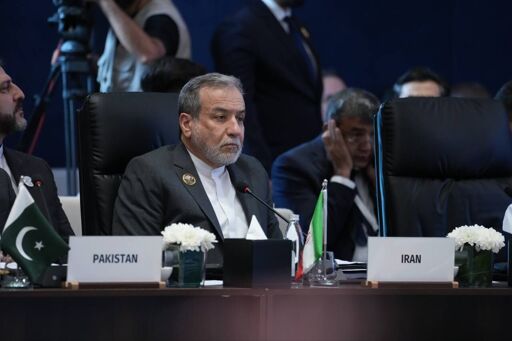

Iranian Foreign Minister Abbas Araghchi reiterated that his country’s proposal to end the war with the US and to restart nuclear negotiations is “still on the table,” claiming the Iranian conditions are “completely clear” and “unchanging.”
Talking to Iranian state media on the sidelines of the 52nd session of the Council of Foreign Ministers of the Organization of Islamic Cooperation (OIC) in Baghdad on Sunday, October 18, Araghchi also said that Iran is currently studying the US response to its proposals.
If the US meets its conditions, “the Strait of Hormuz will be reopened on the sixth day, and negotiations will resume on the seventh,” Araghchi said.
Though Araghchi did not talk about them explicitly, he reiterated that the Iranian conditions are the same as what the US had agreed to under the Islamabad Memorandum of Understanding (MoU), signed in June.
On several previous occasions Iran has made clear that if the US lifts its naval blockade, releases Iran’s foreign frozen assets, and ends the war on all fronts in the region, it will allow the Strait of Hormuz to open.
As per the MoU, in the first 60 days after the deal took effect both sides were to initiate negotiations over Iran’s nuclear program. However, the MoU expired in August after hostilities were resumed within weeks of its signing.
The US resumed its military strikes on Iran in July, leading the Iranians to reimpose their blockade in the Strait of Hormuz in response, reversing its decision to open it for navigation as per the MoU.
Tehran had claimed that it presented a plan to reopen the Strait to the US in September, in a brief meeting with its delegation during the annual session of the UN General Assembly. However, US President Donald Trump later declared he had rejected the Iranian proposals.
Beware of Israeli provocations
Araghchi also rejected the repeated threats of new strikes and economic isolation against his country, claiming that Iran will not bow to threats and will defend its strategic and economic interests.
Last week it was reported that Israeli Prime Minister Benjamin Netanyahu, who is facing a tough election at home, apart from planning to escalate war against Palestinians in the West Bank, also pressured Trump to resume the military strikes on Iran.
Read more: Netanyahu presses Trump to renew aggression on Iran ahead of Israeli elections
On the same day, Trump claimed that the US may attack some specific targets in Iran in order to disrupt its nuclear program. Media reports also claimed that the US is preparing to use the so-called “mother of all bombs” to again target Iran’s energy and nuclear infrastructure.
This is despite the fact that Trump has repeatedly boasted about “obliterating” Iran’s nuclear program during the joint US and Israeli airstrikes in June 2025.
Reacting to those reports, Araghchi warned both the US and Israel to learn from their mistakes and stay away from Iran to avoid consequences more severe than during the earlier wars.
“Last time you wanted to “finish the job” Iran emerged even stronger. Want to try your luck again? Be our guest. But be careful; we have unfinished jobs too,” Araghchi said in a post on X on Monday.
He claimed that Netanyahu is pressing for a fresh war simply because he wants to stay in power and out of jail over corruption charges he has been facing for years now, without thinking about consequences to Israel or the US.
In a similar reaction, the head of the Iranian armed forces Ali Abdollahi also claimed on Sunday that his country was waiting for their [the US and Israel’s] foolish decision and miscalculation. Any attack by them would invite “a response war more severe, distinct, and devastating than in the past,” Abdollahi claimed.
Abdollahi’s warnings were relayed by several other Iranian officials on Sunday.
It is reported that the US has spent billions of dollars in the last eight months of war on Iran. It has lost most of its military infrastructure in the Gulf countries in Iranian responses, with over a dozen of its soldiers killed and several dozen of its aircraft lost. The US also faced a severe shortage of crucial ammunition due to the war on Iran, forcing it to suspend the strikes midway.
From BT News via This RSS Feed.