

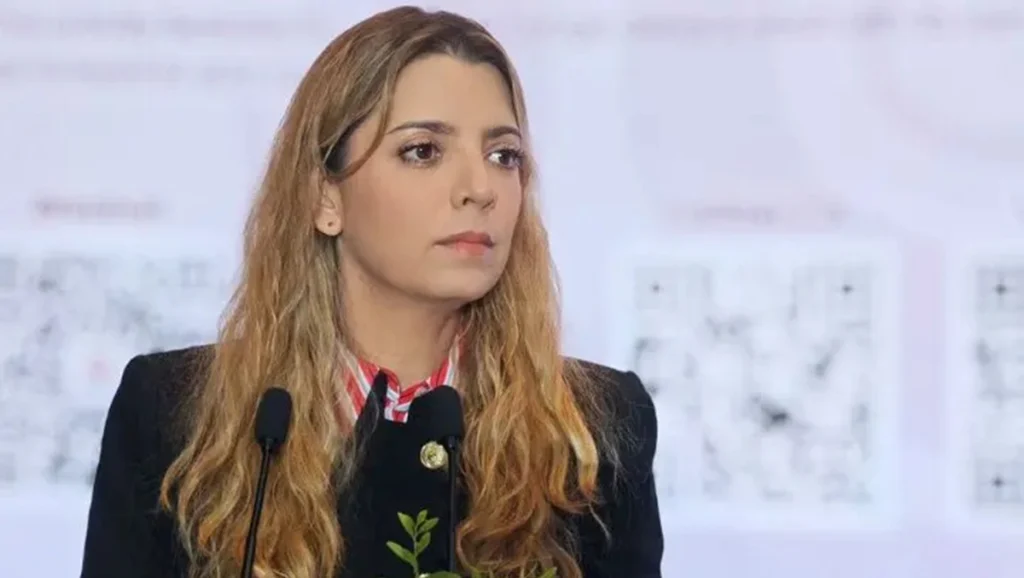
Patricia Villegas highlights digital infrastructure, media sovereignty and cooperation with China.
On Sunday, teleSUR President Patricia Villegas participated in the closing session of the Global South Academic Forum, held in Shanghai, where she defended South-South cooperation to strengthen communications sovereignty.
RELATED:
Global South Media Center: 4 Outlets Launch Bold New Platform in China
During her presentation, the Colombian journalist argued that power in the international arena is also exercised through digital infrastructure, undersea cables and algorithms that determine the global circulation of news.
Villegas warned that the digital environment is not neutral but instead reflects power relations that prioritize content with immediate impact at the expense of the peoples’ memory and identity.
She also urged Latin America and the Caribbean to engage more decisively in Global South initiatives to narrow the gap between existing knowledge and strategic decision-making.
teleSUR President highlighted the partnership with China as a key channel for diversifying the capacity of developing nations to produce their own content.
Villegas pointed to concrete advances, including the teleSUR+ platform, created in July 2026 to distribute material produced by creators from the Global South, and the joint bureau operated in Beijing with Prensa Latina and Brasil de Fato.
On the sidelines of the 2026 Global South Academic Forum in Shanghai, I held discussions with the forum’s organising committee, led by Prof. Lu Xinyu, Chair of the Global South Academic Forum, about China’s experience in rural revitalisation, poverty reduction, and community… pic.twitter.com/xnoslb0ouk
— Professor Naana Jane Opoku-Agyemang (@NJOAgyemang) October 19, 2026
U.S. Blockade Affects Cuban News Agency
During the same panel on communication and governance, Prensa Latina Vice President Alejandro Gomez denounced the severe obstacles facing the Cuban news agency as a result of the U.S. blockade.
Gomez explained that unilateral restrictions limit the acquisition of fuel for electricity generation and the purchase of basic medical supplies for Cuba’s children.
He said the financial blockade directly affects the work of the agency’s foreign bureaus through the arbitrary closure of bank accounts and restrictions on transfers. These coercive measures hinder the objective reporting of the Cuban reality and the provision of communications services across several continents.
The international forum brought together more than 200 delegates in the Chinese metropolis to discuss modernization, governance, and social mobilization from the perspective of developing countries.
Speakers agreed that content exchange, journalism training and the fight against disinformation are essential to democratizing the global media landscape.
teleSUR/ JF
Source: teleSUR
From teleSUR English via This RSS Feed.